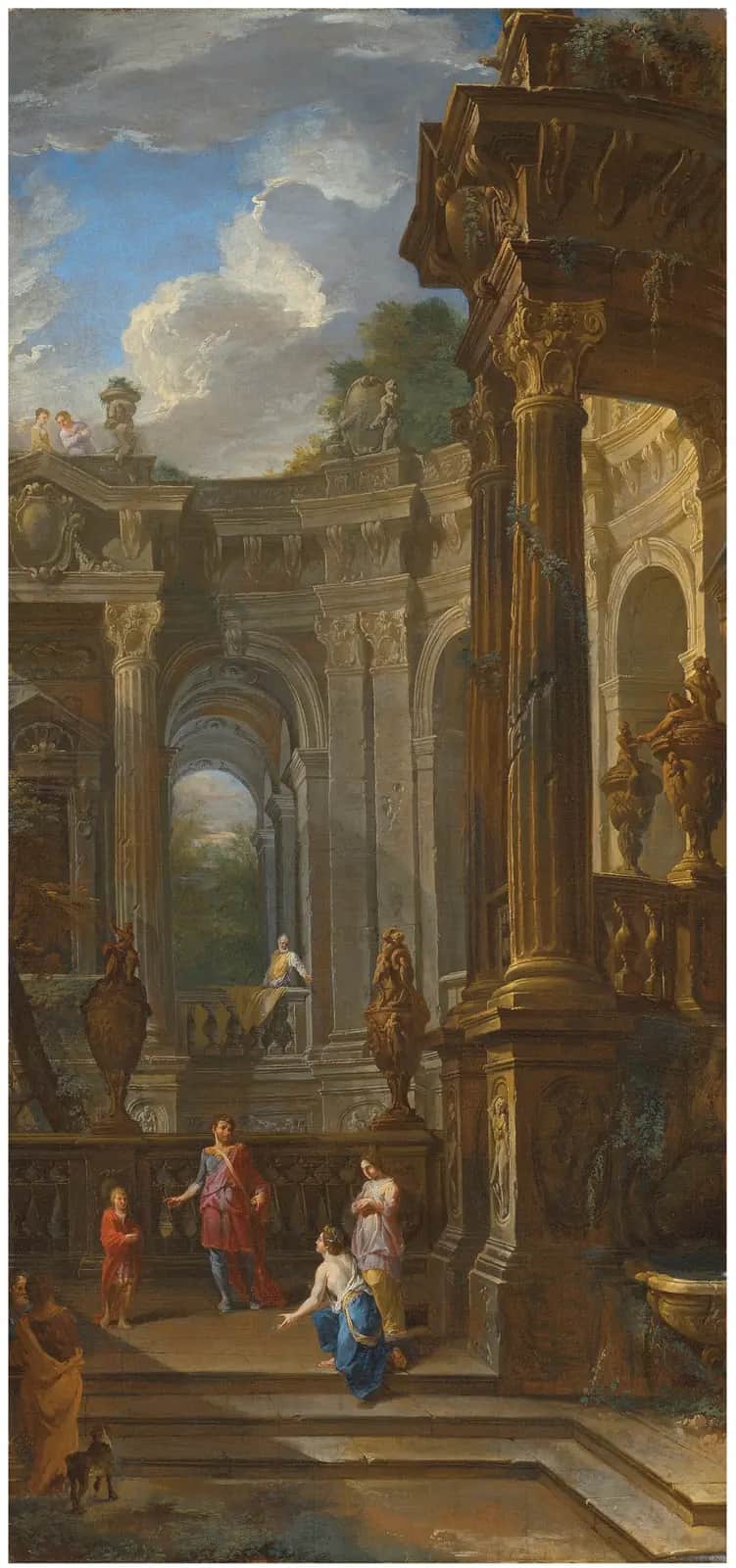
1 Kings 19:5 (WEB)
He lay down and slept under a juniper tree; and behold, an angel touched him, and said to him, “Arise and eat!”
Catechism · 2
In the Old Testament
“Finally, taking the desert road that leads to the place where the living and true God reveals himself to his people, Elijah, like Moses before him, hides "in a cleft of he rock" until the mysterious presence of God has passed by.” — Catechism footnote: Cf. 1 Kings 19:1-14; cf. Ex 33:19-23.
Heaven and Earth
“…hand; communicated the law by their ministry; led the People of God; announced births and callings; and assisted the prophets, just to cite a few examples.” — Catechism footnote: Cf. Job 38:7 (where angels are called "sons of God"); Gen 3:24; 19; 21: 17; 22:11; Acts 7:53; Ex 23:20-23; Judg 13; 6:11-24; Is 6:6; 1 Kings 19:5.
Fathers and councils · 6
Athanasius of Alexandria
“As also Elisha, when he thought he was alone in the wilderness, was with companies of angels; so in this case, though the people were at first afflicted and in the wilderness, yet those who remained faithful afterwards entered the land of promise.” — editor's note: The reference is to 2 Kings vi. 13–17, though ‘the wilderness’ agrees better with the history of Elijah, 1 Kings xix. 4–8.
Read the whole comment
Jerome
“And he looked, and behold there was a cake and a cruse of water at his head.” — editor's note: 1 Kings xix. 4–6.
Read the whole comment
Tertullian
“…nights, his belly empty, his mouth dry, arrived at Mount Horeb; where, when he had made a cave his inn, with how familiar a meeting with God was he received!” — editor's note: See 1 Kings xix. 1–8. But he took two meals: see vers. 6, 7, 8.
Read the whole comment“When the ravens had been wont to satisfy him with “bread and flesh,” why was it that afterwards, at Beersheba of Judea, that certain angel, after rousing him from sleep, offered him, beyond doubt, bread alone, and water?” — editor's note: 1 Kings xix. 3–7.
Read the whole comment“For Patience sits on the throne of that calmest and gentlest Spirit, who is not found in the roll of the whirlwind, nor in the leaden hue of the cloud, but is of soft serenity, open and simple, whom Elias saw at his third essay.” — editor's note: i.e., as Rigaltius (referred to by Oehler), explains, after the two visions of angels who appeared to him and said, “Arise and eat.” See 1 Kings xix. 4–13. [It…
Read the whole comment
Aphrahat
“…him; and because he took upon him the likeness of the angels of heaven, those very angels brought him bread and water when he was fleeing from before Jezebel.” — editor's note: 1 Kings xvii. 3–5; xix. 1–8.
Read the whole comment
Cross-references · 1
Cited together in On Patience Chapter 15.