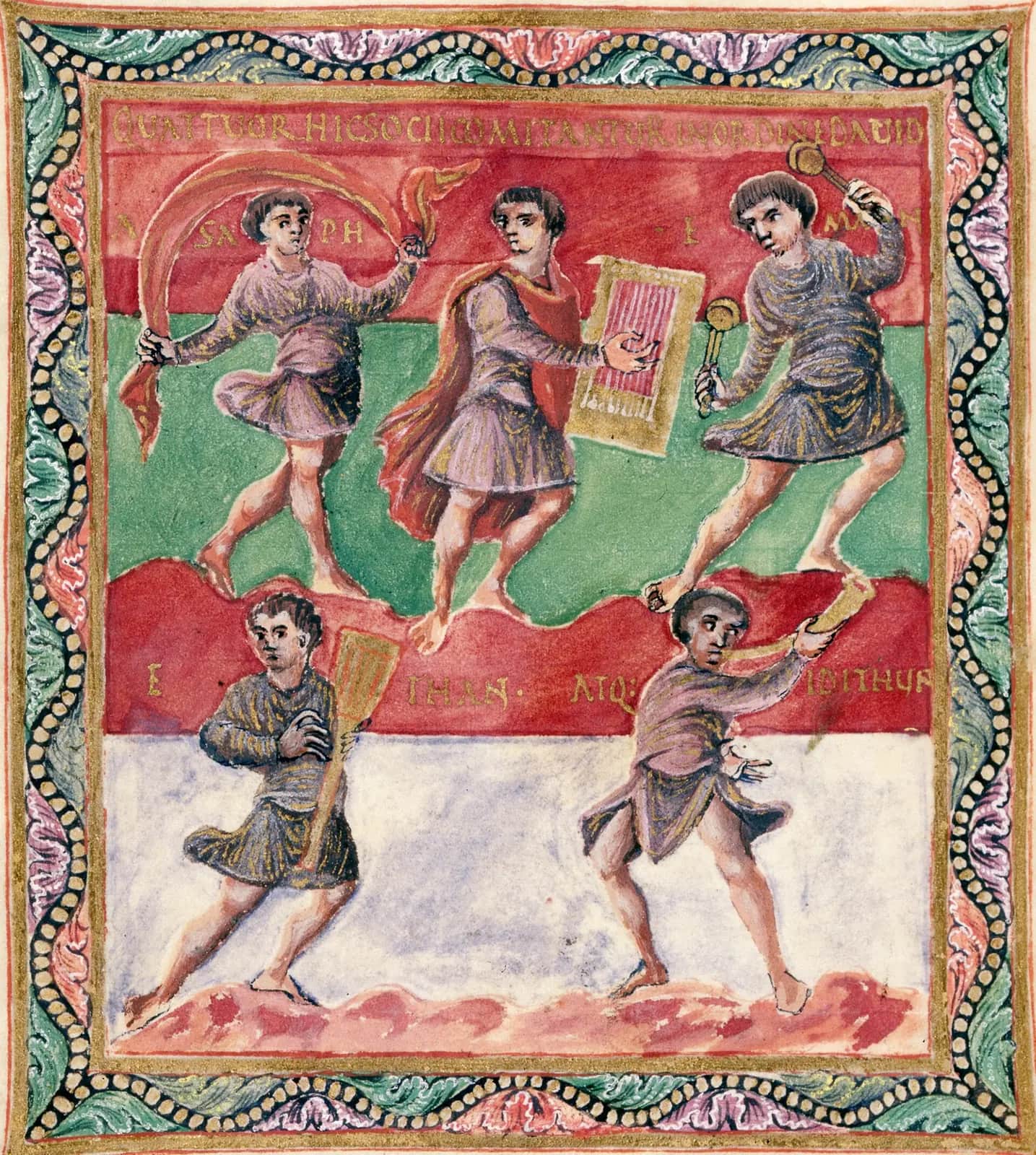
2 Samuel 12:13 (WEB)
David said to Nathan, “I have sinned against the LORD.” Nathan said to David, “The LORD also has put away your sin. You will not die.
Catechism · 1
“The prophet Nathan questioned David in the same way after he committed adultery with the wife of Uriah and had him murdered.” — Catechism footnote: Cf. 2 Sam 12:7-15.
Fathers and councils · 13
Jerome
“Yet he had certainly heard from Nathan the words,“The Lord also hath put away thy sin.”” — editor's note: 2 Sam. xii. 13.
Read the whole comment“Immediately that he confessed his fault he was comforted by the words: “the Lord also hath put away thy sin.”” — editor's note: 2 Sam. xii. 13.
Read the whole comment
Cyril of Jerusalem
“He was not puffed up by the array of soldiers standing round: for he had seen in thought the angel-host of the Lord, and he trembled as seeing Him who is invisible; and to the messenger, or rather by him in answer to God who sent him, he said, I have sinned against the Lord.” — editor's note: 2 Sam. xii. 13.
Read the whole comment
John Cassian
- John Cassian, Conferences XI–XVII XIII.13Conference XIII
“…two grievous sins of his, so that it was vouchsafed to him to hear from the prophet Nathan: “The Lord also hath put away thine iniquity: thou shalt not die.”” — editor's note: 2 Sam. xii. 13.
Read the whole comment “Or if we bear in mind those two grievous and heinous sins of King David, blotted out by one word of penitence, we shall see that neither here were the merits of his works sufficient to obtain pardon for so great a sin, but that the grace of God superabounded, as, when…” — editor's note: Cf. 2 Sam. xii. 13.
Read the whole comment
Augustine of Hippo
““Uncertain and hidden things” of His wisdom He manifested to him.” — editor's note: 2 Sam. xii. 13.
Read the whole comment“Consequently Matthew traces the succession downwards from David through Solomon, in connection with whose mother it was that he sinned; while Luke carries the genealogy upwards to the same David through Nathan, by which prophet God took away his sin.” — editor's note: 2 Sam. xii. 1–14.
Read the whole comment
Ambrose of Milan
“To him it was told how the rich man who had many flocks seized and killed the poor man’s one lamb, because of the arrival of his guest, and recognizing that he himself was being condemned in the tale, for that he himself had done it, he said: “I have sinned against the Lord.”” — editor's note: 2 Sam. [2 Kings] xii. 13.
Read the whole comment
Tertullian
“You will maintain communion, too, with the murderer: because Ahab, by deprecation, washed away (the guilt of) Naboth’s blood; and David, by confession, purged Uriah’s slaughter, together with its cause—adultery.” — editor's note: See 2 Sam. xi.; xii. 1–13.
Read the whole comment“So, too, had the prophets (of old) granted to the repentant the pardon of murder, and therewith of adultery, inasmuch as they gave, at the same time, manifest proofs of severity.” — editor's note: Comp. 2 Sam. xii. 1–14, etc.
Read the whole comment“…to the devotion of the people the son of Saul when about to die, and gave free forgiveness to David on his confessing his sins against the house of Uriah; which also restored the house of Israel as often as it condemned it, and addressed to it consolation no less frequently than reproof.” — editor's note: 2 Sam. xii. 13.
Read the whole comment“…too, how that, when David acknowledged his sin against Uriah, the prophet Nathan said unto him, “The Lord hath cancelled thy sin, and thou shalt not die;” how king Ahab in like manner, the husband of Jezebel, guilty of idolatry and of the blood of Naboth, obtained pardon because of his repentance; and how…” — editor's note: 2 Sam. xii. 13.
Read the whole comment“How prompt in pardoning David on his confession of his sin—preferring, indeed, the sinner’s repentance to his death, of course because of His gracious attribute of mercy.” — editor's note: 2 Sam. xii. 13.
Read the whole comment
Cross-references · 12
Cited together in The Five Books Against Marcion II.17.
Cited together in The Five Books Against Marcion II.17.
Cited together in The Five Books Against Marcion II.17.
Cited together in The Five Books Against Marcion II.17.
Cited together in The Institutes XII.11.
Cited together in Conferences XI–XVII XIII.13.
Cited together in The Five Books Against Marcion II.17.
Cited together in Conferences XI–XVII XIII.13.
Cited together in Catechism §1736.
Cited together in Catechism §1736.
Cited together in The Five Books Against Marcion II.17.
Cited together in The Five Books Against Marcion II.17.