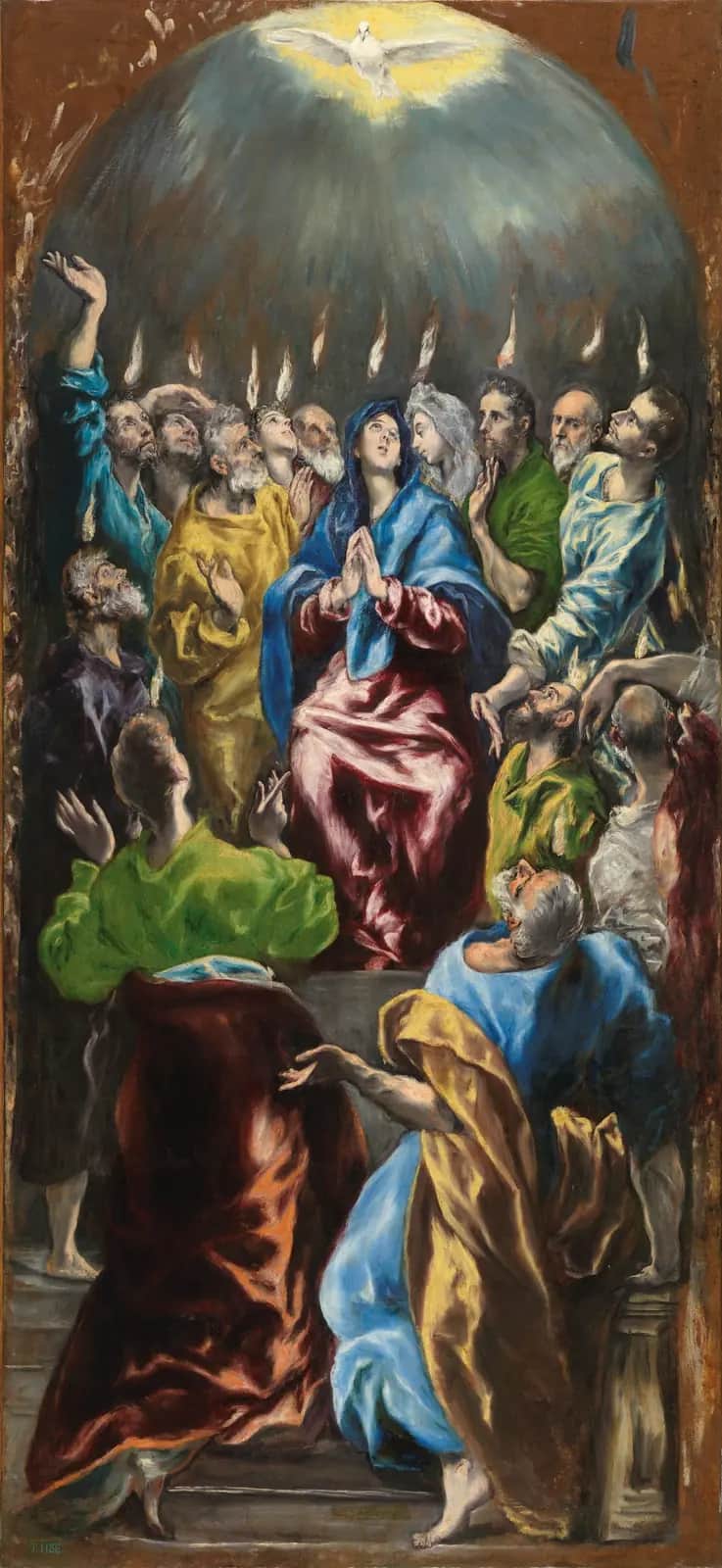
Acts 2:29 (WEB)
“Brothers, I may tell you freely of the patriarch David, that he both died and was buried, and his tomb is with us to this day.
Fathers and councils · 6
Theodoret of Cyrus
“Eran.—He quoted the divine David, and said that he had received promises from God that the Lord Christ should be born of the fruit of his loins and that in trust in these promises he prophetically foresaw His resurrection, and plainly said that His soul was not left in Hades and that His flesh did not see corruption.” — editor's note: Acts ii. 29 et seqq. and Ps. xvi. 10
Read the whole comment
Augustine of Hippo
“…my soul in Hell, neither shalt Thou suffer Thy Holy One to see corruption,” the Apostolic teaching takes up this testimony, and in the Acts of the Apostles thus argues against the unbelieving; Men and brethren, we know that the patriarch David is dead and buried, and his flesh hath seen corruption.” — editor's note: Acts ii. 29.
Read the whole comment
John Chrysostom
“And so great was the glory of the man, that Peter, so many years after, in exhorting the Jews, spake on this wise: “Let me freely speak unto you of the patriarch David, that he is both dead and buried.”” — editor's note: Acts ii. 29.
Read the whole comment“For great indeed was that prophet’s glory, so that Peter also afterwards pleading with the Jews, spake on this wise, “Let me freely speak unto you of the patriarch David, that he is both dead and buried.”” — editor's note: Acts ii. 29.
Read the whole comment“For this reason the apostles also reasoned submissively, saying, “Let us speak freely of the Patriarch David, that he is both dead and buried.”” — editor's note: Acts ii. 29.
Read the whole comment
Tertullian
“…then, Christ was announced by the Creator, “who formeth the lightning, and createth the wind, and declareth unto man His Christ,” as the prophet Joel says, since the entire hope of the Jews, not to say of the Gentiles too, was fixed on the manifestation of Christ,—it was demonstrated that they, by their being…” — editor's note: A supposed quotation of Amos iv. 13. See Oehler’s marginal reference. If so, the reference to Joel is either a slip of Tertullian or a corruption of his text;…
Read the whole comment