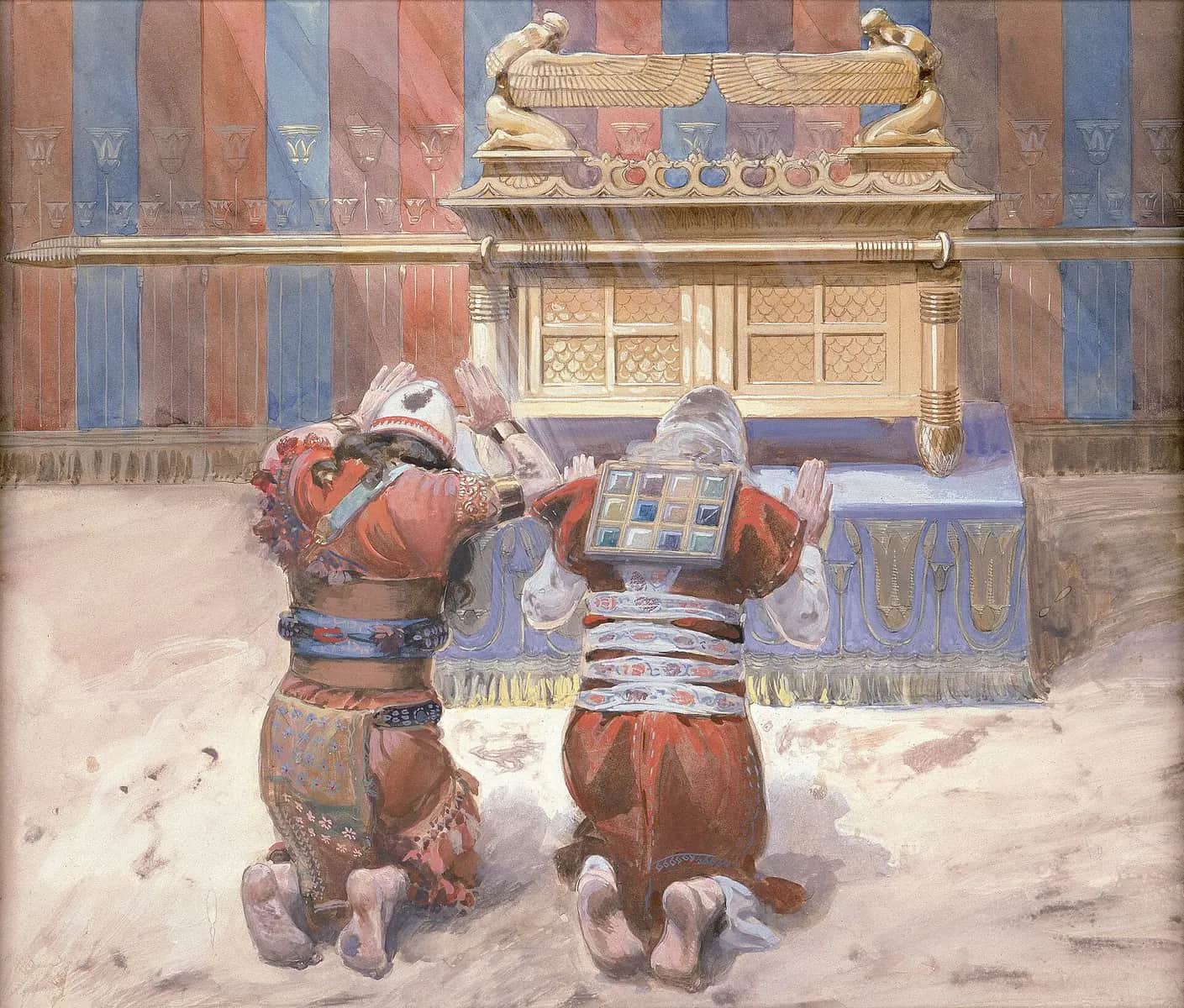
Exodus 34:6 (WEB)
The LORD passed by before him, and proclaimed, “The LORD! The LORD, a merciful and gracious God, slow to anger, and abundant in loving kindness and truth,
Catechism · 3
I Believe in God
“Then the LORD passes before Moses and proclaims, "YHWH, YHWH, a God merciful and gracious, slow to anger, and abounding in steadfast love and faithfulness"; Moses then confesses that the LORD is a forgiving God.” — Catechism footnote: Ex 34:5-6; cf. 34:9
“God, "HE WHO IS", revealed himself to Israel as the one "abounding in steadfast love and faithfulness".” — Catechism footnote: Ex 34:6
In the Old Testament
“From this intimacy with the faithful God, slow to anger and abounding in steadfast love,” — Catechism footnote: Cf. Ex 34:6.
Fathers and councils · 6
Irenaeus of Lyons
“…and long-suffering, and of great commiseration, and true, and keeps justice and mercy for thousands, forgiving unrighteousness, and transgressions, and sins.”” — editor's note: Ex. xxxiv. 6, 7.
Read the whole comment
Athanasius of Alexandria
“…as if He exercises faith and so receives the reward of faith, they must proceed at this rate to find fault with Moses for saying, ‘God faithful and true,’ and with St. Paul for writing, ‘God is faithful, who will not suffer you to be tempted above that ye are able.’” — editor's note: Combines Greek of Deut. xxxii. 4 and Ex. xxxiv. 6; cf. Rev. iii. 14.
Read the whole comment
Cyril of Jerusalem
“And the Lord passed by before him, and proclaimed, The Lord, the Lord God, merciful and gracious, long-suffering, and abundant in goodness and truth, both keeping righteousness and shewing mercy unto thousands, taking away iniquities, and transgressions, and sins.” — editor's note: Ex. xxxiv. 5–7. For “keeping righteousness and shewing mercy,” the Hebrew has only “keeping mercy.”
Read the whole comment
Ambrose of Milan
“For He Who is God cannot but be good, seeing that fulness of goodness is of the nature of God: nor can God, Who made time, be in time; nor, again, can God be imperfect, for a lesser being is plainly imperfect, seeing that it lacks somewhat whereby it could be made equal to a greater.” — editor's note: Dan. ix. 7; Ex. xxxiv. 6.
Read the whole comment
Tertullian
“…though fatter than he, could not constantly contemplate even Moses himself, fed as he had been upon God, nor his leanness, sated as it had been with His glory!” — editor's note: See Ex. xxxiii. 18, 19, with xxxiv. 4–9, 29–35.
Read the whole comment““But,” say they, “God is ‘good,’ and ‘most good,’ and ‘pitiful-hearted,’ and ‘a pitier,’ and ‘abundant in pitiful-heartedness,’ which He holds ‘dearer than all sacrifice,’ ‘not thinking the sinner’s death of so much worth as his repentance’, ‘a Saviour of all men, most of all of believers.’” — editor's note: See Ex. xxxiv. 6, 7.
Read the whole comment
Cross-references · 16
Parallel passages
Exodus 34:6 and Nehemiah 9:17 share the same wording (9 words).
Exodus 34:6 and Psalm 86:15 share the same wording (15 words).
Exodus 34:6 and Joel 2:13 share the same wording (9 words).
Exodus 34:6 and Jonah 4:2 share the same wording (9 words).
Cited together with
Cited together in Catechism §214.
Cited together in Catechism §214.
Cited together in Catechism §214.
Cited together in Catechism §214.
Cited together in Catechism §210.
Cited together in Catechism §210.
Cited together in Catechism §210.
Cited together in Catechism §210.
Cited together in Catechism §210.
Cited together in Catechism §210.
Cited together in Catechism §210.
Cited together in Catechism §210.