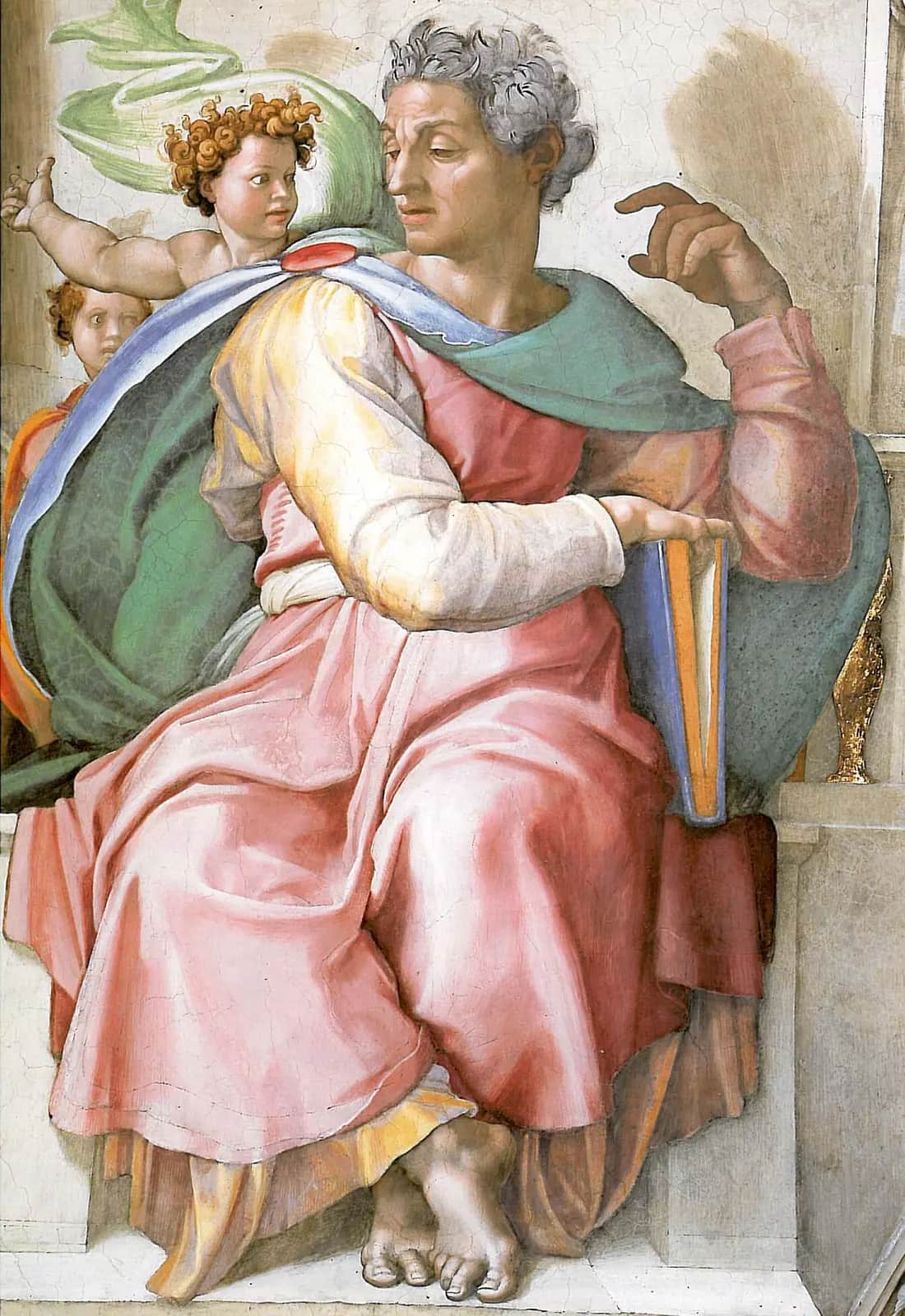
Isaiah 26:17 (WEB)
Just as a woman with child, who draws near the time of her delivery, is in pain and cries out in her pangs, so we have been before you, LORD.
As quoted in the map (KJV)
Isaiah 26:17–19 (KJV)
17 Like as a woman with child, that draweth near the time of her delivery, is in pain, and crieth out in her pangs; so have we been in thy sight, O LORD. 18 We have been with child, we have been in pain, we have as it were brought forth wind; we have not wrought any deliverance in the earth; neither have the inhabitants of the world fallen. 19 Thy dead men shall live, together with my dead body shall they arise. Awake and sing, ye that dwell in dust: for thy dew is as the dew of herbs, and the earth shall cast out the dead.
Key words
- חִילchil · Hebrew
- 'travail' — the writhing of labour pains.
- ὠδίνουσαōdinousa · Greek (LXX)
- 'in birth pangs' — from ōdin (ὠδίν), the word for the 'birth pangs' in Mark 13:8 and for the Woman 'travailing in birth' in Revelation 12:2.
- יִחְיוּ מֵתֶיךָyichyu metekha · Hebrew
- 'thy dead men shall live' (v. 19) — the labour issues in resurrection.
Why it matters
Israel writhes like a woman in labour before the LORD, and the passage ends with the promise that the dead will rise. Pitre uses this to show the prophetic pattern behind the Jewish idea of the 'birth pangs of the Messiah': tribulation that gives birth to salvation and resurrection. Revelation's Woman in labour, and Mary's own travail at the cross, follow this prophetic script.
Fathers and councils · 1
“See the same conception of pain and travail: “Of Thy fear” (saith Isaiah) “we have conceived, we have travailed of the Spirit of salvation.”” — editor's note: Isa. xxvi. 17, 18.
Read the whole comment