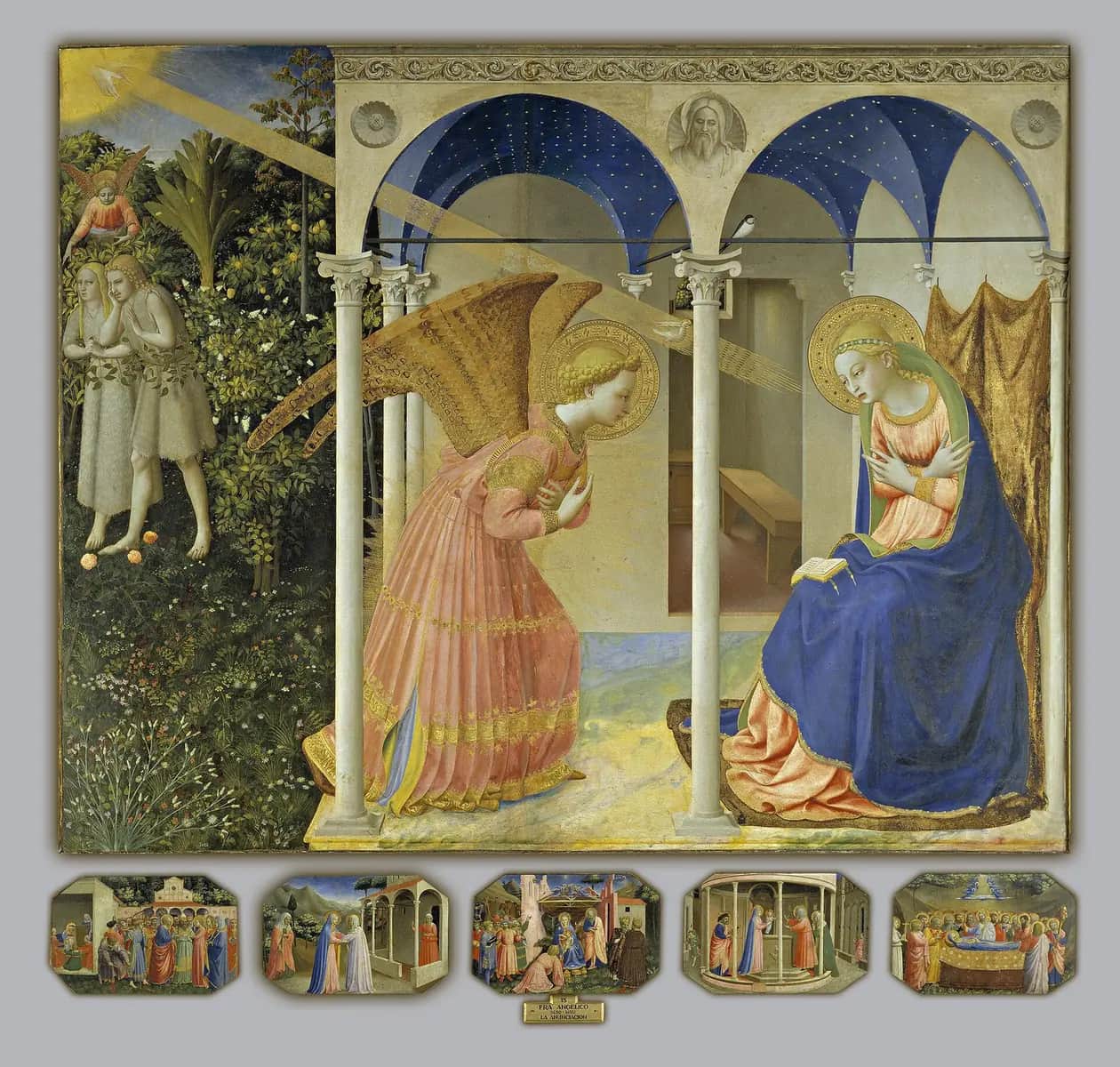
Luke 1:12 (WEB)
Zacharias was troubled when he saw him, and fear fell upon him.
Fathers and councils · 22
Augustine of Hippo
“And Mary abode with her about three months, and returned to her own house.” — editor's note: Luke i. 5–36.
Read the whole commentChapter IX.—Of the Question How It Can Be Shown that the Narrative of the Haul of Fishes Which Luke Has Given Us is Not to Be Identified with the Record of an Apparently Similar Incident Which John Has Reported…
Read the whole comment
Catena Aurea on Luke
- John ChrysostomCatena Aurea on Luke
When Zacharias entered into the temple to offer up prayers to God for all men, interceding between God and man, he saw an angel standing within, as it is said, And there appeared unto him an angel.
Read the whole comment - Ambrose of MilanCatena Aurea on Luke
It is well said that there appeared an angel to Zacharias, who suddenly beheld him; and this is the expression especially used by Divine Scripture with respect to angels or God, that what cannot be seen beforehand…
Read the whole comment - OrigenCatena Aurea on Luke
And we speak thus not only of the present time, but also of the future. When we shall have passed from the world, God will not appear unto all men, nor will the angels, but unto him only who has a clean heart. The…
Read the whole comment - John ChrysostomCatena Aurea on Luke
But the angel evidently came not in a dream, because the tidings he brought were too hard to be understood, and needed therefore a more visible and marvellous manifestation.
Read the whole comment - John DamasceneCatena Aurea on Luke
Angels, however, are revealed not as they really are, but transformed (as men are able to behold them) into whatever the Lord commands.
Read the whole comment - Theophylact of OhridCatena Aurea on Luke
It is said the altar of incense, because the other altar was set apart for burnt offerings.
Read the whole comment - Ambrose of MilanCatena Aurea on Luke
It was not without good reason that the angel appeared in the temple, for the coming of the true High Priest was now announced, and the Heavenly Sacrifice was preparing at which angels were to minister. For one…
Read the whole comment - John ChrysostomCatena Aurea on Luke
The justest of men can not without fear behold an angel; Zacharias therefore, not sustaining the sight of the angel’s presence, nor able to withstand his brightness, is troubled, as it is added, Zacharias was…
Read the whole comment - OrigenCatena Aurea on Luke
A new face suddenly presenting itself to the human eye, troubles and startles the mind. The angel knowing this to be the nature of man, first dispels the alarm, as it follows, But the angel said unto him, Fear not.
Read the whole comment - Athanasius of AlexandriaCatena Aurea on Luke
Whereby it is not difficult to discern between good and bad spirits, for if joy has succeeded to fear, we may know that relief has come from God, because the peace of the soul is a sign of the Divine Presence; but if…
Read the whole comment - OrigenCatena Aurea on Luke
The angel not only soothes his fears, but gladdens him with good tidings, adding, For thy prayer is heard, and thy wife Elisabeth shall bear a son.
Read the whole comment - Augustine of HippoCatena Aurea on Luke
Now here we must first consider that it is not likely that Zacharias, when offering sacrifice for the sins or for the salvation or redemption of the people, would neglect the public petitions, to pray (though himself…
Read the whole comment - John ChrysostomCatena Aurea on Luke
Or it means, that this was to be the proof of his prayer having been heard, namely, that a son should be born to him, crying, Behold the Lamb of God!
Read the whole comment - Theophylact of OhridCatena Aurea on Luke
As if when Zacharias asks, How shall I know this? the angel answers, Because Elisabeth shall bring forth a son, thou shalt believe that the sins of thy people are forgiven.
Read the whole comment - Ambrose of MilanCatena Aurea on Luke
Or, as follows; Divine mercy is ever full and overflowing, not narrowed to a single gift, but pouring in an abundant store of blessings; as in this case, where first the fruit of his prayer is promised; and next,…
Read the whole comment - BedeCatena Aurea on Luke
It is meant as a token of particular merit, when a man has a name given him or changed by God.
Read the whole comment - John ChrysostomCatena Aurea on Luke
Which must be the meaning here, for those who from their earliest years were destined to shine forth in virtue, received their names at the very first from a divine source; while those who were to rise up in later…
Read the whole comment - BedeCatena Aurea on Luke
John is therefore interpreted, “one in whom is grace, or the grace of God;” by which name it is declared, first, that grace was given to his parents, to whom in their old age a son was to be born; next, to John…
Read the whole comment - OrigenCatena Aurea on Luke
For when a just man is born into the world, the authors of his birth rejoice; but when one is born who is to be as it were an exile to labour and punishment, they are struck with terror and dismay.
Read the whole comment - Ambrose of MilanCatena Aurea on Luke
But a saint is not only the blessing of his parents, but also the salvation of many; as it follows, And many shall rejoice at his birth. Parents are reminded here to rejoice at the birth of saints, and to give…
Read the whole comment
Cross-references · 1
Cited together in Ambrose of Milan on Luke 1:11–14 (2) (Catena Aurea).