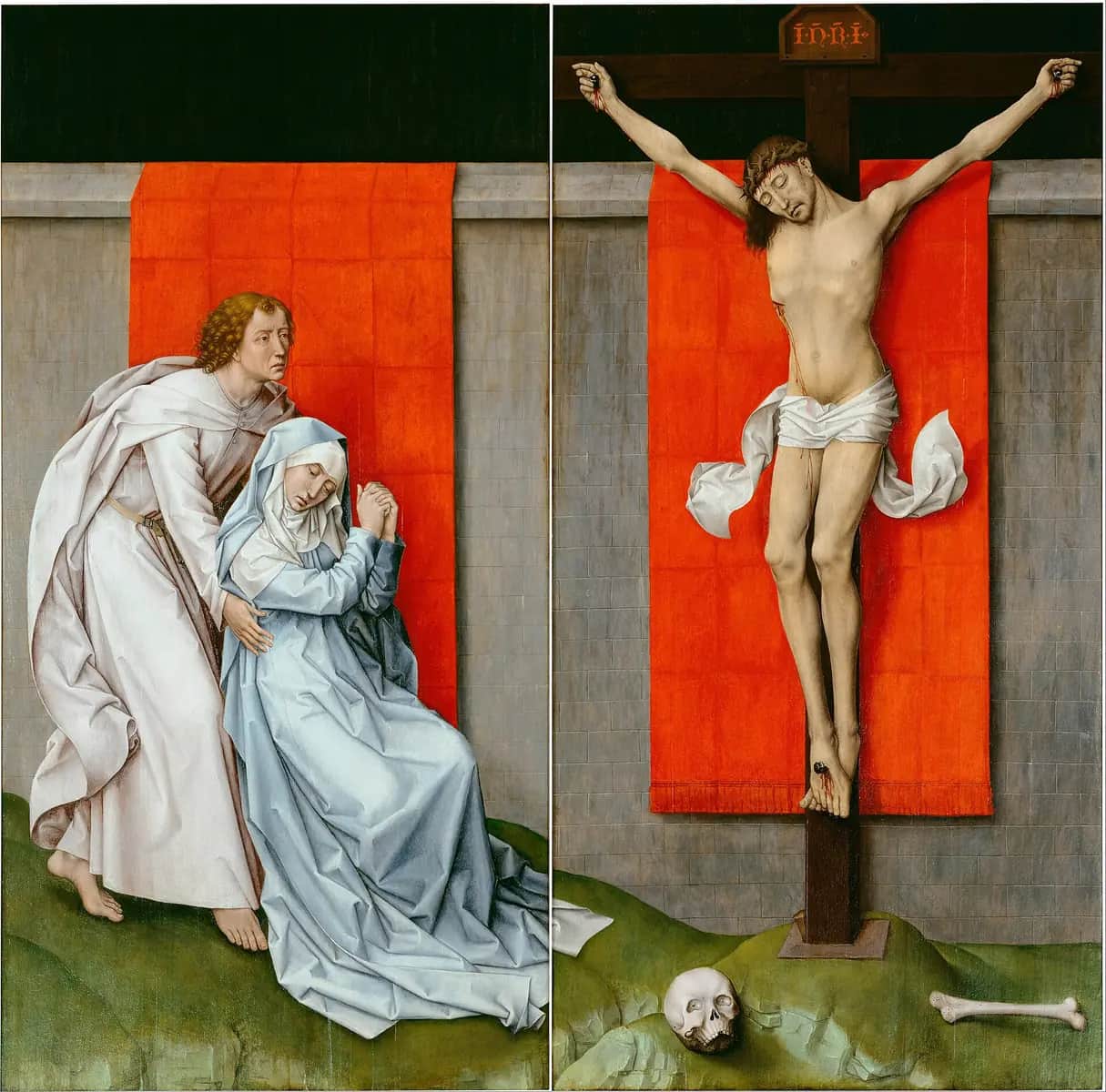
Luke 23:14 (WEB)
and said to them, “You brought this man to me as one that perverts the people, and behold, having examined him before you, I found no basis for a charge against this man concerning those things of which you accuse him.
Fathers and councils · 19
Cyril of Jerusalem
“Yet why now bring the Prophet only as a witness? take for a witness Pilate himself, who gave sentence upon Him, saying, I find no fault in this Man: and when he gave Him up, and had washed his hands, he said, I am innocent of the blood of this just person.” — editor's note: Luke xxiii. 14.
Read the whole comment
Augustine of Hippo
““I find not anything in this Man,” saith the judge, “wherefore He is worthy of death.”” — editor's note: Luke xxiii. 14, 20, 22.
Read the whole comment“…as one that perverteth the people: and, behold, I having examined him before you, have found no fault in this man touching those things whereof ye accuse him.”” — editor's note: Luke xxiii. 13, 14.
Read the whole comment
Ephrem the Syrian
“And at that time there were judges against them, lo, the judges are, as it were, against us, and instead of a handwriting are their commands.” — editor's note: Luke xxiii. 14, 15.
Read the whole comment
Catena Aurea on Luke
- Augustine of HippoCatena Aurea on Luke
Luke returns to those things which were going on before the governor, from which He had digressed in order to relate what took place with Herod; saying as follows, And Pilate, when he had called, &c. from which we…
Read the whole comment - Ambrose of MilanCatena Aurea on Luke
Here Pilate, who as a judge acquits Christ, is made the minister of His crucifixion. He is sent to Herod, sent back to Pilate, as it follows, Nor yet Herod, for I sent you to him, and behold nothing worthy of death…
Read the whole comment - Theophylact of OhridCatena Aurea on Luke
Wherefore by the testimony of two men, Jesus is declared innocent, but the Jews His accusers brought forward no witness whom they could believe. See then how truth triumphs. Jesus is silent, and His enemies witness…
Read the whole comment - BedeCatena Aurea on Luke
Perish then those writings, which, composed so long a time after Christ, convict not the accused of magical arts against Pilate, but the writers themselves of treachery and lying against Christ.
Read the whole comment - Theophylact of OhridCatena Aurea on Luke
Pilate therefore lenient and easy, yet wanting in firmness for the truth, because afraid of being accused, adds, I will therefore chastise him and release him.
Read the whole comment - BedeCatena Aurea on Luke
As if he said, I will subject Him to all the scourgings and mockings you desire, but do not thirst after the innocent blood. It follows, For of necessity he must release one unto them, &c. an obligation not imposed…
Read the whole comment - Theophylact of OhridCatena Aurea on Luke
For the Romans permitted the Jews to live according to their own laws and customs. And it was a natural custom of the Jews to seek pardon of the prince for those who were condemned, as they asked Jonathan of Saul.…
Read the whole comment - Ambrose of MilanCatena Aurea on Luke
Not unreasonably do they seek the pardon of a murderer, who were themselves demanding the death of the innocent. Such are the laws of iniquity, that what innocence hates, guilt loves. And here the interpretation of…
Read the whole comment - BedeCatena Aurea on Luke
Even to this day their request still clings to the Jews. For since when they had the choice given to them, they chose a robber for Jesus, a murderer for a Saviour; rightly lost they both life and salvation, and…
Read the whole comment - Theophylact of OhridCatena Aurea on Luke
Thus it came to pass, the once holy nation rages to slay, the Gentile Pilate forbids slaughter; as it follows, Pilate therefore spoke again unto them, but they cried out, Crucify, &c.
Read the whole comment - BedeCatena Aurea on Luke
With the worst kind of death, that is, crucifixion, they long to murder the innocent. For they who hung on the cross, with their hands and feet fixed by nails to the wood, suffered a prolonged death, that their agony…
Read the whole comment - Theophylact of OhridCatena Aurea on Luke
Three times did Pilate acquit Christ, for it follows, And he said unto them the third time, Why, what evil hath he done? I will chastise him, and let him go.
Read the whole comment - BedeCatena Aurea on Luke
This chastisement wherewith Pilate sought to satisfy the people, lest their rage should go even so far as to crucify Jesus, John’s words bear testimony that he not only threatened but performed together with mockings…
Read the whole comment - Theophylact of OhridCatena Aurea on Luke
They cry out the third time against Christ, that by this third voice, they may approve the murder to be their own, which by their entreaties they extorted; for it follows, And Pilate gave sentence that it should be…
Read the whole comment - John ChrysostomCatena Aurea on Luke
For they thought they could add this, namely, that Jesus was worse than a robber, and so wicked, that neither for mercy’s sake, or by the privilege of the feast, ought He to be let free.
Read the whole comment
Cross-references · 4
Cited together in The Pearl. Seven Hymns on the Faith Hymn 7.
Cited together in The Pearl. Seven Hymns on the Faith Hymn 7.
Cited together in The Pearl. Seven Hymns on the Faith Hymn 7.
Cited together in The Pearl. Seven Hymns on the Faith Hymn 7.