Matthew 27:55 (WEB)
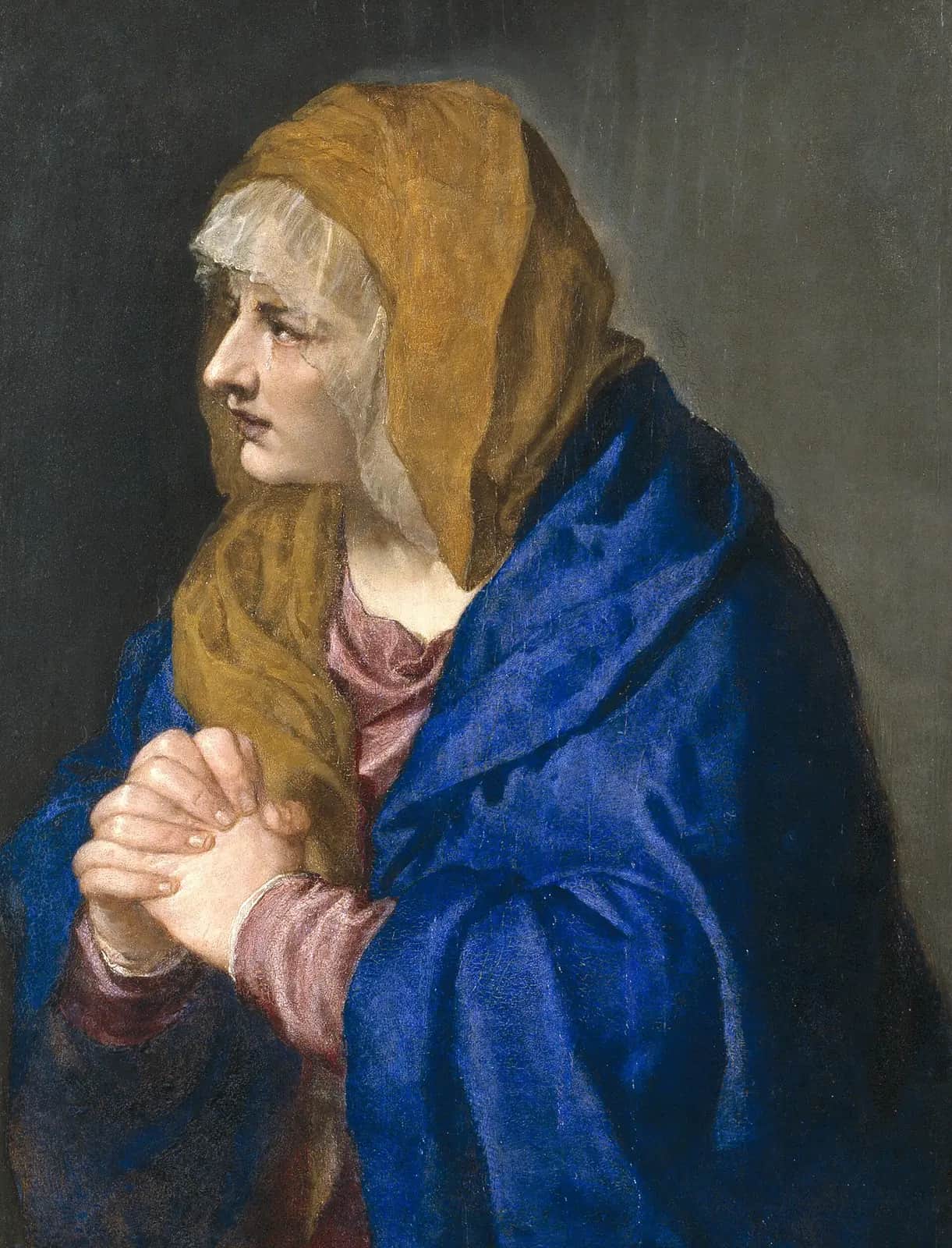
Many women were there watching from afar, who had followed Jesus from Galilee, serving him.
Fathers and councils · 24
Augustine of Hippo
“Matthew proceeds thus: “And many women were there beholding afar off, which followed Jesus from Galilee: among which was Mary Magdalene, and Mary the mother of James and Joseph, and the mother of Zebedee’s children.”” — editor's note: Matt. xxvii. 55, 56.
Read the whole comment
John Chrysostom
““And many women were there beholding afar off, which had followed Him, ministering unto Him, Mary Magdalene, and Mary the mother of James, and Joses, and the mother of Zebedee’s sons.”” — editor's note: Matt. xxvii. 55, 56. [There are three omissions: ἀπ before μακρθεν, τ Ιησο π τ Γαλιλαα, and ἐν α ν.—R.]
Read the whole comment
Catena Aurea on Luke
- JeromeCatena Aurea on Luke
It was a Jewish custom, nor was it thought blameable, according to the ancient manners of that nation, that women should afford of their substance food and clothing to their teachers. This custom, as it might cause…
Read the whole comment
Tertullian
“…not still have the power of eating and drinking; but simply “women,” who used to minister to them in the same way (as they did) when accompanying the Lord.” — editor's note: See Luke viii. 1–3; Matt. xxvii. 55, 56.
Read the whole comment
Jerome
“Matthew says, “And many women were there (doubtless at the Lord’s cross) beholding from afar, which had followed Jesus from Galilee, ministering unto him: among whom was Mary Magdalene, and Mary the mother of James and Joses, and the mother of the sons of Zebedee.”” — editor's note: S. Matt. xxvii. 55, 56. For Joses, Jerome has Joseph.
Read the whole comment
Catena Aurea on Matthew
- OrigenCatena Aurea on Matthew
Great things were done at the moment that Jesus cried with a great voice.
Read the whole comment - Augustine of HippoCatena Aurea on Matthew
The wording sufficiently shews that the veil was rent just when He gave up the ghost. If he had not added, “And, lo!” but had merely said, “And the veil of the temple was rent,: it would have been uncertain whether…
Read the whole comment - OrigenCatena Aurea on Matthew
It is understood that there were two veils; one veiling the Holy of Holies, the other, the outer part of the tabernacle or temple. In the Passion then of our Lord and Saviour, it was the outer veil which was rent…
Read the whole comment - Leo the GreatCatena Aurea on Matthew
The sudden commotion in the elements is a sufficient sign in witness of His venerable Passion, “The earth quaked, and the rocks rent, and the graves were opened.”
Read the whole comment - JeromeCatena Aurea on Matthew
It is not doubtful to any what these great signs signify according to the letter, namely, that heaven and earth and all things should bear witness to their crucified Lord.
Read the whole comment - Hilary of PoitiersCatena Aurea on Matthew
“The earth quaked,” because it was unequal to contain such a body; “the rocks rent,” for the Word of God that pierces all strong and mighty things, and the virtue of the eternal Power had penetrated them; “the graves…
Read the whole comment - John ChrysostomCatena Aurea on Matthew
When He remained on the cross they had said tauntingly, “He saved others, himself he cannot save.” But what He would not do for Himself, that He did and more than that for the bodies of the Saints. For if it was a…
Read the whole comment - JeromeCatena Aurea on Matthew
As Lazarus rose from the dead, so also did many bodies of the Saints rise again to shew forth the Lord’s resurrection; yet notwithstanding that the graves were opened, they did not rise again before the Lord rose,…
Read the whole comment - Remigius of AuxerreCatena Aurea on Matthew
But some one will ask, what became of those who rose again when the Lord rose. We must believe that they rose again to be witnesses of the Lord’s resurrection. Some have said that they died again, and were turned to…
Read the whole comment - OrigenCatena Aurea on Matthew
These same mighty works are still done every day; the veil of the temple is rent for the Saints, in order to reveal the things that are contained within. The earthquakes, that is, all flesh because of the new word…
Read the whole comment - Augustine of HippoCatena Aurea on Matthew
It is no contradiction here that Matthew says, that “The centurion and they that were with him, watching Jesus, feared when they saw the earthquake, and the things that were done;” while Luke says, that he wondered…
Read the whole comment - JeromeCatena Aurea on Matthew
Observe, that in the very midst of the offence of His passion the Centurion acknowledges the Son of God, while Arius in the Church proclaims Him a creature.
Read the whole comment - Rabanus MaurusCatena Aurea on Matthew
Whence with good reason by the Centurion is denoted the faith of the Church, which, when the veil of heavenly mysteries had been rent by the Lord’s death, immediately asserts Jesus to be both very Man, and truly Son…
Read the whole comment - Leo the GreatCatena Aurea on Matthew
From this example then of the Centurion let the substance of the earth tremble in the punishment of it Redeemer, let the rocks of unbelieving minds be rent, and those who were pent up in these sepulchres of mortality…
Read the whole comment - JeromeCatena Aurea on Matthew
It was a Jewish custom, and held no disgrace, according to the manners of the people of old, for women to minister of their substance, food, and clothing to their teachers. This Paul says, that he refused, because it…
Read the whole comment - OrigenCatena Aurea on Matthew
In Mark the third is called Salome.
Read the whole comment - John ChrysostomCatena Aurea on Matthew
These women thus watching the things that are done are the most compassionate, the most sorrowful. They had followed Him ministering, and remained by Him in danger, shewing the highest courage, for when the disciples…
Read the whole comment - JeromeCatena Aurea on Matthew
‘See,’ says Helvidius, ‘Jacob and Joseph are the sons of Mary the Lord’s mother, whom the Jews call the brethren of Christ. [marg. note: Mark 6:3] He is also called James the less, to distinguish him from James the…
Read the whole comment - Augustine of HippoCatena Aurea on Matthew
We might have supposed that some of the women stood “afar off,” as three Evangelists say, and others “near the cross,” as John says, had not Matthew and Mark reckoned Mary Magdalen among those that stood afar off,…
Read the whole comment
Cross-references · 13
Cited together in Harmony of the Gospels III.22.
Cited together in Harmony of the Gospels III.22.
Cited together in Jerome on Luke 8:1–3 (Catena Aurea).
Cited together in Jerome on Luke 8:1–3 (Catena Aurea).
Cited together in Jerome on Luke 8:1–3 (Catena Aurea).
Cited together in Augustine of Hippo on Matthew 27:51–56 (Catena Aurea).
Cited together in Harmony of the Gospels III.22.
Cited together in Harmony of the Gospels III.22.
Cited together in Jerome on Matthew 27:51–56 (5) (Catena Aurea) and 1 other place.
Cited together in Harmony of the Gospels III.22.
Cited together in Harmony of the Gospels III.22.
Cited together in Jerome on Matthew 27:51–56 (5) (Catena Aurea).
Cited together in Jerome on Luke 8:1–3 (Catena Aurea).