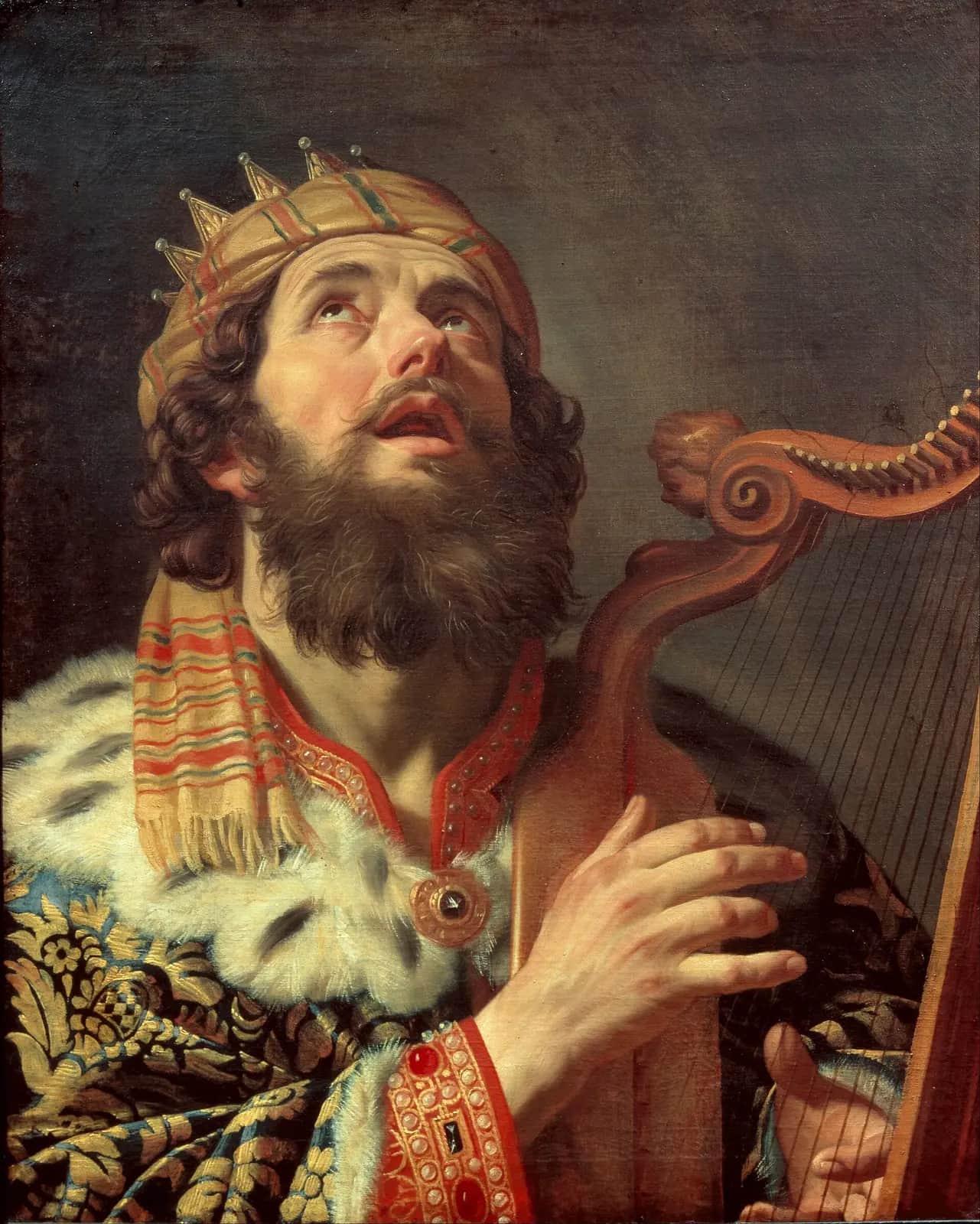
Psalm 50:3 (WEB)
Our God comes, and does not keep silent. A fire devours before him. It is very stormy around him.
Catechism · 1
“But you have placed nothing in their hands; therefore you have found nothing in my presence."” — Catechism footnote: St. Augustine, Sermo 18, 4: PL 38, 130-131; cf. Ps 50:3.
Fathers and councils · 20
Irenaeus of Lyons
“He of whom He has said, “God shall come openly, our God, and shall not keep silence;” that is, the Son, who came manifested to men who said, “I have openly appeared to those who seek Me not.”” — editor's note: Ps. l. 3.
Read the whole comment“…to men; and brings in just judgment and worthy upon all; as David also, clearly pointing to this, says, “Our God shall openly come, and will not keep silence.”” — editor's note: Ps. l. 3, 4.
Read the whole comment
John Damascene
“Some, again, have a prophetic sense, and of these some are in the future tense: for instance, He shall come openly, and this from Zechariah, Behold, thy King cometh unto thee, and this from Micah, Behold, the Lord cometh out of His place and will come down and tread upon the high places of the earth.” — editor's note: Ps. l. 3.
Read the whole comment
Cyril of Jerusalem
“David says, God shall manifestly come, even our God, and shall not keep silence; a fire shall burn before Him, and a fierce tempest round about Him, and the rest.” — editor's note: Ps. l. 3.
Read the whole comment
Augustine of Hippo
“Evidently not: hear what followeth: “God shall come manifest” (ver. 3).” — the author cites it
Read the whole comment“For God shall not be hidden, as before, and in the judgment of men not opening His mouth; but “God shall come manifest, our God, and He shall not be silent.”” — editor's note: Ps. l. 3.
Read the whole comment“Gather His saints together to Him; they who make a covenant with Him over sacrifices.”” — editor's note: Ps. l. 3–5.
Read the whole comment“You have just listened to the Psalm: “God shall come manifestly, and our God shall not keep silence.”” — editor's note: Ps. l. 3.
Read the whole comment““God,” saith the psalm, “will come manifest, our God, and He will not be silent.”” — editor's note: Ps. l. 3.
Read the whole comment“Let us, then, to whom this is ministered, understand that the power of our Lord Jesus Christ, then concealed, will be made manifest in the judgment, of which it is said, “God will come manifest; our God, and He will not be silent.”” — editor's note: Ps. l. 3.
Read the whole comment
John Chrysostom
““There is wrath revealed from heaven against all ungodliness and unrighteousness of men” ( Rom. i. 18 ); “God will come manifestly: a fire will burn before Him, and round about Him will be a mighty tempest.” ( Ps. l. 3.)” — the author cites it
Read the whole comment
Basil the Great
“…imagination, the conclusion of all human life, when the Son of God shall come in His glory with His angels, “For he shall come and shall not keep silence;” when He shall come to judge the quick and dead, to render to every one according to his work; when that terrible trumpet with its mighty voice shall wake those…” — editor's note: Ps. l. 3.
Read the whole comment
Cyprian of Carthage
“Gather His saints together unto Him, who establish His covenant in sacrifices; and the heavens shall declare His righteousness, for God is the Judge.”” — editor's note: Ps. l. 3–6.
Read the whole comment“And the heavens shall announce His righteousness, for God is the judge.”” — editor's note: Ps. l. 1–6.
Read the whole comment
Ambrose of Milan
“We read also: “Blow up the trumpet at the beginning of the month [the new moon]”; and again elsewhere: “Praise Him with the sound of the trumpet.”” — editor's note: Ps. cl. 3.
Read the whole comment“And as there is a light of the divine countenance, so, too, does fire shine forth from the countenance of God, for it is written: “A fire shall burn in His sight.”” — editor's note: Ps. l. [xlix.] 3.
Read the whole comment
John Cassian
“David also: “God will clearly come:” and again: “Thou that sittest above the Cherubim, show Thyself.”” — editor's note: Ps. xlix. (l.) 3; lxxix. (lxxx.) 2.
Read the whole comment“For “God,” says David, “shall plainly come; our God, and shall not keep silence.”” — editor's note: Ps. xlix. (l.) 3.
Read the whole comment
Clement of Alexandria
““And praise Him on the lyre.”” — editor's note: Ps. cl. 3, 5.
Read the whole comment
Hippolytus of Rome
“Moses also, he says, expresses himself thus: “The Lord thy God is a burning and consuming fire.”” — editor's note: Deut. ix. 3; Ps. l. 3; Heb. xii. 29.
Read the whole comment
Cross-references · 27
Cited together in On the Incarnation of the Lord, Against Nestorius V.15.
Cited together in The Refutation of All Heresies VI.27.
Cited together in The Refutation of All Heresies VI.27.
Cited together in The Refutation of All Heresies VI.27.
Cited together in On the Incarnation of the Lord, Against Nestorius V.15.
Cited together in The Refutation of All Heresies VI.27.
Cited together in The Refutation of All Heresies VI.27.
Cited together in The Refutation of All Heresies VI.27.
Cited together in On the Incarnation of the Lord, Against Nestorius V.15.
Cited together in Tractates on the Gospel of John Tractate 37.
Cited together in Against Heresies V.18.
Cited together in Against Heresies V.18.
Cited together in Against Heresies V.18.
Cited together in Against Heresies V.18.
Cited together in Against Heresies V.18.
Cited together in Catechism §1039.
Cited together in Against Heresies V.18.
Cited together in The Instructor II.4.
Cited together in Against Heresies V.18.
Cited together in The Instructor II.4.
Cited together in Against Heresies V.18.
Cited together in The Instructor II.4.
Cited together in The Instructor II.4.
Cited together in The Instructor II.4.
Cited together in The Instructor II.4.
Cited together in The Instructor II.4.
Cited together in The Instructor II.4.