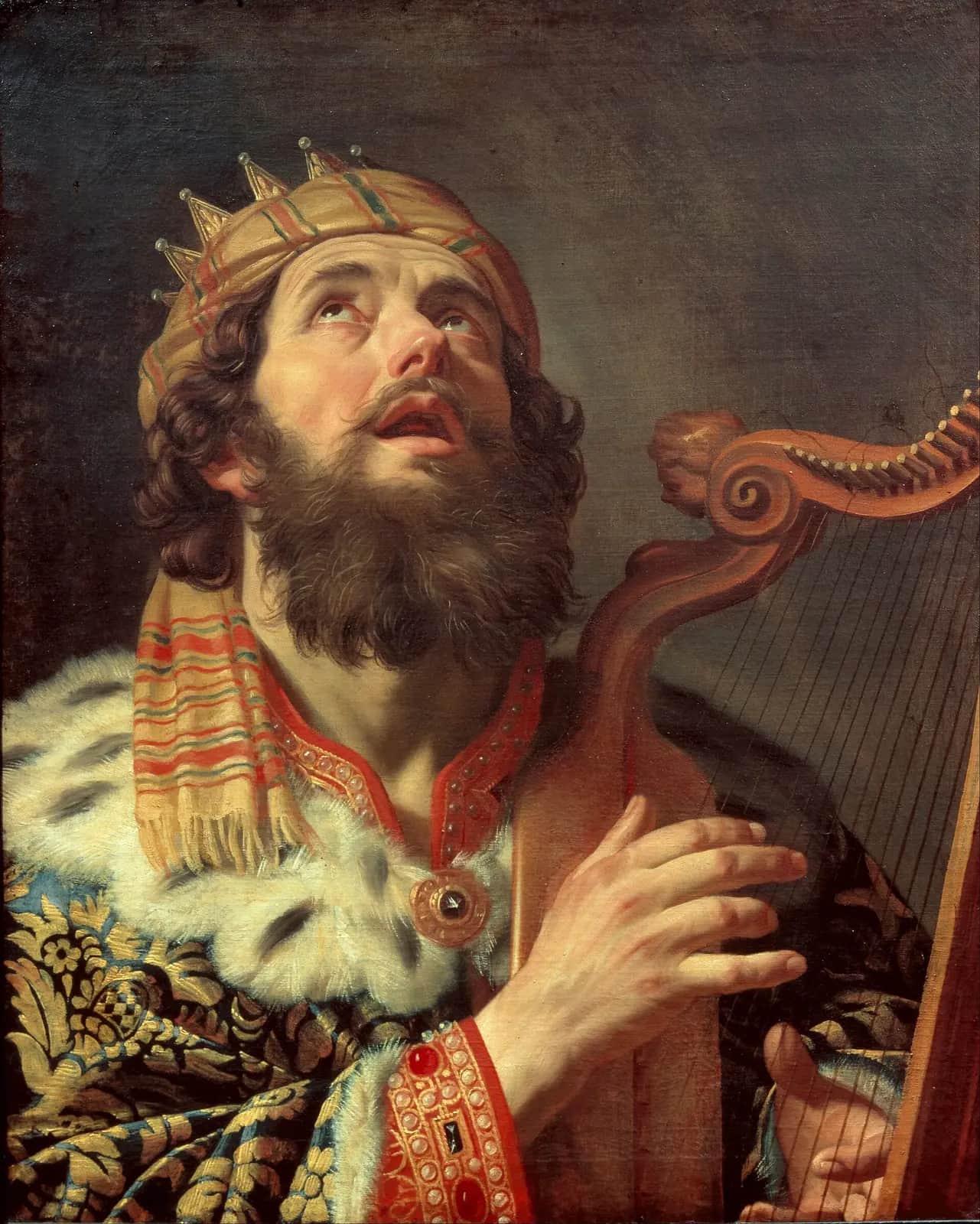
Psalm 51:17 (WEB)
The sacrifices of God are a broken spirit. O God, you will not despise a broken and contrite heart.
Catechism · 2
The Sacrament of Penance and Reconciliation
“It is the movement of a "contrite heart," drawn and moved by grace to respond to the merciful love of God who loved us first.” — Catechism footnote: Ps 51:17; cf. Jn 6:44; 12:32; 1 Jn 4:10.
The First Commandment
“Outward sacrifice, to be genuine, must be the expression of spiritual sacrifice: "The sacrifice acceptable to God is a broken spirit...."” — Catechism footnote: PS 51:17.
Fathers and councils · 26
Irenaeus of Lyons
“The sacrifice of God is a broken spirit; a broken and contrite heart the Lord will not despise.”” — editor's note: Ps. li. 17.
Read the whole comment
Tertullian
“For that it is not by earthly sacrifices, but by spiritual, that offering is to be made to God, we thus read, as it is written, An heart contribulate and humbled is a victim for God;” and elsewhere, “Sacrifice to God a sacrifice of praise, and render to the Highest thy vows.”” — editor's note: See Ps. li. 17 (in LXX. l. 19).
Read the whole comment“Further: since He Himself both commands fasting, and calls “a soul wholly shattered”—properly, of course, by straits of diet—“a sacrifice;” who will any longer doubt that of all dietary macerations the rationale has been this,…” — editor's note: The reference is to Ps. li. 17 (in LXX. Ps. l. 19).
Read the whole comment
Augustine of Hippo
“And who is this but Thee, our God, the sweetness and well-spring of righteousness, who renderest “to every man according to his deeds,” and despisest not “a broken and a contrite heart!”” — editor's note: Ps. li. 17.
Read the whole comment“Those pages contain not the expression of this piety,—the tears of confession, Thy sacrifice, a troubled spirit, “a broken and a contrite heart,” the salvation of the people, the espoused city, the earnest of the Holy Ghost, the cup of our redemption.” — editor's note: Ps. li. 17.
Read the whole comment“He says the same in another Psalm, “the sacrifice for God is a troubled spirit.”” — editor's note: Ps. li. 17.
Read the whole comment“Which be then holocausts that He despiseth not?” — editor's note: Ps. li. 17.
Read the whole comment““Sacrifice to God is a spirit troubled, a heart contrite and humbled God despiseth not” (ver. 17).” — the author cites it
Read the whole comment“Enter with an humble heart into the house of God, and thou hast entered with a present.” — editor's note: Ps. li. 17.
Read the whole comment“But in that place he next showeth what he offereth: “The sacrifice of God is a troubled spirit: a broken and a contrite heart, O God, shalt Thou not despise.” — editor's note: Ps. li. 17.
Read the whole comment“…of us on account of something in which we ourselves have erred or sinned, we should bear in mind not only that a “broken spirit is a sacrifice to God,” but also the saying, “Like as water quencheth fire, so alms sin;” and again, “I will have mercy,” saith He, “rather than sacrifice.”” — editor's note: Ps. li. 17
Read the whole comment“The sacrifice of God is a broken heart: a heart contrite and humble God will not despise.”” — editor's note: Ps. li. 16, 17.
Read the whole comment“And in the act of repentance, where a crime has been committed of such a nature as to cut off the sinner from the body of Christ, we are not to take account so much of the measure of time as of the measure of sorrow; for a broken and a contrite heart God doth not despise.” — editor's note: Ps. li. 17
Read the whole comment
John Chrysostom
“Other things too must be added to humbleness of mind if it be such as the blessed David knew, when he said, “A broken and a contrite heart God will not despise.” ( Ps. li. 17.)” — the author cites it
Read the whole comment“…); “Offer a sacrifice of praise” ( Ps. l. 14 ); and, “a sacrifice of praise shall glorify Me” ( Ps. l. 23 ), and, “the sacrifice of God is a broken spirit” ( Ps. li. 17 ); and “what doth the Lord require of thee but” to hearken to Him? ( Mic. vi. 8.)” — the author cites it
Read the whole comment“It is this last lowliness of mind which that blessed prophet commends, picturing to us the temper that is not merely subdued, but utterly broken, when he saith, “The sacrifice for God is a contrite spirit, a contrite and an humble heart God will not despise.”” — editor's note: Ps. li. 17, LXX.
Read the whole comment“It is a golden altar, and a spiritual place of sacrifice;“For a contrite spirit is a sacrifice to God.”” — editor's note: Ps. li. 17.
Read the whole comment“Hear David saying, “The sacrifice of God is a contrite spirit; a contrite and humbled heart God will not despise.”” — editor's note: Ps. li. 17. [LXX.]
Read the whole comment
Ambrose of Milan
“And so the holy prophet says: “Thou shalt open my mouth, and it shall declare Thy praise.”” — editor's note: Ps. li. [l.] 17.
Read the whole comment
Jerome
“Else would I say of it that it is “a sacrifice…well pleasing to God,” I would cite the words of the psalmist: “the sacrifices of God are a broken spirit,” and those of Ezekiel “I prefer the repentance of a sinner rather than his death,” and those of Baruch, “Arise, arise, O Jerusalem,” and many other…” — editor's note: Ps. li. 17.
Read the whole comment
Cyprian of Carthage
“…with patience and courage whatever happens, since it is written, “The sacrifice to God is a broken spirit; a contrite and humbled heart God does not despise;” since also in Deuteronomy the Holy Spirit warns by Moses, and says, “The Lord thy God will vex thee, and will bring hunger upon thee; and it shall be known in…” — editor's note: Ps. li. 17.
Read the whole comment“Also in the fiftieth Psalm: “The sacrifice to God is a contrite spirit; a contrite and humbled heart God will not despise.”” — editor's note: Ps. li. 17.
Read the whole comment
Gregory the Great
“Hence again it is said, A bruised and humbled heart God doth not despise (Ps. l. 19).” — the author cites it
Read the whole comment
Clement of Alexandria
““The sacrifice of the Lord is,” He says, “a broken heart.”” — editor's note: Ps. li. 17.
Read the whole comment““For the sacrifice of God is a broken spirit.”” — editor's note: Ps. li. 17.
Read the whole comment“I affirm that these virtues “are a sacrifice acceptable in the sight of God;” Scripture alleging that “the humble heart with right knowledge is the holocaust of God;” each man who is admitted to holiness being illuminated in order to indissoluble union.” — editor's note: Ps. li. 17, 19.
Read the whole comment
Cross-references · 35
Cited together in The Book of Pastoral Rule III.31.
Cited together in Expositions on the Psalms Psalm 131.
Cited together in On the Catechising of the Uninstructed Chapter 14.
Cited together in Expositions on the Psalms Psalm 131.
Cited together in Expositions on the Psalms Psalm 131.
Cited together in The Book of Pastoral Rule III.31.
Cited together in The Book of Pastoral Rule III.31.
Cited together in The City of God X.4 and 1 other place.
Cited together in The City of God X.4.
Cited together in The City of God X.4.
Cited together in The City of God X.4.
Cited together in Confessions IV.3.
Cited together in On the Catechising of the Uninstructed Chapter 14.
Cited together in On the Catechising of the Uninstructed Chapter 14.
Cited together in On the Catechising of the Uninstructed Chapter 14.
Cited together in Expositions on the Psalms Psalm 131.
Cited together in Expositions on the Psalms Psalm 131.
Cited together in Catechism §1428.
Cited together in Catechism §1428.
Cited together in Confessions IV.3.
Cited together in The Stromata, or Miscellanies VII.3.
Cited together in The Stromata, or Miscellanies VII.3.
Cited together in The City of God X.4.
Cited together in Confessions IV.3 and 1 other place.
Cited together in The Stromata, or Miscellanies IV.17.
Cited together in Confessions IV.3 and 1 other place.
Cited together in Catechism §1428.
Cited together in The Book of Pastoral Rule III.31.
Cited together in The City of God X.4.
Cited together in Confessions IV.3.
Cited together in The City of God X.4.
Cited together in The City of God X.4.
Cited together in The City of God X.4 and 1 other place.
Cited together in The City of God X.4 and 1 other place.
Cited together in On Fasting Chapter 3.