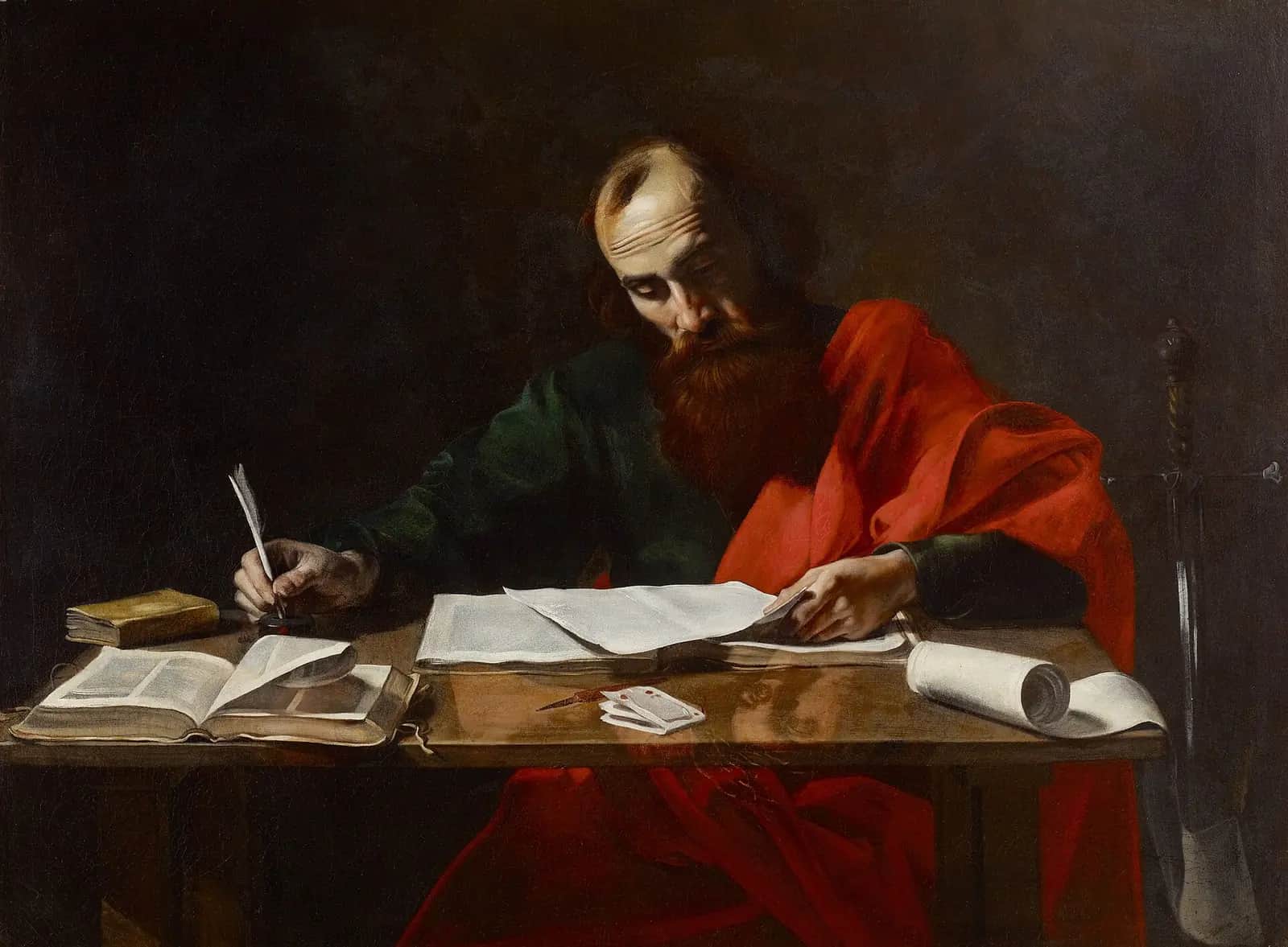
Romans 9:10 (WEB)
Not only so, but Rebekah also conceived by one, by our father Isaac.
Fathers and councils · 6
Irenaeus of Lyons
“…Two nations are in thy womb, and two manner of people are in thy body; and the one people shall overcome the other, and the elder shall serve the younger.”” — editor's note: Rom. ix. 10–13; Gen. xxv. 23.
Read the whole comment
Tertullian
“For thus unto Rebecca did God speak: “Two nations are in thy womb, and two peoples shall be divided from thy bowels; and people shall overcome people, and the greater shall serve the less.”” — editor's note: See Gen. xxv. 21–23, especially in the LXX.; and comp. Rom. ix. 10–13.
Read the whole comment“…Christian with the elder, and the Jew with the younger son, “according to the analogy of faith,” if the order of each people as intimated from Rebecca’s womb permitted the inversion: only that (in that case) the concluding paragraph would oppose them; for it will be fitting for the Christian to rejoice, and not to…” — editor's note: Comp. Rom. ix. 10–13; Gen. xxv. 21–24.
Read the whole commentChapter XIV.—The Divine Power Shown in Christ’s Incarnation. Meaning of St. Paul’s Phrase. Likeness of Sinful Flesh. No Docetism in It. Resurrection of Our Real Bodies. A Wide Chasm Made in the Epistle by Marcion’s…
Read the whole comment
Gregory of Nyssa
- Gregory of Nyssa, On Virginity On Virginity.8On Virginity
“He cohabited with her till the birth of her only children, and then, closing the channels of the senses, lived wholly for the Unseen; for this is what seems to be meant by the mention in his history of the dimness of the Patriarch’s eyes.” — editor's note: μέχρι μιᾶς ὠδῖνος. So perhaps Rom. ix. 10: ῾Ρεβέκκα ἐξ ἑνὸς κοίτην ἔχουσα, i.e. ex uno concubitu. Below, c. 9 (p. 139, c. 11), Gregory uses the same expression…
Read the whole comment
Augustine of Hippo
“The Apostle Paul would have us understand this as a great instance of grace; for the children being not yet born, neither having done any good or evil, the younger is chosen without any good desert and the elder is rejected, when beyond…” — editor's note: Rom. ix. 10–13.
Read the whole comment
Cross-references · 6
Cited together in On Virginity On Virginity.8.
Cited together in On Virginity On Virginity.8.
Cited together in On Virginity On Virginity.8.
Cited together in The City of God XVI.35.
Cited together in On Virginity On Virginity.8.
Cited together in On Virginity On Virginity.8.