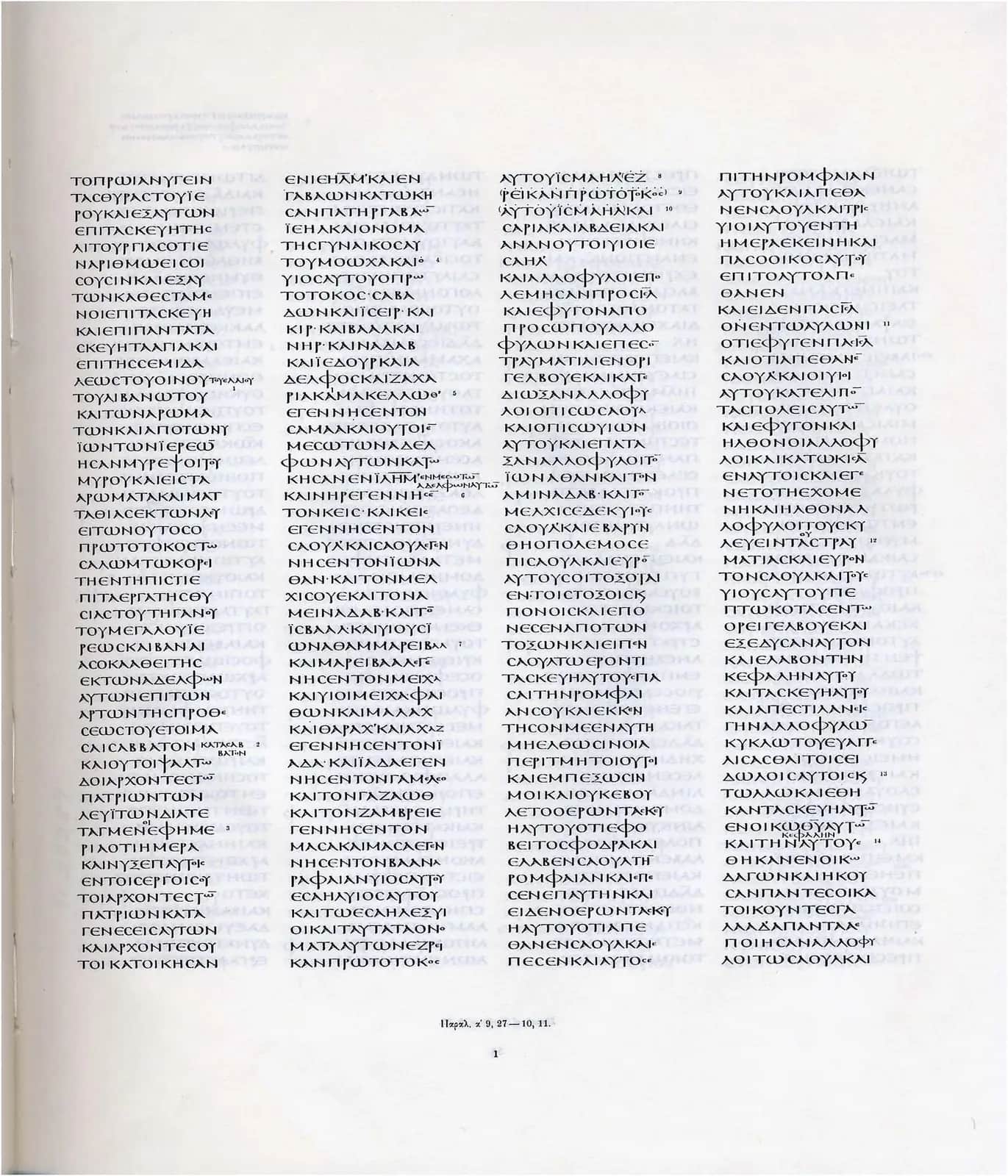
Greek scribe, Codex Sinaiticus, 1 Chronicles 9:27–10:11, 4th century · Public domainGreek scribe, Codex Sinaiticus, 1 Chronicles 9:27–10:11, 4th century
Wisdom 13
WEB · 19 verses · 9 with connections
9 verses cited by the Catechism · 6 verses with comments from the Fathers · 9 verses with cross-references. Tap a marked verse to open its catena.
1
2
3
4
5
6
7
8
9
10But they were miserable, and their hopes were in dead things, who called them gods which are works of men’s hands, gold and silver, skillfully made, and likenesses of animals, or a useless stone, the work of an ancient hand.
11Yes and some woodcutter might saw down a tree that is easily moved, skillfully strip away all its bark, and fashion it in attractive form, make a useful vessel to serve his life’s needs.
12Burning the scraps from his handiwork to cook his food, he eats his fill.
13Taking a discarded scrap which served no purpose, a crooked piece of wood and full of knots, he carves it with the diligence of his idleness, and shapes it by the skill of his idleness. He shapes it in the image of a man,
14or makes it like some worthless animal, smearing it with something red, painting it red, and smearing over every stain in it.
15Having made a worthy chamber for it, he sets it in a wall, securing it with iron.
16He plans for it that it may not fall down, knowing that it is unable to help itself (for truly it is an image, and needs help).
17When he makes his prayer concerning goods and his marriage and children, he is not ashamed to speak to that which has no life.
18Yes, for health, he calls upon that which is weak. For life, he implores that which is dead. For aid, he supplicates that which has no experience. For a good journey, he asks that which can’t so much as move a step.
19And for profit in business and good success of his hands, he asks ability from that which has hands with no ability.