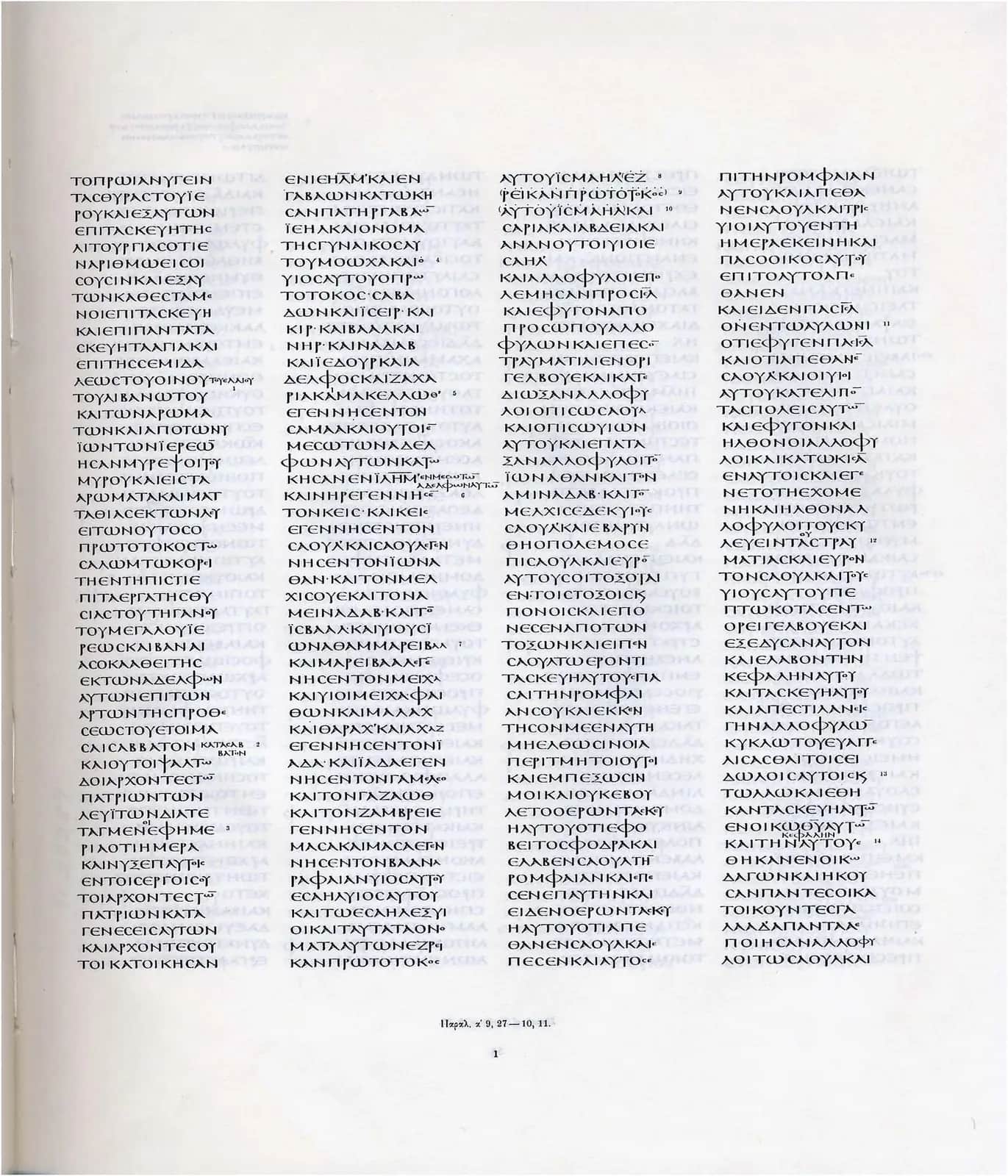
Wisdom 2:12 (WEB)
But let’s lie in wait for the righteous man, because he annoys us, is contrary to our works, reproaches us with sins against the law, and charges us with sins against our training.
Fathers and councils · 8
Cyril of Jerusalem
“Esaias says, Woe unto their soul, for they have taken evil counsel against themselves, saying, Let us bind the Just, for He is troublesome to us.” — editor's note: Isa. iii. 9: (R.V.) they have rewarded evil unto themselves. Say ye of the righteous, that it shall be well with him/ In the Septuagint, from which Cyril…
Read the whole comment
Hippolytus of Rome
“…to our doings and words, and upbraideth us with our offending the law, and professeth to have knowledge of God; and he calleth himself the Child of God.”” — editor's note: Wisd. ii. 1, 12, 13.
Read the whole comment
Athanasius of Alexandria
“For who that looks upon their dispersion, and the desolation of their city, may not aptly say, ‘Woe unto them, for they have imagined an evil imagination, saying against their own soul, let us bind the righteous man, because he is not pleasing to us.’” — editor's note: Is. iii. 9, 10, LXX.; cf. Wisd. ii. 12.
Read the whole comment“And what their end is, the prophet foretold, crying, ‘Woe unto their soul, for they have devised an evil thought, saying, let us bind the just man, because he is not pleasing to us.’” — editor's note: Is. iii. 9, 10; Wisd. ii. 12.
Read the whole comment
Augustine of Hippo
“These things did they imagine, and were mistaken; for their own malice hath quite blinded them.”” — editor's note: Wisd. ii. 12–21.
Read the whole comment
Tertullian
““Come, say they, let us take away the righteous, because He is not for our turn, (and He is clean contrary to our doings).”” — editor's note: Wisd. of Sol. ii. 12.
Read the whole comment
Clement of Alexandria
“Is it not similar to Scripture when it says, “Let us remove the righteous man from us, because he is troublesome to us?” when Plato, all but predicting the economy of salvation, says in the second book of the Republic as follows: “Thus he who is constituted just shall be…” — editor's note: Wisd. ii. 12.
Read the whole comment
Cyprian of Carthage
“For their maliciousness hath blinded them, and they knew not the sacraments of God.”” — editor's note: Wisd. ii. 12–22.
Read the whole comment
Cross-references · 1
The plot against the righteous one who reproaches the wicked.