Now in that which he says, Thou hast killed for him the fatted calf, he confesses that Christ has come, but envy has no wish to be saved.
Reproduced in full. Translation: Oxford 1841 (Newman), public domain (Public domain).
Also cites: Ubi sup.
Search arguments, verses, authorities and passages
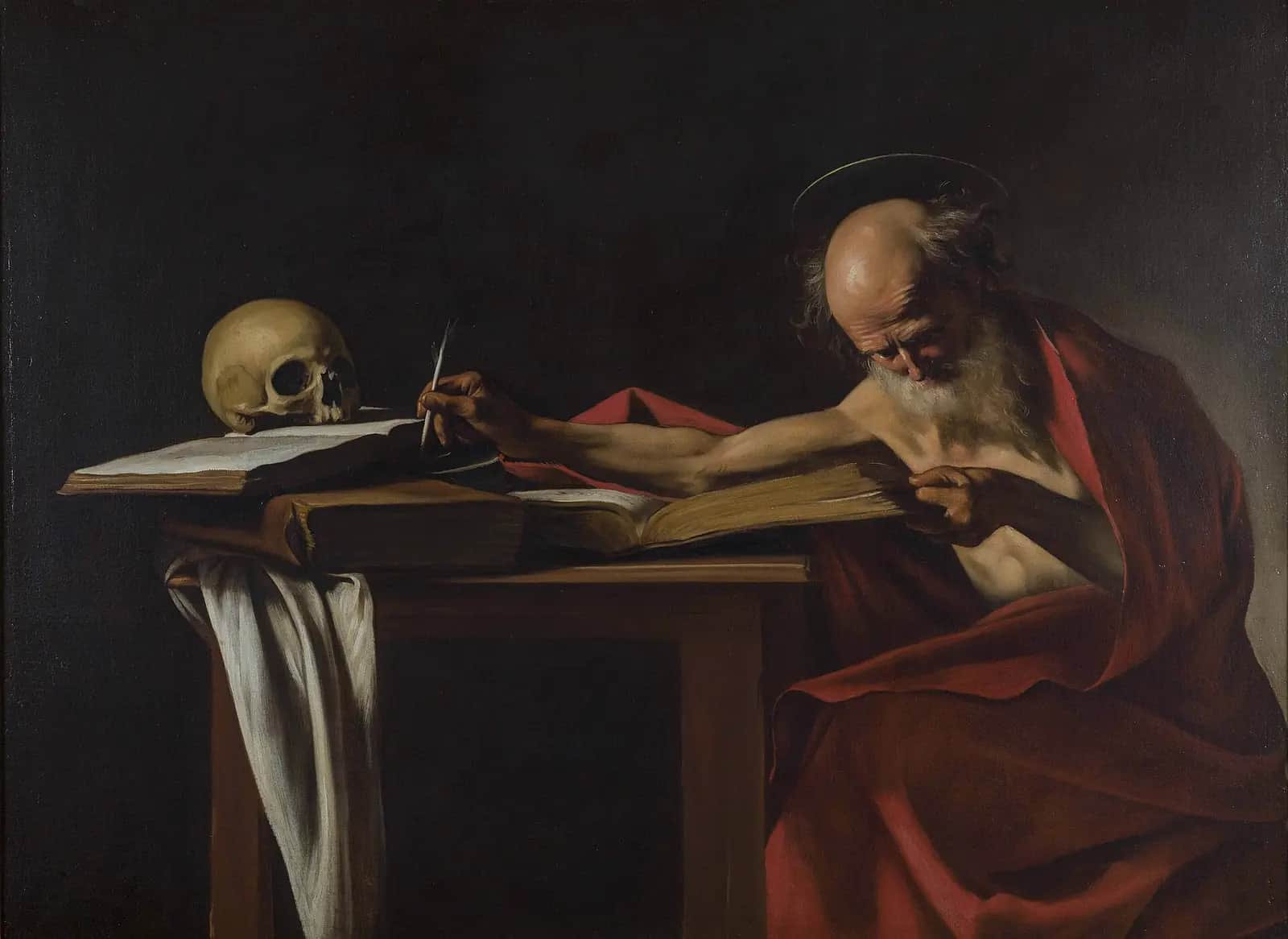
Caravaggio, Saint Jerome Writing, c. 1605–1606 · Galleria Borghese, Rome · Public domainCaravaggio, Saint Jerome Writing, c. 1605–1606, Galleria Borghese, Rome
Now in that which he says, Thou hast killed for him the fatted calf, he confesses that Christ has come, but envy has no wish to be saved.
Reproduced in full. Translation: Oxford 1841 (Newman), public domain (Public domain).
Also cites: Ubi sup.
Hover to trace, click to select, double-click to open.