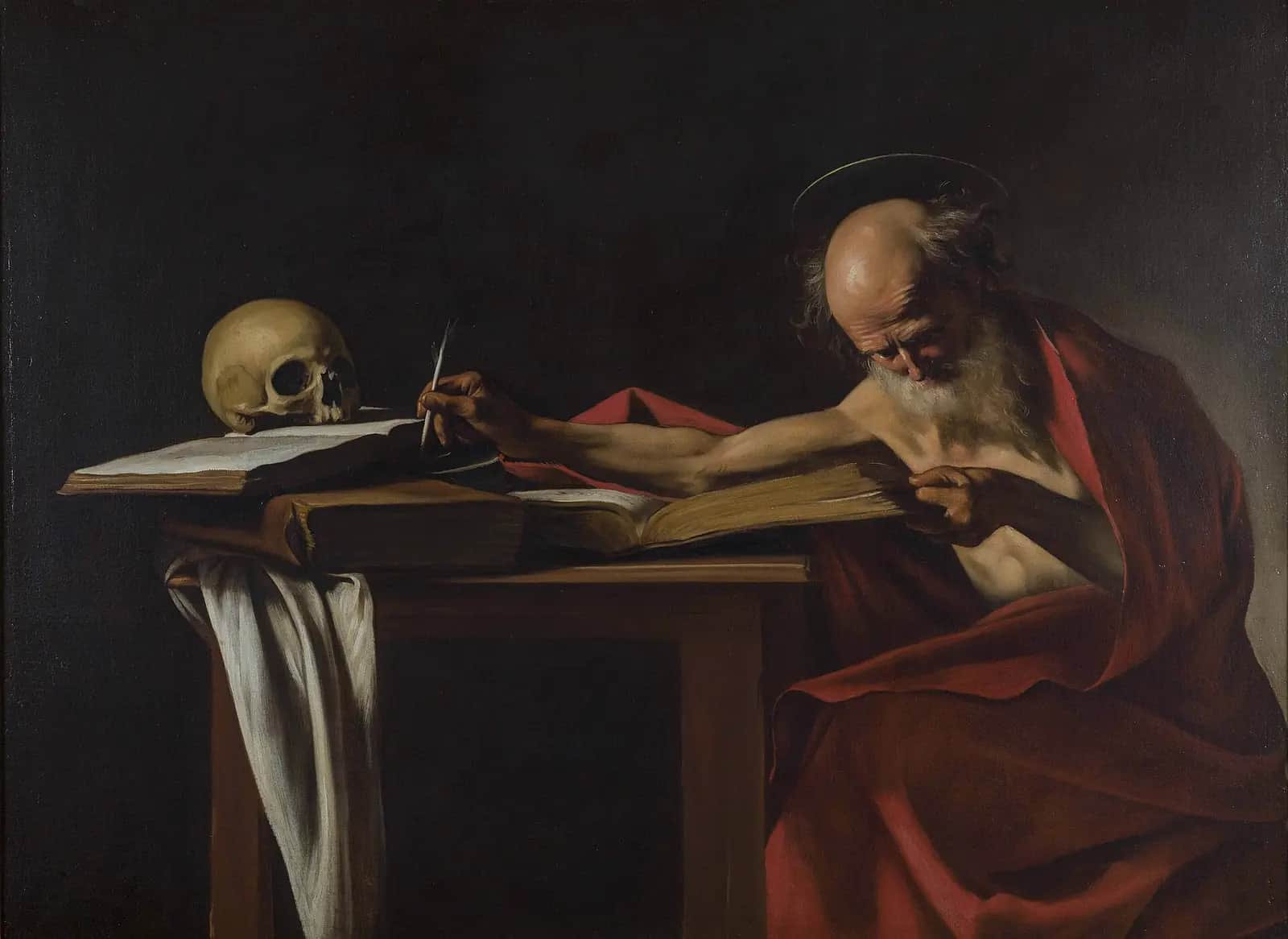
Jerome’s reply to the foregoing. For the second and fourth questions he refers Damasus to the writings of Tertullian, Novatian, and Origen. The remaining three he deals with in detail.
Gen. iv. 15, he understands to mean “the slayer of Cain shall complete the sevenfold vengeance which is to be wreaked upon him.”
Exodus xiii. 18, he proposes to reconcile with Gen. xv. 16, by supposing that in the one place the tribe of Levi is referred to, in the other the tribe of Judah. He suggests, however, that the words rendered by the LXX. “in the fifth generation” more probably mean “harnessed” (so A.V.) or “laden.” In reply to the question about Isaac he says: “No man save Him who for our salvation has deigned to put on flesh has full knowledge and a complete grasp of the truth. Paul, Samuel, David, Elisha, all make mistakes, and holy men only know what God reveals to them.” He then goes on to give a mystical interpretation of the passage suggested by the martyr Hippolytus. Written the day after the previous letter.
Reproduced in full. Translation: Nicene and Post-Nicene Fathers, series 2, vol. 6 (Schaff and Wace, 1893), public domain (Public domain).