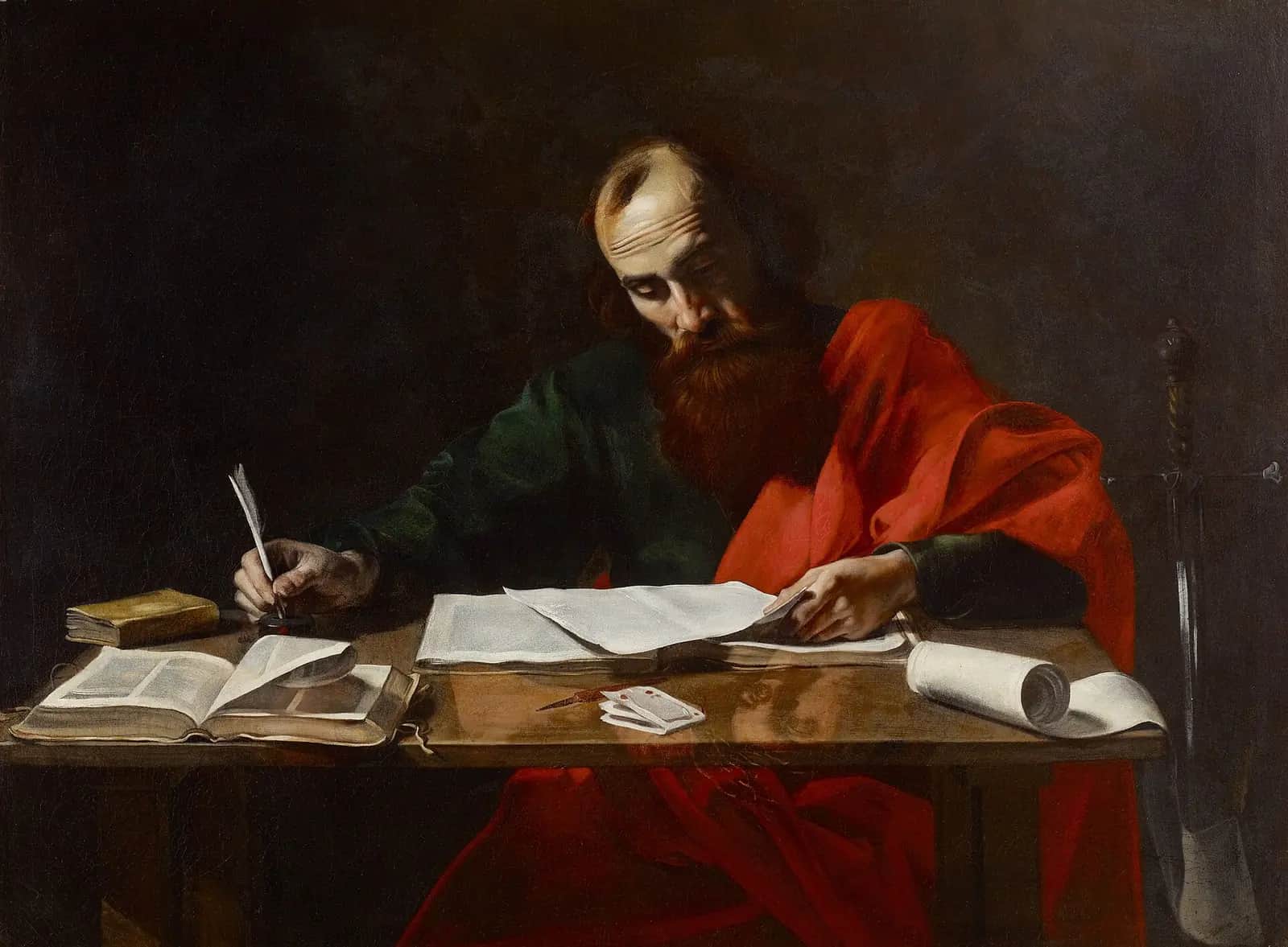
1 Corinthians 7:8 (WEB)
But I say to the unmarried and to widows, it is good for them if they remain even as I am.
Fathers and councils · 17
Jerome
“Then come the words“But I say to the unmarried and to widows, it is good for them if they abide even as I. But if they have not continency, let them marry: for it is better to marry than to burn.”” — editor's note: 1 Cor. vii. 8.
Read the whole comment“And farther on, “I say, therefore, to the unmarried and widows, it is good for them if they abide even as I.” And in another place, “have we not power to lead about wives even as the rest of the apostles?”” — editor's note: 1 Cor. vii. 7, 8.
Read the whole comment“Moreover, when I came to discuss marriage in connection with the following verses, I still adhered to the same view.” — editor's note: 1 Cor. vii. 8–10.
Read the whole comment“To the Corinthians he uses somewhat similar language: “I say therefore to the unmarried and widows, It is good for them if they abide even as I. But if they cannot contain, let them marry: for it is better to marry than to burn.”” — editor's note: 1 Cor. vii. 8, 9.
Read the whole comment
Cyril of Jerusalem
“For it is good for them, saith the Apostle, if they abide even as I. But if they have not continency, let them marry: for it is better to marry than to burn.” — editor's note: 1 Cor. vii. 8, 9.
Read the whole comment
Eusebius of Caesarea
“And Paul does not hesitate, in one of his epistles, to greet his wife, whom he did not take about with him, that he might not be inconvenienced in his ministry.”” — editor's note: The passage to which Clement here refers and which he quotes in this connection is 1 Cor. ix. 5; but this by no means proves that Paul was married, and 1 Cor.…
Read the whole comment
Ambrose of Milan
“And again: “I would that all men were even as I myself;” and once more: “It is good for them if they remain even as I;” and a fourth time: “It is good for the present distress.”” — editor's note: 1 Cor. vii. 8.
Read the whole comment
John Cassian
- John Cassian, Conferences I–X V.11Conference V
“…unmarried and to widows, that it is good for them if they abide even as I. But if they do not contain let them marry: for it is better to marry than to burn;” (3) that which is conceived in heart and mind, of which the Lord says in the gospel: “Whosoever looketh on a woman to lust after her hath already committed…” — editor's note: 1 Cor. vii. 8, 9.
Read the whole comment
Tertullian
“For, withal, when he has laid down the definitive rule with reference to “the widowed and the unwedded,” that they are to “marry if they cannot contain,” because “better it is to marry than to burn,” he turns round to the other class, and says: “But to the wedded I make official declaration—not indeed I, but the Lord.”” — editor's note: 1 Cor. vii. 8, 9.
Read the whole comment““To the unmarried” also, “and widows,” he says, “It is good, by his example, to persevere” (in their present state); “but if they were too weak, to marry; because it is preferable to marry than to bum.”” — editor's note: 1 Cor. vii. 8, 9.
Read the whole comment“For the apostle, although preferring the grace of continence, yet permits the contraction of marriage and the enjoyment of it, and advises the continuance therein rather than the dissolution thereof.” — editor's note: 1 Cor. vii. 7, 8.
Read the whole comment- Tertullian, To His Wife II.1Book II
“Add to this the fact that the apostle, with regard to widows and the unmarried, advises them to remain permanently in that state, when he says, “But I desire all to persevere in (imitation of) my example:” but touching marrying “in the Lord,” he no longer advises, but plainly bids.” — editor's note: 1 Cor. vii. 6–8.
Read the whole comment
Augustine of Hippo
“Therefore (thus) saith the Apostle, the teacher of the Gentiles, the vessel of election, “But I say unto the unmarried and the widows, that it is good for them, if they shall have so continued, even as I also.”” — editor's note: τοῖς, ταῖς: 1 Cor. vii. 8
Read the whole comment“But as, when he says, “But I say unto the unmarried and widows, that it is good for them if they shall have so continued;” assuredly he set down “good” for “better,” since every thing, which, when compared with a good, is called better, this also without doubt is a good; for what…” — editor's note: 1 Cor. vii. 8
Read the whole comment“For you would have done what the Apostle says, after he had said, “It is good for them, if they shall have so continued, even as I;” forsooth he straightway added, “But if they contain not themselves, let them marry; for I had rather that they marry than be burned.”” — editor's note: 1 Cor. vii. 8, 9
Read the whole comment
Gregory of Nazianzus
“He gives laws for slaves and masters, rulers and ruled, husbands and wives, parents and children, marriage and celibacy, self-discipline and indulgence, wisdom and ignorance, circumcision and uncircumcision, Christ and the world, the flesh and the spirit.” — editor's note: 1 Cor. vii. 3, 8, 25, 31.
Read the whole comment
Clement of Alexandria
“Et: “Bonum est manere sicut ego.”” — editor's note: 1 Cor. vii. 8.
Read the whole comment
Cross-references · 14
Cited together in Church History III.30.
Cited together in Church History III.30.
Cited together in On the Good of Widowhood Chapter 11.
Cited together in On the Good of Widowhood Chapter 11.
Cited together in On the Good of Widowhood Chapter 11.
Cited together in On the Good of Widowhood Chapter 11.
Cited together in On the Good of Widowhood Chapter 7.
Cited together in On the Good of Widowhood Chapter 7.
Cited together in On the Good of Widowhood Chapter 7.
Cited together in To His Wife II.1.
Cited together in On the Good of Widowhood Chapter 11.
Cited together in Church History III.30.
Cited together in To His Wife II.1.
Cited together in To His Wife II.1.