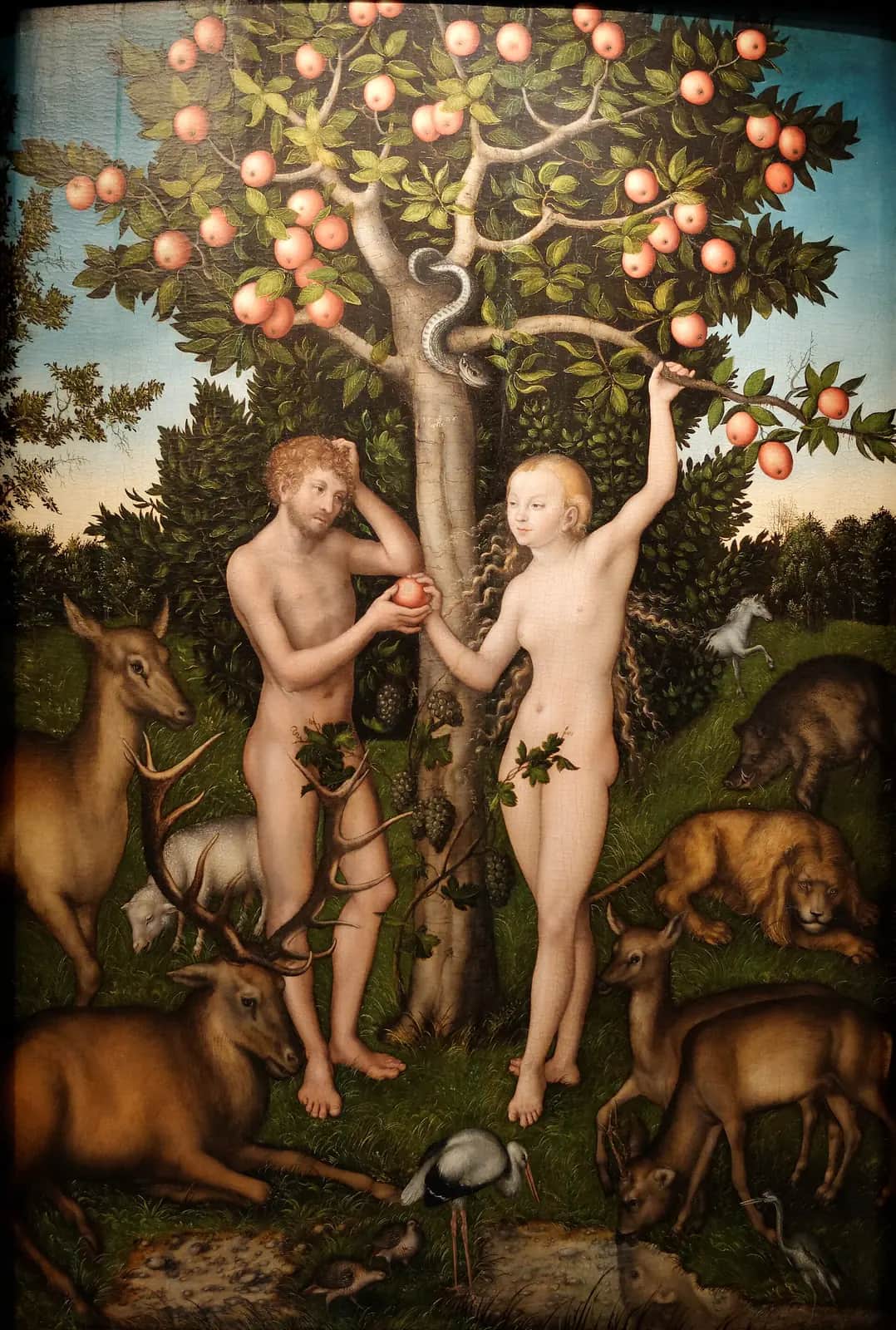
Genesis 2:7 (WEB)
The LORD God formed man from the dust of the ground, and breathed into his nostrils the breath of life; and man became a living soul.
Catechism · 3
Man
“The human person, created in the image of God, is a being at once corporeal and spiritual. the biblical account expresses this reality in symbolic language when it affirms that "then the LORD God formed man of dust from the ground, and breathed into his nostrils the breath of life; and man became a living being."” — Catechism footnote: Gen 2:7.
“"Being man" or "being woman" is a reality which is good and willed by God: man and woman possess an inalienable dignity which comes to them immediately from God their Creator.” — Catechism footnote: Cf. Gen 2:7, 22.
"I Believe in the Holy Spirit"
“The Word of God and his Breath are at the origin of the being and life of every creature:” — Catechism footnote: Cf. Pss 33:6; 104:30; Gen 1:2; 2:7; Eccl 3:20-21; Ezek 37:10.
Fathers and councils · 42
Tertullian
“We relied even there on the clear direction of the inspired statement which informs us how that “the Lord God breathed on man’s face the breath of life, so that man became a living soul”—by that inspiration of God, of course.” — editor's note: Gen. ii. 7.
Read the whole comment“Since God forms us in the womb, He also breathes upon us, as He also did at the first creation, when “the Lord God formed man, and breathed into him the breath of life.”” — editor's note: Gen. ii. 7.
Read the whole comment“It next reveals how He made him: “And (the Lord) God formed man of the dust of the ground, and breathed into his nostrils the breath of life; and man became a living soul.”” — editor's note: Gen. ii. 7.
Read the whole comment“It says that “God made man of the dust of the ground and breathed into his nostrils the breath of life, and man became a living soul.”” — editor's note: Gen. ii. 7.
Read the whole comment“The earth was still in a virgin state, reduced as yet by no human labour, with no seed as yet cast into its furrows, when, as we are told, God made man out of it into a living soul.” — editor's note: Gen. ii. 7.
Read the whole comment“Remember, too, that man is properly called flesh, which had a prior occupation in man’s designation: “And God formed man the clay of the ground.”” — editor's note: Limum de terra: Gen. ii. 7.
Read the whole comment“For in order that you may understand it in this sense, he points to this same conclusion, when in like manner, on the authority of the same passage of Scripture, he displays to us “the first man Adam as made a living soul.”” — editor's note: Compare ver. 45 with Gen. ii. 7.
Read the whole comment“Besides, what else is man than flesh, since no doubt it was the corporeal rather than the spiritual element from which the Author of man’s nature gave him his designation?” — editor's note: הָאָרָם, homo, from הָאֲרַמָה, humus, the ground; see the Hebrew of Gen. ii. 7.
Read the whole comment“In fact, the Scripture, by expressly saying that God breathed into man’s nostrils the breath of life, and that man became thereby a living soul, not a life-giving spirit, has distinguished that soul from the condition of the Creator.” — editor's note: Gen. ii. 7.
Read the whole comment
Origen
- Origen, Against Celsus IV.37Book IV
“For the Scripture, speaking of the “fashioning” of the man, says, “And breathed into his face the breath of life, and the man became a living soul.”” — editor's note: Gen. ii. 7; Heb. ויפָאַפְ, LXX. πρόσωπον.
Read the whole comment “For it is not by receiving the breath of life that He is made a Son, by any outward act, but by His own nature.” — editor's note: Per adoptionem Spiritus. The original words here were probably εἰσποίησις τοῦ πνεύματος, and Rufinus seems to have mistaken the allusion to Gen. ii. 7. To…
Read the whole comment“But here we must see whether this does not bear the same meaning with the expression in Genesis: “And He breathed into his face the breath of life, and man became a living soul.”” — editor's note: Gen. ii. 7.
Read the whole comment- Origen, De Principiis II.8Book II
“And now with respect to man, although no one entertains any doubt, or needs to inquire, yet holy Scripture declares that “God breathed into his countenance the breath of life, and man became a living soul.”” — editor's note: Gen. ii. 7, animam viventem.
Read the whole comment
Irenaeus of Lyons
“Wherefore also the prophetic word declares of the first-formed man, “He became a living soul,” teaching us that by the participation of life the soul became alive; so that the soul, and the life which it possesses, must be understood as being separate existences.” — editor's note: Gen. ii. 7.
Read the whole comment“And this is He of whom the Scripture says, “And God formed man, taking clay of the earth, and breathed into his face the breath of life.”” — editor's note: Gen. ii. 7.
Read the whole comment“For, as the Scripture says, He made [man] by a kind of process: “And the Lord took clay from the earth, and formed man.”” — editor's note: Gen. ii. 7.
Read the whole comment
Cyril of Jerusalem
“This was the second time He breathed on man (His first breath having been stifled through wilful sins); that the Scripture might be fulfilled, He went up breathing upon thy face, and delivering thee from affliction.” — editor's note: Gen. ii. 7: and breathed into his nostrils the breath of life. Compare Cat. xiv. 10.
Read the whole comment“Go to the first book of the Scripture, which even you receive; And God formed man of the dust of the ground.” — editor's note: Gen. ii. 7.
Read the whole comment
Augustine of Hippo
“And hereby, in Thy Word, not the depth of the sea, but the earth parted from the bitterness of the waters, bringeth forth not the creeping and flying creature that hath life, but the living soul itself.” — editor's note: Gen. ii. 7.
Read the whole comment“For out of clay man hath been made.” — editor's note: Gen. ii. 7.
Read the whole comment“For the Scripture uses this word, where we read, God made, or “God formed man out of the dust of the ground.”” — editor's note: Gen. ii. 7.
Read the whole comment“He wished thus to show what the animated body is, though Scripture did not say of the first man Adam, when his soul was created by the breath of God, “Man was made in an animated body,” but “Man was made a living soul.”” — editor's note: Gen. ii. 7.
Read the whole comment“Some have hastily supposed from the words, “God breathed into Adam’s nostrils the breath of life, and man became a living soul,” that a soul was not then first given to man, but that the soul already given was quickened by the Holy Ghost.” — editor's note: Gen. ii. 7.
Read the whole comment
Theodoret of Cyrus
“For it is written God took dust from the earth and “formed man,” and “breathed into his nostrils the breath of life, and man became a living soul.”” — editor's note: Gen. ii. 7
Read the whole comment“For we read “And the Lord God formed man of the dust of the ground and breathed into his nostrils the breath of life and man became a living soul.”” — editor's note: Gen. ii. 7
Read the whole comment
Hippolytus of Rome
“Gen. ii. 7 “And God formed man of the dust of the ground.”” — the author cites it
Read the whole comment“And He formed him not uncompounded, but twofold, according to (His own) image and likeness.” — editor's note: Gen. ii. 7.
Read the whole comment“This is what has been declared: “And God formed man, taking clay from the earth, and breathed upon his face the breath of life, and man was made into a living soul.”” — editor's note: Gen. ii. 7.
Read the whole comment
John Chrysostom
“And as in the beginning earth was the subject material, but the whole was of Him who molded it; so also now water is the subject material, and the whole is of the grace of the Spirit: then, “man became a living soul,” ( Gen. ii. 7 ); now he becomes “a quickening Spirit.”” — the author cites it
Read the whole comment
Jerome
“Man is formed out of clay and God holds the mystic waters in the hollow of his hand.” — editor's note: Gen. ii. 7.
Read the whole comment
Basil the Great
“And He did not leave Him when He had risen from the dead; for when renewing man, and, by breathing on the face of the disciples, restoring the grace, that came of the inbreathing of God, which man had lost, what did the Lord say?” — editor's note: Gen. ii. 7, lxx. is ἐνεφύσησεν εἰς τὸ πρόσωπον αὐτοῦ. “εἰς τὸ πρόσωπον” is thence imported into John xx. 22. Mr. C.F.H. Johnston notes, “This addition…is found…
Read the whole comment
Gregory of Nyssa
- Gregory of Nyssa, On the Making of Man On the.29On the Making of Man
“…soul is second to the body in order of time, since God first took dust from the earth and formed man, and then animated the being thus formed by His breath: and by this argument they prove that the flesh is more noble than the soul; that which was previously formed than that which was afterwards infused into it:…” — editor's note: Cf. Gen. ii. 7
Read the whole comment “For since from no other source than from the concrete lump of our nature had come that flesh, which was the receptacle of the Godhead and in the resurrection was raised up together with that Godhead, therefore just in the same way…” — editor's note: Cf. Rom. ix. 21: φύραμα is used for the human body often in the Greek Fathers, i.e. Athanasius, Chrysostom, John Damascene: by all of whom Christ is called…
Read the whole comment
Gregory of Nazianzus
“This is the reason for the generation and the virgin, for the manger and Bethlehem; the generation on behalf of the creation, the virgin on behalf of the woman, Bethlehem because of Eden, the manger because of the garden, small and visible things on behalf of great and hidden things.” — editor's note: Lit. “of the formation”—the substantive here corresponds to the verb in Gen. ii. 7 (LXX.).
Read the whole comment“For in Him we live and move and have our being, according to the double power of that Breathing into us; for we were all inspired by Him with breath, and as many of us as were capable of it, and in so far as we open the mouth of our mind, with God the Holy Ghost.” — editor's note: Gen. ii. 7.
Read the whole comment“…visible and the invisible creations, I mean—fashions Man; and taking a body from already existing matter, and placing in it a Breath taken from Himself which the Word knew to be an intelligent soul and the Image of God, as a sort of second world.” — editor's note: Gen. ii. 7.
Read the whole comment“…various ways in pursuit of shameful thoughts and fancies, ever since they drove us away from the Tree of Life, by means of the Tree of Knowledge unseasonably and improperly imparted to us, and then assailed us as now weaker than before; carrying clean away the mind, which is the ruling power in us, and opening a…” — editor's note: cf. Orat. in Theoph. c. 12. The explanation seems to be, that the “Knowledge of good and evil” was a necessary part of the development of man’s intellect, but…
Read the whole comment“My Lord Jesus Christ has showed that He honoured all these births in His own Person; the first, by that first and quickening Inbreathing; the second by His Incarnation and the Baptism wherewith He Himself was baptized; and the third by the Resurrection of which He was the Firstfruits;…” — editor's note: Gen. ii. 7.
Read the whole comment
Catena Aurea on Matthew
- OrigenCatena Aurea on Matthew
“…and of bright clouds at the Consummation; wherefore it is here said, “in the clouds of heaven,” as it was there said, “of the clay of the ground.” [Gen 2:7]” — the author cites it
Read the whole comment
Aphrahat
“For in the first birth they are born with an animal souls which is created within man and is not thereafter subject to death, as he said:—Adam became a living soul.” — editor's note: Gen. ii. 7.
Read the whole comment“For with His holy hands He fashioned them; and of His Spirit He breathed into them, and a dwelling-place did He become unto them from of old.” — editor's note: Gen. ii. 7 ; Ps. xc. 1.
Read the whole comment
Leo the Great
“For the first man received the substance of flesh from the earth, and was quickened with a rational spirit by the in-breathing of his Creator, so that living after the image and likeness of his Maker, he might preserve the form of God’s goodness and righteousness as in a bright mirror.” — editor's note: Cf. 1 Cor. xv. 45, and Gen. ii. 7.
Read the whole comment
Cross-references · 49
Cited together in A Treatise on the Soul Chapter 26.
Cited together in A Treatise on the Soul Chapter 26.
Cited together in Against Celsus IV.37.
Cited together in The Great Catechism Chapter 34.
Cited together in Against Heresies II.34.
Cited together in Catechism §703.
Cited together in Catechism §703.
Cited together in Against Heresies II.34.
Cited together in Against Heresies II.34.
Cited together in The Refutation of All Heresies VI.9.
Cited together in The Refutation of All Heresies VI.9.
Cited together in Catechism §703.
Cited together in Catechism §703.
Cited together in Against Celsus IV.37.
Cited together in A Treatise on the Soul Chapter 3.
Cited together in Against Heresies V.15.
Cited together in Against Heresies V.15.
Cited together in Against Heresies V.15.
Cited together in Against Heresies V.15 and 2 other places.
Cited together in Against Heresies V.15.
Cited together in Catechism §703.
Cited together in Against Heresies V.15.
Cited together in Homilies on John Homily 24.
Cited together in A Treatise on the Soul Chapter 26.
Cited together in A Treatise on the Soul Chapter 26.
Cited together in A Treatise on the Soul Chapter 26.
Cited together in A Treatise on the Soul Chapter 26.
Cited together in Against Heresies II.34.
Cited together in Against Heresies II.34.
Cited together in Against Heresies V.15.
Cited together in Against Heresies V.15.
Cited together in Against Heresies V.15.
Cited together in Homilies on John Homily 24.
Cited together in A Treatise on the Soul Chapter 3.
Cited together in The Great Catechism Chapter 34.
Cited together in The Five Books Against Marcion II.9.
Cited together in A Treatise on the Soul Chapter 3.
Cited together in The Refutation of All Heresies VI.9.
Cited together in The Five Books Against Marcion I.23.
Cited together in Homilies on John Homily 24 and 1 other place.
Cited together in On the Resurrection of the Flesh Chapter 53.
Cited together in On the Resurrection of the Flesh Chapter 53.
Cited together in The Refutation of All Heresies VI.29.
Cited together in The Great Catechism Chapter 34 and 1 other place.
Cited together in Catechism §703 and 2 other places.
Cited together in Against Hermogenes Chapter 26.
Cited together in Against Heresies V.15.
Cited together in Against Hermogenes Chapter 26 and 1 other place.
Cross-reference given by the World English Bible's translators.