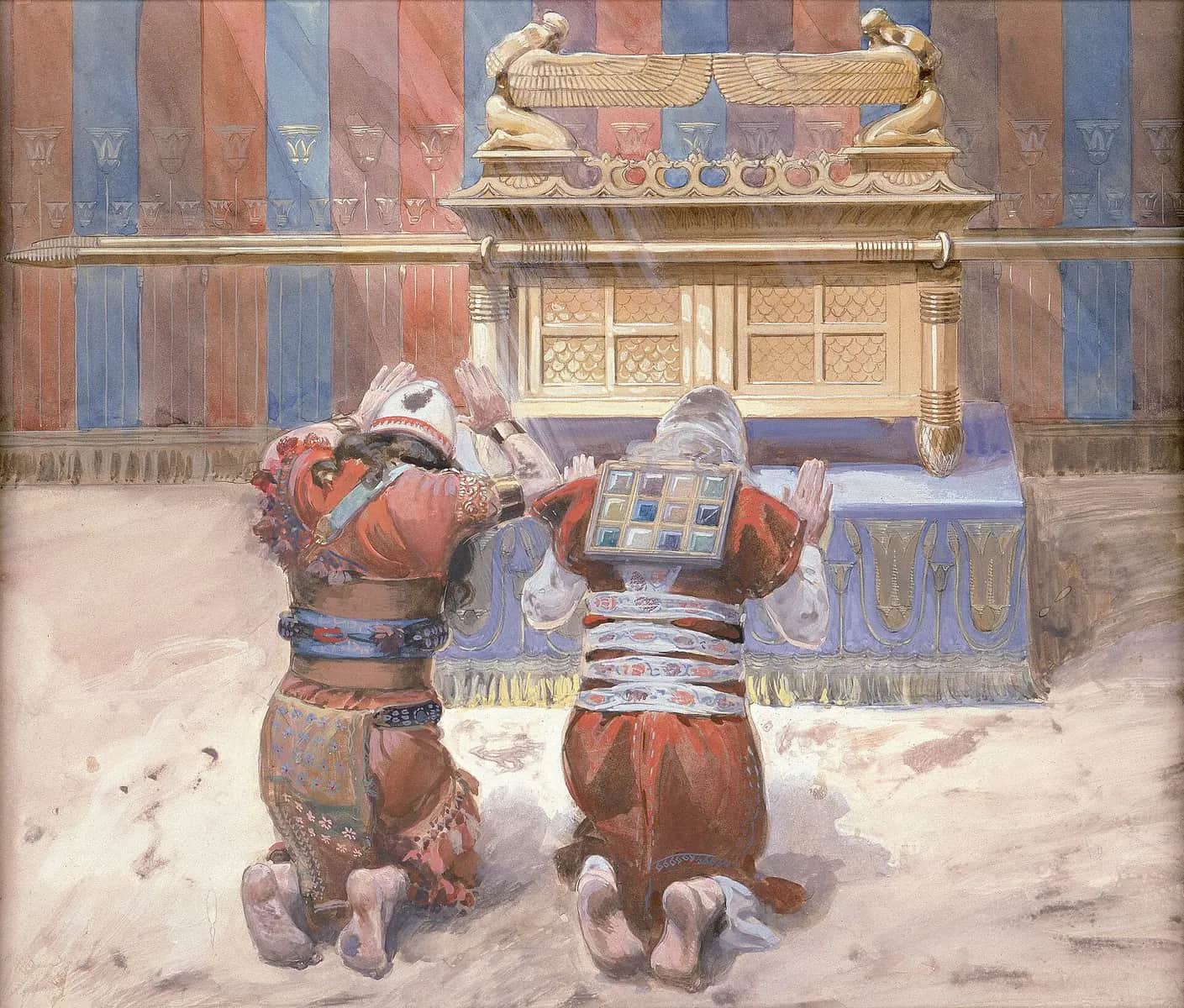
Hebrews 11:1 (WEB)
Now faith is assurance of things hoped for, proof of things not seen.
Catechism · 1
“Abraham thus fulfils the definition of faith in Hebrews 11:1: "Faith is the assurance of things hoped for, the conviction of things not seen":” — Catechism footnote: Heb 11:1
Fathers and councils · 20
Gregory of Nyssa
“Why are they baptized into Christ, if He has no power of goodness of His own?” — editor's note: Τί γὰρ βαπτίζονται εἰς Χριστὸν. This throws some light on the much discussed passage, ‘Why are these baptized for the dead?’ Gregory at all events seems here…
Read the whole comment“To say that the heavens and the earth and other contents of creation were out of things which are not, or, as the Apostle says, out of “things not seen,” inflicts no dishonour upon the Maker of this universe; for we know from Scripture that all these things are not from everlasting nor will remain for ever.” — editor's note: Heb. xi. 1; 2 Cor. iv. 18.
Read the whole comment“…the being of the Deity to that, since time’s lapse sweeps away with it all existence in the past, whereas expected existence gains substance from our hope.” — editor's note: Cf. Heb. xi. 1, of faith, ἐλπιζομένων ὑπόστασις πραγμάτων
Read the whole comment“…things hoped for is not to be had; and faith in the same way is a support in the uncertainty about the things hoped for; for so he defines it—“the substance of things hoped for”; but when the thing hoped for actually comes, then all other faculties are reduced to quiescence, and love alone remains active, finding…” — editor's note: ὑπόστασις Heb. xi. 1.
Read the whole comment
John Damascene
“But again, faith is the substance of things hoped for, the evidence of things not seen, or undoubting and unambiguous hope alike of what God hath promised us and of the good issue of our prayers.” — editor's note: Heb. xi. 1.
Read the whole comment
Cyril of Jerusalem
“Hebrews xi. 1, 2” — the author cites it
Read the whole comment
Ambrose of Milan
“For, “faith is the substance of things hoped for, the evidence of things not seen.”” — editor's note: Heb. xi. 1.
Read the whole comment
Theodoret of Cyrus
“…even be conceived by the mind; while the fact that the world was created out of the non-existent involves a later and fresh genesis of its essential nature, all things having been endowed with such an origin of existence by the Father through the Son.” — editor's note: The history of the word ὑπόστασις is of crucial value in the study of the Arian controversy. Its various usages may be classified as (i) Classical; (ii)…
Read the whole comment
Catena Aurea on John
- Gregory the GreatCatena Aurea on John
“But when the Apostle says, Faith is the substance of things hoped for, the evidence of things not seen, (Heb. 11:1) it is plain that things which are seen, are objects not of faith, but of knowledge.” — the author cites it
Read the whole comment
John Chrysostom
“[4.] ( c. xi. 1, 2 ) “Now faith is the substance of things hoped for, the evidence of things not seen.” — the author cites it
Read the whole comment“…just shall live by faith” ( c. x. 38 ); afterwards from arguments, saying, “But Faith is the substance of things hoped for, the evidence of things not seen.” ( c. xi. 1.)” — the author cites it
Read the whole comment“For this is of faith, to receive things not seen; since,“Faith is the substance of things hoped for, the evidence of things not seen.” ( Heb. xi. 1.)” — the author cites it
Read the whole comment
Tertullian
“We ought indeed to walk so holily, and with so entire substantiality of faith, as to be confident and secure in regard of our own conscience, desiring that that (gift) may abide in us to the end, yet not presuming (that it will).” — editor's note: Substantia. Comp. Heb. xi. 1, ἔστι δὲ πίστις ἐλπιζομένων ὑπόστασις .
Read the whole comment
Augustine of Hippo
“For is it indeed still to be called faith, when faith, according to the definition in the Epistle to the Hebrews, is the evidence of things not seen?” — editor's note: Heb. xi. 1
Read the whole comment“In the Epistle to the Hebrews, for example, faith is defined (and eminent defenders of the catholic faith have used the definition as a standard) “the evidence of things not seen.”” — editor's note: Heb. xi. 1
Read the whole comment“Accordingly, if faith is in things that are believed, and that, too, in things which are not seen, what mean these words of the Lord, “And now I have told you before it come to pass, that, when it is come to pass, ye might believe”?” — editor's note: Heb. xi. 1.
Read the whole comment“But after His servant-form was itself also withdrawn from their view, then in every respect was the word truly fulfilled, “The just liveth by faith.”” — editor's note: Rom. i. 17; Hab. ii. 4; and Heb. xi. 1.
Read the whole comment“For if faith has been correctly defined in the Epistle to the Hebrews as “the assurance [conviction] of things that are not seen,” why may not the wages of faith be defined, the beholding of things which were hoped for in faith?” — editor's note: Heb. xi. 1.
Read the whole comment
Aphrahat
“The Apostle also said:—Also over us is set this cloud of confession; which (is) our honour, wherein many confess and are slain.” — editor's note: Heb. xi. 1.
Read the whole comment
Clement of Alexandria
“But without faith it is impossible to please God.”” — editor's note: Heb. xi. 1, 2, 6.
Read the whole comment
Cross-references · 22
Cited together in The Enchiridion Chapter 8.
Cited together in Tractates on the Gospel of John Tractate 79.
Cited together in Catechism §146.
Cited together in Catechism §146.
Cited together in Concerning Repentance II.3.
Cited together in Against Eunomius I.41.
Cited together in Against Eunomius I.41.
Cited together in Concerning Repentance II.3.
Cited together in Against Eunomius I.41.
Cited together in Concerning Repentance II.3.
Cited together in Gregory the Great on John 20:26–31 (3) (Catena Aurea) and 1 other place.
Cited together in Gregory the Great on John 20:26–31 (3) (Catena Aurea).
Cited together in Catechism §146.
Cited together in Catechism §146.
Cited together in Catechism §146.
Cited together in Catechism §146.
Cited together in The Enchiridion Chapter 8.
Cited together in Concerning Repentance II.3.
Cited together in Against Eunomius I.21.
Cited together in Concerning Repentance II.3.
Cited together in Tractates on the Gospel of John Tractate 79.
Cited together in Against Eunomius I.41.