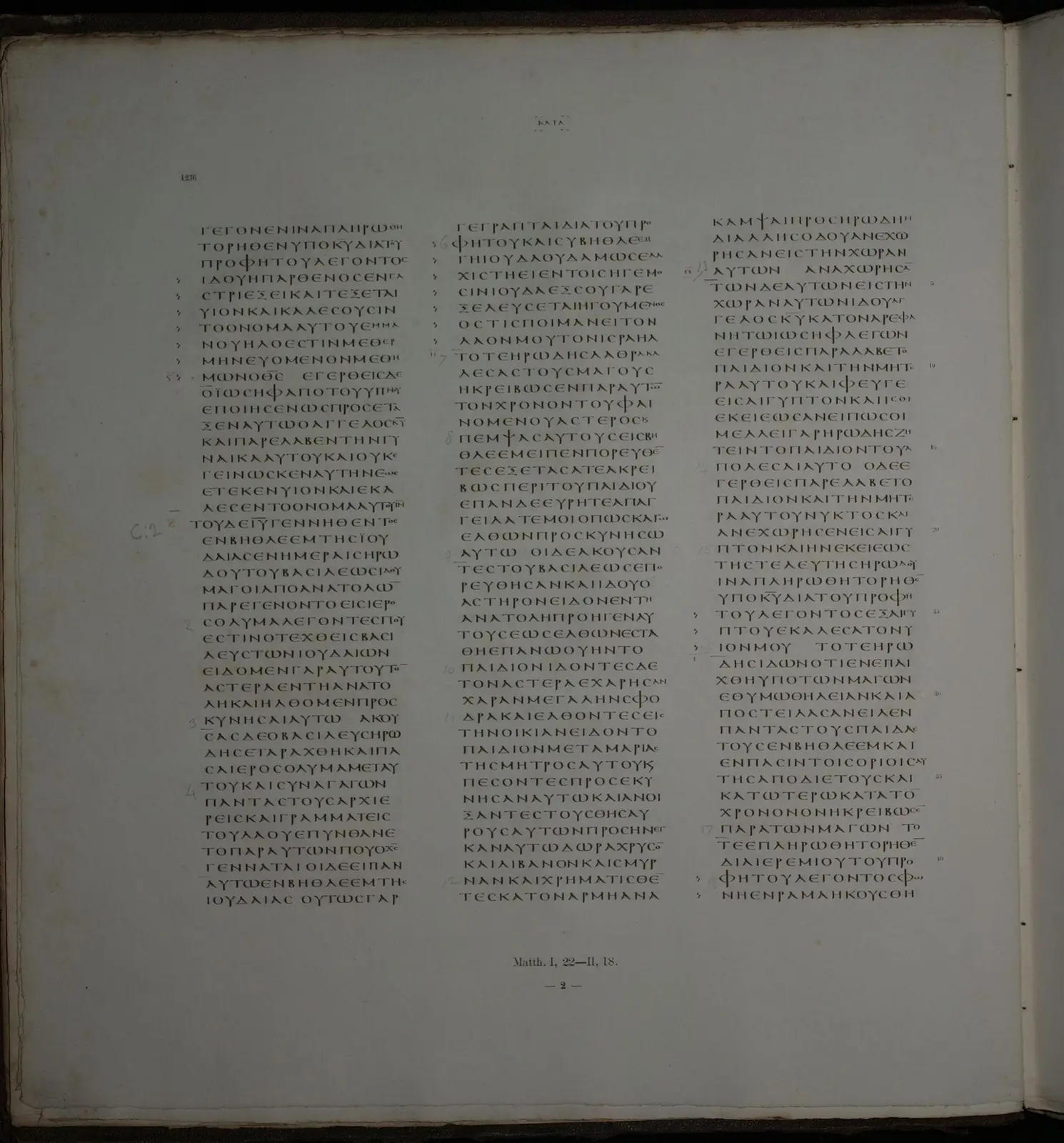
James 1:17 (WEB)
Every good gift and every perfect gift is from above, coming down from the Father of lights, with whom can be no variation nor turning shadow.
Catechism · 2
I Believe in God
“In God "there is no variation or shadow due to change."” — Catechism footnote: Jas 1:17
In the Age of the Church
“By means of petition and intercession, faith hopes against all hope and gives thanks to the "Father of lights," from whom "every perfect gift" comes down.” — Catechism footnote: Jas 1:17.
Fathers and councils · 21
Gregory of Nyssa
“…“no man knoweth the Father save the Son,” in all which passages there is no hint given to those who receive these declarations as genuine, of any variation of glory, or of essence, or anything else, between the Father and the Son.” — editor's note: παραλλαγή (Cf. S. James i. 17).
Read the whole comment
Jerome
“He, the first bishop of the Church at Jerusalem, which was composed of Jewish believers, to whom Paul went, accompanied by Titus and Barnabas, says in his Epistle: “Be not deceived, my beloved brethren.” — editor's note: S. James i. 16–18.
Read the whole comment
John Damascene
“How, therefore, are demons driven off by them, diseases dispelled, sick persons made well, the blind restored to sight, lepers purified, temptations and troubles overcome, and how does every good gift from the Father of lights come down through them to those who pray with sure faith?” — editor's note: Jas. i. 17.
Read the whole comment“…whose bright pinions bear up to the only-begotten Son and Heir of the Husbandman of that spiritual Vineyard and bring us through Him to the Father of Lights.” — editor's note: Jas. i. 17.
Read the whole comment
Cyril of Jerusalem
“…for every good gift and every perfect gift is from above, coming down from the Father of lights, with whom can be no variation, neither shadow of turning.” — editor's note: James i. 17.
Read the whole comment
John Cassian
- John Cassian, Conferences I–X III.16Conference III
“For “every good gift and every perfect boon is from above, coming down from the Father of lights.”” — editor's note: S. James i. 17.
Read the whole comment - John Cassian, Conferences XI–XVII XIII.3Conference XIII
“…with the opportunity of carrying out what we rightly desire: for “every good gift and every perfect gift cometh down from above, from the Father of lights,” who both begins what is good, and continues it and completes it in us, as the Apostle says: “But He who giveth seed to the sower will both provide bread to eat…” — editor's note: S. James i. 17.
Read the whole comment “For “every good gift and every perfect gift is from above, and cometh down from the Father of lights.”” — editor's note: S. James i. 17.
Read the whole comment
Augustine of Hippo
“…hungered and thirsted not even after those first works of Thine, but after Thee Thyself, the Truth, “with whom is no variableness, neither shadow of turning;” yet they still served up to me in those dishes glowing phantasies, than which better were it to love this very sun (which, at least, is true to our sight),…” — editor's note: Jas. i. 17.
Read the whole comment““For Thou wilt light my candle; the Lord my God will enlighten my darkness; and “of His fulness have all we received,” for “that was the true Light which lighted every man that cometh into the world;” for in Thee there is “no variableness, neither shadow of turning.”” — editor's note: Jas. i. 17.
Read the whole comment“…and reflect on real goods in himself, and render thanks for these unto “the Father of lights, from Whom cometh down every best gift, and every perfect gift,” and yet be rejected by reason of the sin of haughtiness, if through pride, even in his thought alone, which is before God, he insult other sinners, and…” — editor's note: James i. 17
Read the whole comment“Wherefore let this be the first thought for the putting on of humility, that God’s virgin think not that it is of herself that she is such, and not rather that this best “gift cometh down from above from the Father of Lights, with Whom is no change nor shadow of motion.”” — editor's note: James i. 17. [See R.V.]
Read the whole comment“…receive it from that Rich One, to Whom is said, “My God art Thou, because my goods Thou needest not:” of Whom is “every good gift, and every perfect gift;” to Whom crieth the needy and the poor, and in asking, seeking, knocking, saith, “My God, deliver me from the hand of the sinner, and from the hand of the…” — editor's note: James i. 17
Read the whole comment“…giving of thanks unto the Father of lights, from Whom, without any doubt, every good gift, and every perfect gift, as Scripture bears witness, cometh down.” — editor's note: James i. 17
Read the whole comment“So also James says, “Every good gift and every perfect gift is from above, and cometh down from the Father of Lights, with whom is no variableness, neither shadow of turning.”” — editor's note: Jas. i. 17
Read the whole comment“…variations of time, past, present, and future, though they alter our knowledge, do not affect His, “with whom is no variableness, neither shadow of turning.”” — editor's note: Jas. i. 17.
Read the whole comment
Theodoret of Cyrus
“…were again interrogated by the Bishops as to whether they admitted ‘that the Son is not a creature, but Power, and sole Wisdom, and eternal unchangeable Image of the Father; and that He is very God,’ the Eusebians were noticed making signs to one another to shew that these declarations were equally applicable…” — editor's note: ἀπαράλλακτος, cf. James i. 17, Παρ᾽ ᾦ οὐκ ἔνι παραλλαγή
Read the whole comment
Ambrose of Milan
“Therefore we ought to believe that God is good, eternal, perfect, almighty, and true, such as we find Him in the Law and the Prophets, and the rest of the holy Scriptures, for otherwise there is no God.” — editor's note: Vide, e.g., Ps. xxv. 8; Jer. x. 10; James i. 17, 18; Dan. ix. 9, 10; S. Luke i. 37.
Read the whole comment
Basil the Great
“For if in essence He is without variation, so also is He without variation in power.” — editor's note: ἀπαραλλάκτως ἔχει. cf. Jas. i. 17. παρ᾽ ῷ οὐκ ἔνι παραλλαγή. The word ἀπαράλλακτος was at first used by the Catholic bishops at Nicæa, as implying ὁμοούσιος.…
Read the whole comment
Hilary of Poitiers
“…change nor turning, because He has said through the prophet, I am the Lord your God, and I am not changed, and the apostle James, With Whom there is no change; certain also that He is the righteous Judge, for it is written, God is the righteous Judge, strong and patient; that He cares for all, because the Lord has…” — editor's note: i. 17.
Read the whole comment
Catena Aurea on Mark
- Theophylact of OhridCatena Aurea on Mark
“For He shews to us that we ought to attribute to God whatever we do well, and to say to Him, “Every good gift cometh down from above,” [James 1:17] from Thee.” — the author cites it
Read the whole comment
Cross-references · 47
Cited together in On Patience Chapter 12.
Cited together in Confessions III.6.
Cited together in On the Holy Trinity I.1.
Cited together in Conferences XI–XVII XIII.3.
Cited together in An Exact Exposition of the Orthodox Faith IV.17.
Cited together in An Exact Exposition of the Orthodox Faith IV.17.
Cited together in On Patience Chapter 12.
Cited together in On Patience Chapter 12.
Cited together in On the Holy Trinity I.1.
Cited together in Confessions IV.15.
Cited together in On Patience Chapter 12.
Cited together in An Exact Exposition of the Orthodox Faith IV.17.
Cited together in Confessions III.6.
Cited together in On Patience Chapter 12.
Cited together in On Patience Chapter 12.
Cited together in Confessions IV.15.
Cited together in Catechism §212 and 1 other place.
Cited together in Catechism §212 and 1 other place.
Cited together in Of Holy Virginity Chapter 42.
Cited together in Of Holy Virginity Chapter 42.
Cited together in Of Holy Virginity Chapter 42.
Cited together in On Patience Chapter 12.
Cited together in Confessions IV.15.
Cited together in Confessions III.6.
Cited together in Confessions III.6.
Cited together in Confessions III.6.
Cited together in Confessions III.6.
Cited together in Catechism §212.
Cited together in Conferences XI–XVII XIII.3.
Cited together in Conferences XI–XVII XIII.3.
Cited together in Conferences I–X III.16.
Cited together in Theophylact of Ohrid on Mark 1:35–39 (2) (Catena Aurea).
Cited together in Theophylact of Ohrid on Mark 1:35–39 (2) (Catena Aurea).
Cited together in Theophylact of Ohrid on Mark 1:35–39 (2) (Catena Aurea).
Cited together in Theophylact of Ohrid on Mark 1:35–39 (2) (Catena Aurea).
Cited together in Theophylact of Ohrid on Mark 1:35–39 (2) (Catena Aurea).
Cited together in Conferences I–X III.16.
Cited together in An Exact Exposition of the Orthodox Faith IV.17.
Cited together in Confessions III.6.
Cited together in Confessions IV.15.
Cited together in Conferences XI–XVII XIII.3.
Cited together in On the Holy Trinity I.1.
Cited together in On the Holy Trinity I.1.
Cited together in The Institutes XII.10 and 1 other place.
Cited together in An Exact Exposition of the Orthodox Faith IV.17.
Cited together in Confessions IV.15.
Cited together in Of Holy Virginity Chapter 42.