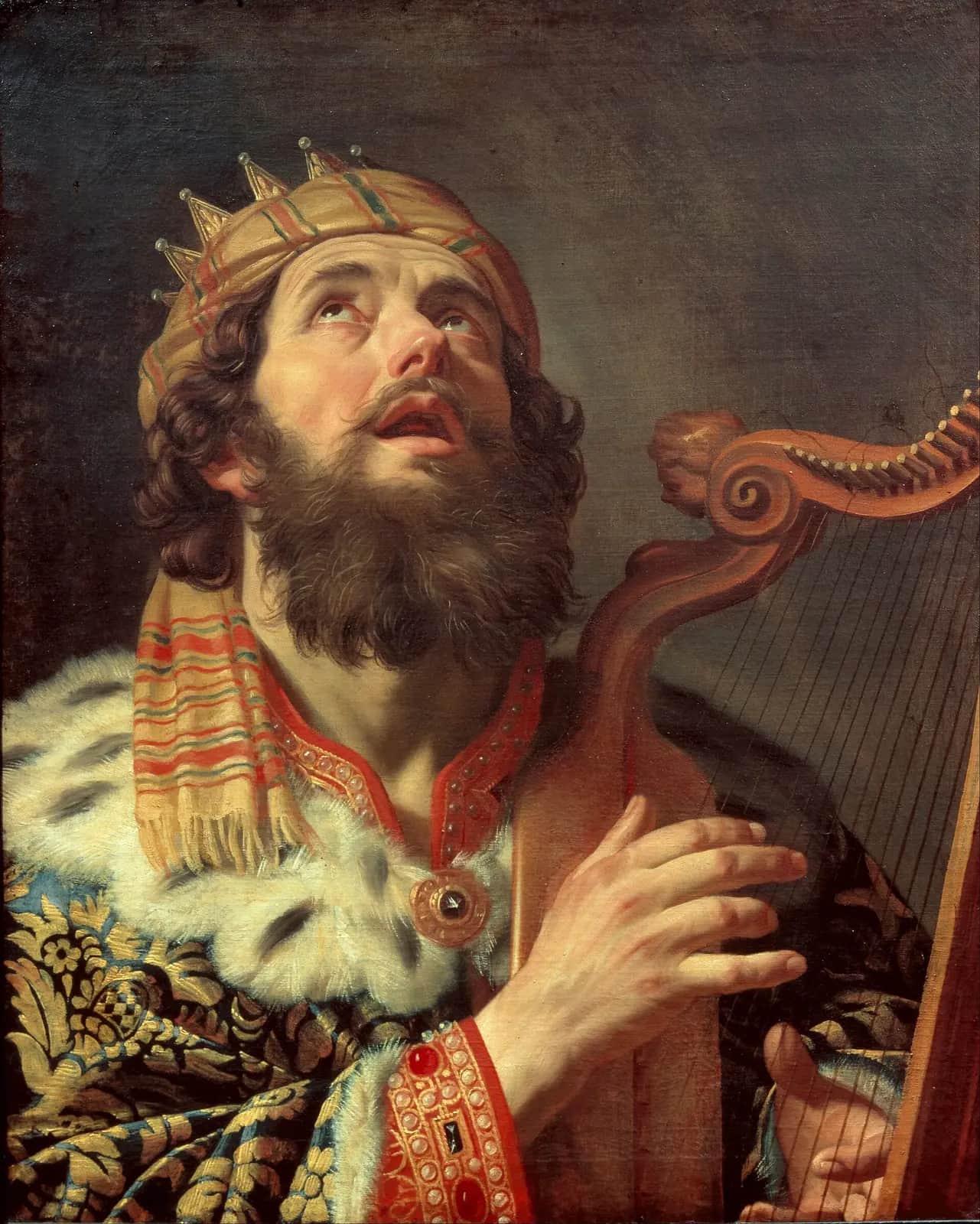
Psalm 102:27 (WEB)
But you are the same. Your years will have no end.
Catechism · 1
“He made heaven and earth: "They will perish, but you endure; they will all wear out like a garment....but you are the same, and your years have no end."” — Catechism footnote: Ps 102:26-27
Fathers and councils · 30
Origen
“…of the profanity of those whose notions of God are marked by impiety, but because it says in the supplication addressed to the Divinity, “Thou art the same,” it being, moreover, an article of faith that God has said, “I change not.”” — editor's note: Ps. cii. 27.
Read the whole comment- Origen, Against Celsus IV.14Book IV
“We show, accordingly, that the holy Scriptures represent God as unchangeable, both by such words as “Thou art the same,” and” I change not;” whereas the gods of Epicurus, being composed of atoms, and, so far as their structure is concerned, capable of dissolution, endeavour to…” — editor's note: Ps. cii. 27.
Read the whole comment - Origen, Against Celsus IV.56Book IV
“…but Thou remainest: and they all shall wax old as a garment; and as a vesture shalt Thou fold them up, and they shall be changed: but Thou art the same.”” — editor's note: Cf. Ps. cii. 26, 27.
Read the whole comment - Origen, Against Celsus VI.62Book VI
“And if he had read the writings of the prophets, David on the one hand saying, “But Thou art the same,” and Malachi on the other, “I am (the Lord), and change not,” he would have observed that none of us assert that there is any change in God, either in act or thought.” — editor's note: Cf. Ps. cii. 27.
Read the whole comment - Origen, De Principiis III.6Book III
“David, too, declares: “The heavens shall perish, but Thou shalt endure; yea, all of them shall wax old as doth a garment: as a vesture shalt Thou change them, and they shall be changed: but Thou art the same, and Thy years shall have no end.”” — editor's note: Ps. cii. 26, 27.
Read the whole comment
Gregory of Nyssa
“But if, as the prophet says of God, He “is the same,” it is idle to say that before He begat He was not Himself Ungenerate; we cannot find either of these names, the Father and the Ungenerate One, parted from the other; the two ideas rise together, suggested by each other, in the thoughts of the devout reasoner.” — editor's note: Psalm cii. 27.
Read the whole comment““Thou art the same,” the prophet says, “and Thy years shall not fail,” showing by “art” that He subsists out of no cause, and by the words following, that the blessedness of His life is ceaseless and unending.” — editor's note: Psalm cii. 27.
Read the whole comment“So, too, great David, in his discourses with himself, proclaims the same truth, in the sense that all the creation was brought into being by God, while He alone exists always in the same manner, and abides for ever, where he says, “But Thou art the same, and Thy years shall not fail.”” — editor's note: Ps. cii. 27.
Read the whole comment
Irenaeus of Lyons
“The children of Thy servants shall continue, and their seed shall be established for ever;” pointing out plainly what things they are that pass away, and who it is that doth endure for ever—God, together with His servants.” — editor's note: Ps. cii. 25–28. The cause of the difference in the numbering of the Psalms is that the Septuagint embraces in one psalm—the ninth—the two which form the ninth…
Read the whole comment
Cyril of Jerusalem
“David also says in one place, Thy throne, O God, is for ever and ever; and in another place, Thou, Lord, in the beginning hast laid the foundations of the earth, &c., they shall perish, but Thou remainest, &c.; but Thou art the same, and Thy years shall not fail: words which Paul has interpreted of the Son.” — editor's note: Ib. cii. 25–27.
Read the whole comment
John Cassian
- John Cassian, Conferences I–X VI.14Conference VI
“For we confess that God only is unchangeable, who alone is thus addressed by the prayer of the holy prophet “But Thou art the same,” and who says of Himself “I am God, and I change not,” because He alone is by nature always good, always full and perfect, and one to whom nothing can ever be…” — editor's note: Ps. ci. (cii.) 27.
Read the whole comment - John Cassian, Conferences XVIII–XXIV XXIII.3Conference XXIII
“But Thou art the same, and Thy years shall not fail.”” — editor's note: Ps. ci. (cii.) 27, 28.
Read the whole comment
Augustine of Hippo
“And since “Thy years shall have no end,” Thy years are an ever present day.” — editor's note: Ps. cii. 27.
Read the whole comment“But in the excellency of an ever-present eternity, Thou precedest all times past, and survivest all future times, because they are future, and when they have come they will be past; but “Thou art the same, and Thy years shall have no end.”” — editor's note: Ps. cii. 27.
Read the whole comment“Thus Thou grantest the prayers of him that asketh, and blessest the years of the just; but Thou art the same, and in Thy years which fail not Thou preparest a garner for our passing years.” — editor's note: Ps. cii. 27.
Read the whole comment“But yet, “Thou art the same, and Thy years shall not fail.”” — editor's note: Ps. cii. 27.
Read the whole comment“…reign together with Him in those days which have no end.…For years of God have been also spoken of: “But Thou art the very Same, and Thy years shall not fail.”” — editor's note: Ps. cii. 27.
Read the whole comment“These years are changeable: the eternal years must be thought on, years that stand, that are not made up of days that come and depart; years whereof in another place the Scripture saith to God, “But Thou art the Self-same, and Thy years shall not fail.”” — editor's note: Ps. cii. 27.
Read the whole comment“Though they might, if they had believed, have had days in truth without failing, with Him to whom hath been said, “Thy years shall not fail.”” — editor's note: Ps. cii. 27.
Read the whole comment“The days of Heaven are those years of which it is said, “Thou art the same, and Thy years shall not fail.”” — editor's note: Ps. cii. 27.
Read the whole comment“Whence the expression, I Am that I Am; and, I Am “hath sent me unto you;” and, “Thou shalt change them, and they shall be changed: but Thou art the same, and Thy years shall not fail.”” — editor's note: Ps. cii. 26, 27.
Read the whole comment“We may therefore hope for the change of our bodies also, but from Him who was before us, and abideth after us.…“But Thou art the same, and Thy years shall not fail” (ver. 27).” — the author cites it
Read the whole comment“God, eternity, the years of God which fail not, whereof is said, “and Thy years shall not fail.”” — editor's note: Ps. cii. 27.
Read the whole comment“But when is it called a day?” — editor's note: Ps. cii. 27.
Read the whole comment“So also David, “Thou shall change them, and they shall be changed; but Thou art the same.”” — editor's note: Ps. cii. 26, 27
Read the whole comment“To whom is sung in another place, “Thou shalt change them, and they shall be changed; but Thou art the same.”” — editor's note: Ps. cii. 26, 27
Read the whole comment“…is spoken in respect to position; and to be covered with the deep as with a garment, which is said in respect to condition; and “Thy years shall have no end,” which is said in respect of time; and, “If I ascend up into heaven, Thou art there,” which is said in respect to place.” — editor's note: Ps. cii. 27
Read the whole comment“They shall perish, but Thou shall endure; yea, all of them shall wax old like a garment; and as a vesture Thou shall change them, and they shall be changed: but Thou art the same, and Thy years shall not fail.”” — editor's note: Ps. cii. 25–27.
Read the whole comment“The beginning cannot be changed: the beginning is self-abiding and all-originating; that is, the beginning, to which it has been said, “But thou Thyself art the same, and Thy years shall not fail.”” — editor's note: Ps. cii. 27.
Read the whole comment
Theodoret of Cyrus
“And the blessed David says “Thou art the same and Thy years shall have no end.”” — editor's note: Ps. cii. 27
Read the whole comment
Cross-references · 41
Cited together in On the Holy Trinity V.8.
Cited together in On the Holy Trinity III.2.
Cited together in On the Holy Trinity V.8.
Cited together in Confessions I.6.
Cited together in De Principiis III.6.
Cited together in Conferences XVIII–XXIV XXIII.3.
Cited together in Against Celsus VI.62.
Cited together in Conferences XVIII–XXIV XXIII.3.
Cited together in Catechism §212.
Cited together in Against Heresies IV.3.
Cited together in Confessions I.6.
Cited together in Confessions I.6 and 2 other places.
Cited together in On the Holy Trinity V.8.
Cited together in Against Eunomius VIII.1.
Cited together in Against Eunomius I.37 and 1 other place.
Cited together in On the Holy Trinity I.1.
Cited together in Against Heresies IV.3 and 1 other place.
Cited together in Letters Letter 145.
Cited together in Confessions XI.13.
Cited together in Letters Letter 145.
Cited together in Against Eunomius I.41 and 1 other place.
Cited together in Against Eunomius VIII.1.
Cited together in Catechism §212 and 1 other place.
Cited together in On the Holy Trinity I.1.
Cited together in Confessions I.6.
Cited together in De Principiis III.6.
Cited together in Letters Letter 145.
Cited together in Letters Letter 145.
Cited together in Confessions I.6.
Cited together in Against Celsus VI.62.
Cited together in Against Eunomius VIII.1.
Cited together in Against Eunomius VIII.1.
Cited together in Conferences I–X VI.14.
Cited together in Conferences I–X VI.14.
Cited together in Against Eunomius I.41.
Cited together in On the Holy Trinity I.1.
Cited together in Against Eunomius I.41.
Cited together in Against Eunomius I.41.
Cited together in On the Holy Trinity V.8.
Cited together in On the Holy Trinity V.8.
Cited together in Confessions I.6.