John 15:8 (WEB)
“In this my Father is glorified, that you bear much fruit; and so you will be my disciples.
As quoted in the map (KJV)
John 15:8–9 (KJV)
8 Herein is my Father glorified, that ye bear much fruit; so shall ye be my disciples. 9 As the Father hath loved me, so have I loved you: continue ye in my love.
Key words
- μαθηταίmathētai · Greek
- 'disciples' — to bear fruit is to prove oneself a disciple.
- κἀγὼ ὑμᾶς ἠγάπησαkagō hymas ēgapēsa · Greek
- 'so have I loved you' — every disciple is a disciple whom Jesus loves.
Why it matters
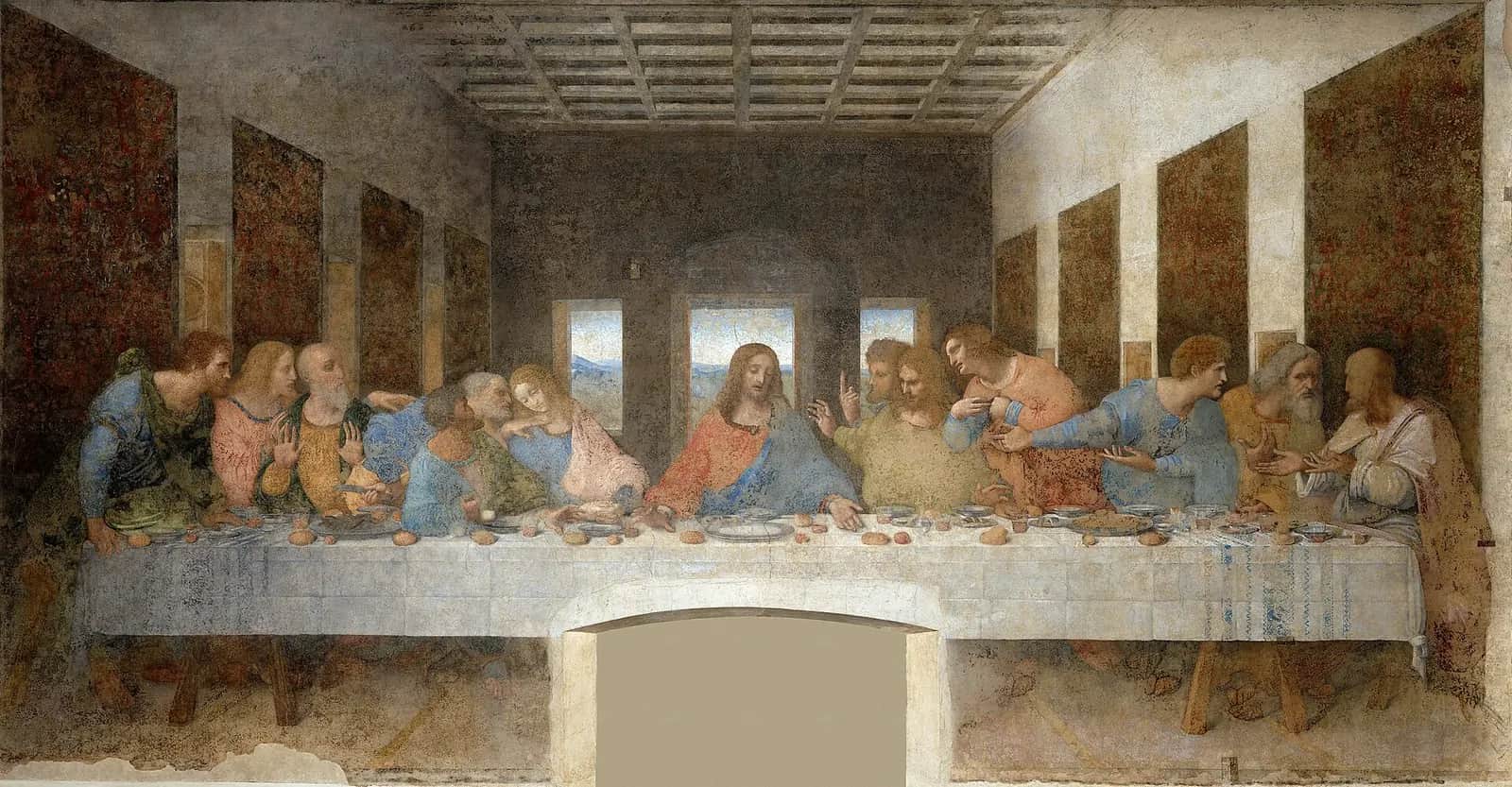
'As the Father hath loved me, so have I loved you.' Pitre uses this Last Supper saying to explain why the disciple at the cross is unnamed (p 163): every true disciple is a beloved disciple. The reader is meant to stand in his place, hear 'Behold thy mother,' and take Mary as his own.
Catechism · 2
The Liturgy - Work of the Holy Trinity
“In every liturgical action the Holy Spirit is sent in order to bring us into communion with Christ and so to form his Body. the Holy Spirit is like the sap of the Father's vine which bears fruit on its branches.” — Catechism footnote: Cf. Jn 15:1-17; Gal 5:22.
"I Believe in the Holy Spirit"
“He makes present the mystery of Christ, supremely in the Eucharist, in order to reconcile them, to bring them into communion with God, that they may "bear much fruit."” — Catechism footnote: Jn 15:8, 16.
Fathers and councils · 9
John Chrysostom
“Ver.” — the author cites it
Read the whole comment
Catena Aurea on John
- John ChrysostomCatena Aurea on John
Our Lord shewed above, that those who plotted against them should be burned, inasmuch as they abode not in Christ: now He shews that they themselves would be invincible, bringing forth much fruit; Herein is My Father…
Read the whole comment - Theophylact of OhridCatena Aurea on John
The fruit of the Apostles are the Gentiles, who through their teaching were converted to the faith, and brought into subjection to the glory of God.
Read the whole comment - Augustine of HippoCatena Aurea on John
Made bright or glorified; the Greek word may be translated in either way. Δόξα signifies glory; not our own glory, we must remember, as if we had it of ourselves: it is of His grace that we have it; and therefore it…
Read the whole comment - John ChrysostomCatena Aurea on John
If then I love you, be of good cheer; if it is the Father’s glory that ye bring forth good fruit, bear no evil. Then to rouse them to exertion, He adds, Continue ye in My love; and then shews how this is to be done:…
Read the whole comment - Augustine of HippoCatena Aurea on John
Who doubts that love precedes the observance of the commandments? For who loves not, has not that whereby to keep the commandments. These words then do not declare whence love arises, but how it is shewn, that no one…
Read the whole comment - Alcuin of YorkCatena Aurea on John
Even as I have kept My Father’s commandments. The Apostle explains what these commandments were: Christ became obedient unto death, even the death of the cross. (Phil. 2:8)
Read the whole comment - John ChrysostomCatena Aurea on John
Then because the Passion was now approaching to interrupt their joy, He adds, These things have I spoken unto you, that my joy may remain in you: as if He said, And if sorrow fall upon you, I will take it away; so…
Read the whole comment - Augustine of HippoCatena Aurea on John
And what is Christ’s joy in us, but that He deigns to rejoice on our account? And what is our joy, which He says shall be full, but to have fellowship with Him? He had perfect joy on our account, when He rejoiced in…
Read the whole comment
Cross-references · 5
Cited together in Alcuin of York on John 15:8–11 (Catena Aurea).
Cited together in Homilies on John Homily 75.
Cited together in Homilies on John Homily 75.
Cited together in Homilies on John Homily 75.
Cited together in Homilies on John Homily 75.