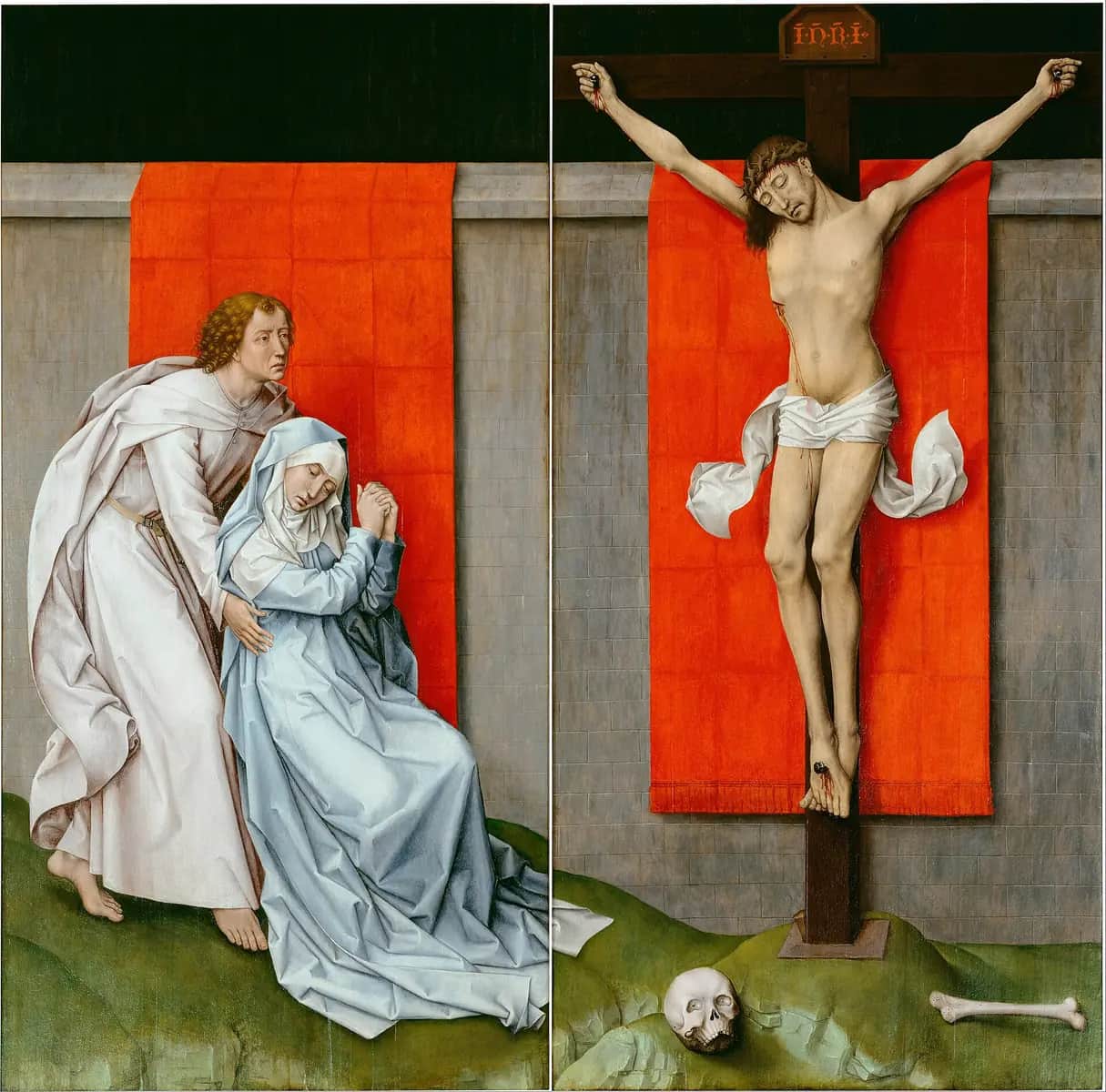
John 19:20 (WEB)
Therefore many of the Jews read this title, for the place where Jesus was crucified was near the city; and it was written in Hebrew, in Latin, and in Greek.
Catechism · 1
“Hence the true meaning of his kingship is revealed only when he is raised high on the cross.” — Catechism footnote: Cf. Jn 19:19-22; Lk 23:39-43.
Fathers and councils · 11
Augustine of Hippo
“For when the Lord was being crucified, a title by Pilate was inscribed and set, “King of the Jews,” in three tongues, Hebrew, Greek, and Latin: which tongues in the whole world mostly do prevail.…Therefore “corrupt not” is most proper and prophetic; since indeed even those Jews made suggestion at that…” — editor's note: John xix. 20.
Read the whole comment“This becomes apparent if (for example) we look to that inscription which was affixed to His cross—“King of the Jews:” in connection also with which, and by a secret instinct, Pilate replied, “What I have written, I have written.”” — editor's note: John xix. 19–22.
Read the whole comment
John Chrysostom
““And Pilate wrote a title.”” — editor's note: Ver. 19, 20. “And Pilate wrote a title, and put it on the Cross, and the writing was, Jesus of Nazareth the King of the Jews. This title then read many of the…
Read the whole comment
Catena Aurea on John
- John ChrysostomCatena Aurea on John
As letters are inscribed on a trophy declaring the victory, so Pilate wrote a title on Christ’s cross. And Pilate wrote a title, and put it on the cross: thus at once distinguishing Christ from the thieves with Him,…
Read the whole comment - BedeCatena Aurea on John
Wherein was shewn that His kingdom was not, as they thought, destroyed, but rather strengthened.
Read the whole comment - Augustine of HippoCatena Aurea on John
But was Christ the King of the Jews only? or of the Gentiles too? Of the Gentiles too, as we read in the Psalms, Yet have I set My King upon My holy hill of Sion; (Ps. 2:6) after which it follows, Demand of Me, and I…
Read the whole comment - John ChrysostomCatena Aurea on John
It is probable that many Gentiles as well as Jews bad come up to the feast. So the title was written in three languages, that all might read it: And it was written in Hebrew, and Greek, and Latin.
Read the whole comment - Augustine of HippoCatena Aurea on John
These three were the languages most known there: the Hebrew, on account of being used in the worship of the Jews: the Greek, in consequence of the spread of Greek philosophy: the Latin, from the Roman empire being…
Read the whole comment - Theophylact of OhridCatena Aurea on John
The title written in three languages signifies that our Lord was King of the whole world; practical, natural, and spiritual1. The Latin denotes the practical, because the Roman empire was the most powerful, and best…
Read the whole comment - John ChrysostomCatena Aurea on John
But the Jews grudged our Lord this title: Then said the chief priests of the Jews to Pilate, Write not, The King of the Jews; but that He said, I am King of the Jews, For as Pilate wrote it, it was a plain and single…
Read the whole comment - Augustine of HippoCatena Aurea on John
O ineffable working of Divine power even in the hearts of ignorant men! Did not some hidden voice sound from within, and, if we may say so, with clamorous silence, saying to Pilate in the prophetic words of the…
Read the whole comment
Cross-references · 9
Cited together in Harmony of the Gospels I.3.
Cited together in Harmony of the Gospels I.3.
Cited together in Augustine of Hippo on John 19:19–22 (Catena Aurea).
Cited together in Harmony of the Gospels I.3.
Cited together in Harmony of the Gospels I.3.
Cited together in Harmony of the Gospels I.3.
Cited together in Harmony of the Gospels I.3.
Cited together in Harmony of the Gospels I.3.
Cited together in Harmony of the Gospels I.3.