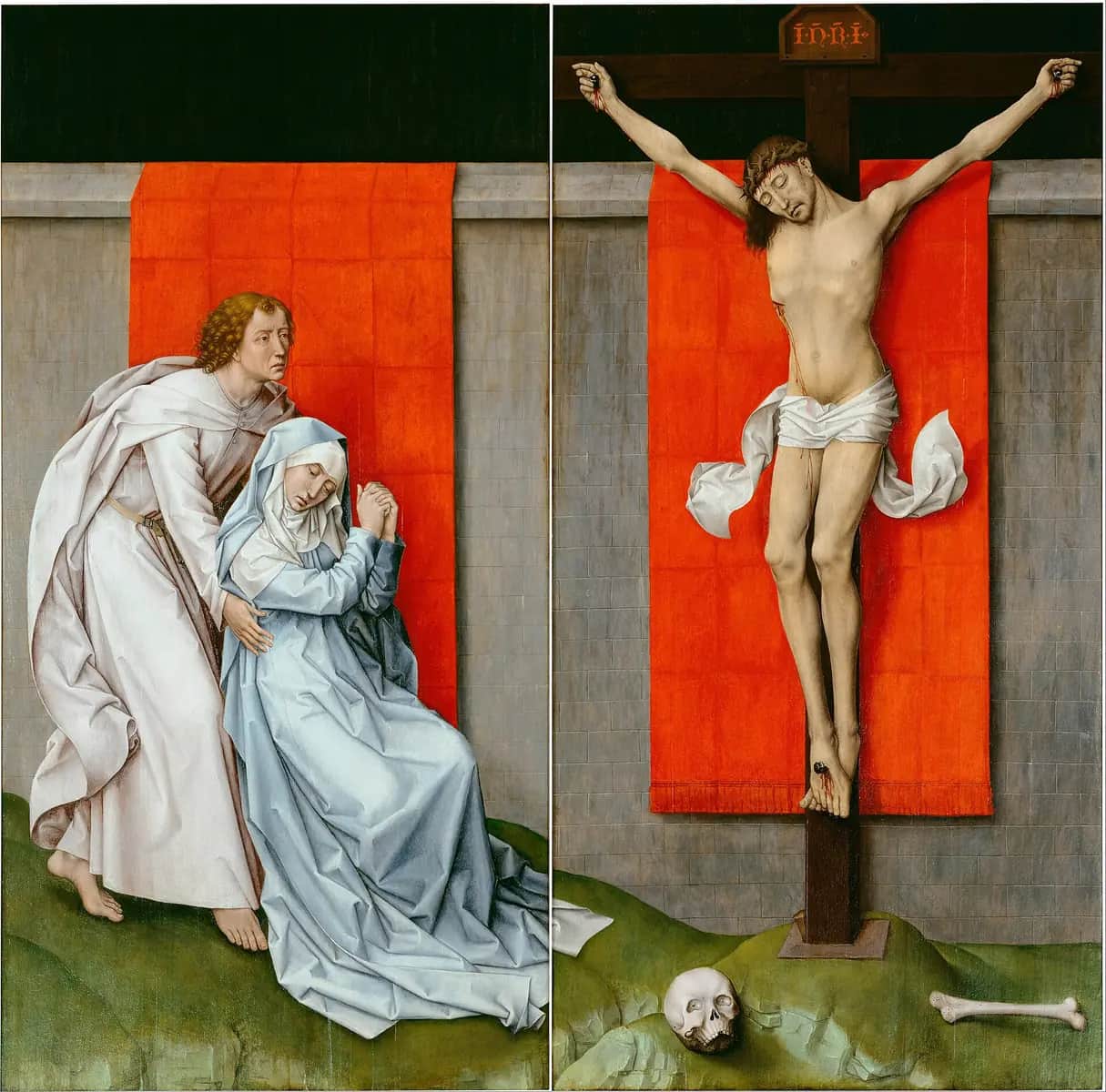
John 19:33 (WEB)
but when they came to Jesus and saw that he was already dead, they didn’t break his legs.
Fathers and councils · 20
Origen
- Origen, Against Celsus II.16Book II
““For the soldiers brake the legs of the first, and of the other who was crucified with Him; but when they came to Jesus, and saw that He was dead, they brake not His legs.”” — editor's note: John xix. 32, 33.
Read the whole comment
Tertullian
“…actually and thoroughly suffering, suffered not for any evil action of His own, but “that the Scriptures from the mouth of the prophets might be fulfilled.”” — editor's note: See Matt. xxvi. 56; xxvii. 34, 35; John xix. 23, 24, 28, 32–37.
Read the whole comment“Whence, too, it was that there flowed out of the wound in the Lord’s side water and blood, the materials of either baptism.” — editor's note: John xix. 33, 34.
Read the whole comment
Augustine of Hippo
“But He gave this promise to other Christians also, “The Lord keepeth all their bones; not one of them shall be broken.”” — editor's note: John xix. 33.
Read the whole comment“For when they came to take down the bodies, by reason of the approaching Sabbath, the Lord was found already dead, and His Bones were not broken.” — editor's note: John xix. 33.
Read the whole comment“And it was this also, at which, as we read, Pilate marvelled, when the body of the Lord was asked of him for burial.” — editor's note: Mark xv. 37, 39, 43, 44, and John xix. 30–34
Read the whole comment“The Lord, however, was found to be already dead, and the men marvelled; and they who despised Him when living, so wondered at Him when dead, that some of them said, “Truly this was the Son of God.”” — editor's note: John xix. 28–33.
Read the whole comment
John Chrysostom
“For the soldiers when they came, brake the legs of the others, but not those of Christ.” — editor's note: Ver. 32–34. “Then came the soldiers and brake the legs of the first, and of the other which was crucified with him. But when they came to Jesus, and saw that…
Read the whole comment
Catena Aurea on John
- John ChrysostomCatena Aurea on John
The Jews who strained at a gnat and swallowed a camel, after their audacious wickedness, reason scrupulously about the day: The Jews therefore because it was the preparation, that the bodies should not remain upon…
Read the whole comment - BedeCatena Aurea on John
Parasceue, i. e. preparation: the sixth day was so called because the children of Israel prepared twice the number of loaves on that day. For that sabbath day was an high day, i. e. on account of the feast of the…
Read the whole comment - Augustine of HippoCatena Aurea on John
Not in order to take away the legs, but to cause death, that they might be taken down from the cross, and the feast clay not be defiled by the sight of such horrid torments.
Read the whole comment - Theophylact of OhridCatena Aurea on John
For it was commanded in the Law that the sun should not set on the punishment of any one; or they were unwilling to appear tormentors and homicides on a feast day.
Read the whole comment - John ChrysostomCatena Aurea on John
How forcible is truth: their own devices it is that accomplish the fulfilment of prophecy: Then came the soldiers and brake the legs of the first, and of the other which was crucified with Him. But when they came to…
Read the whole comment - Theophylact of OhridCatena Aurea on John
To please the Jews, they pierce Christ, thus insulting even His lifeless body. But the insult issues in a miracle: for a miracle it is that blood should flow from a dead body.
Read the whole comment - Augustine of HippoCatena Aurea on John
The Evangelist has expressed himself cautiously; not struck, or wounded, but opened His side: (ἔνυξε, aperuit V.) whereby was opened the gate of life, from whence the sacraments of the Church flowed, without which we…
Read the whole comment - John ChrysostomCatena Aurea on John
This being the source whence the holy mysteries are derived, when thou approachest the awful cup, approach it as if thou wert about to drink out of Christ’s side.
Read the whole comment - Theophylact of OhridCatena Aurea on John
Shame then upon them who mix not water with the wine in the holy mysteries: they seem as if they believed not that the water flowed from the side. Had blood flowed only, a man might have said that there was some life…
Read the whole comment - John ChrysostomCatena Aurea on John
As if to say, I did not hear it from others, but saw it with mine own eyes. And his record is true, he adds, not as if he had mentioned something so wonderful that his account would be suspected, but to stop the…
Read the whole comment - Augustine of HippoCatena Aurea on John
He that saw it knoweth; let him that saw not believe his testimony. He gives testimonies from the Scriptures to each of these two things he relates. After, they brake not His legs, He adds, For these things were…
Read the whole comment - JeromeCatena Aurea on John
This testimony is taken from Zacharias.
Read the whole comment
Cross-references · 2
Cited together in Against Celsus II.16.
Cited together in Against Celsus II.16.