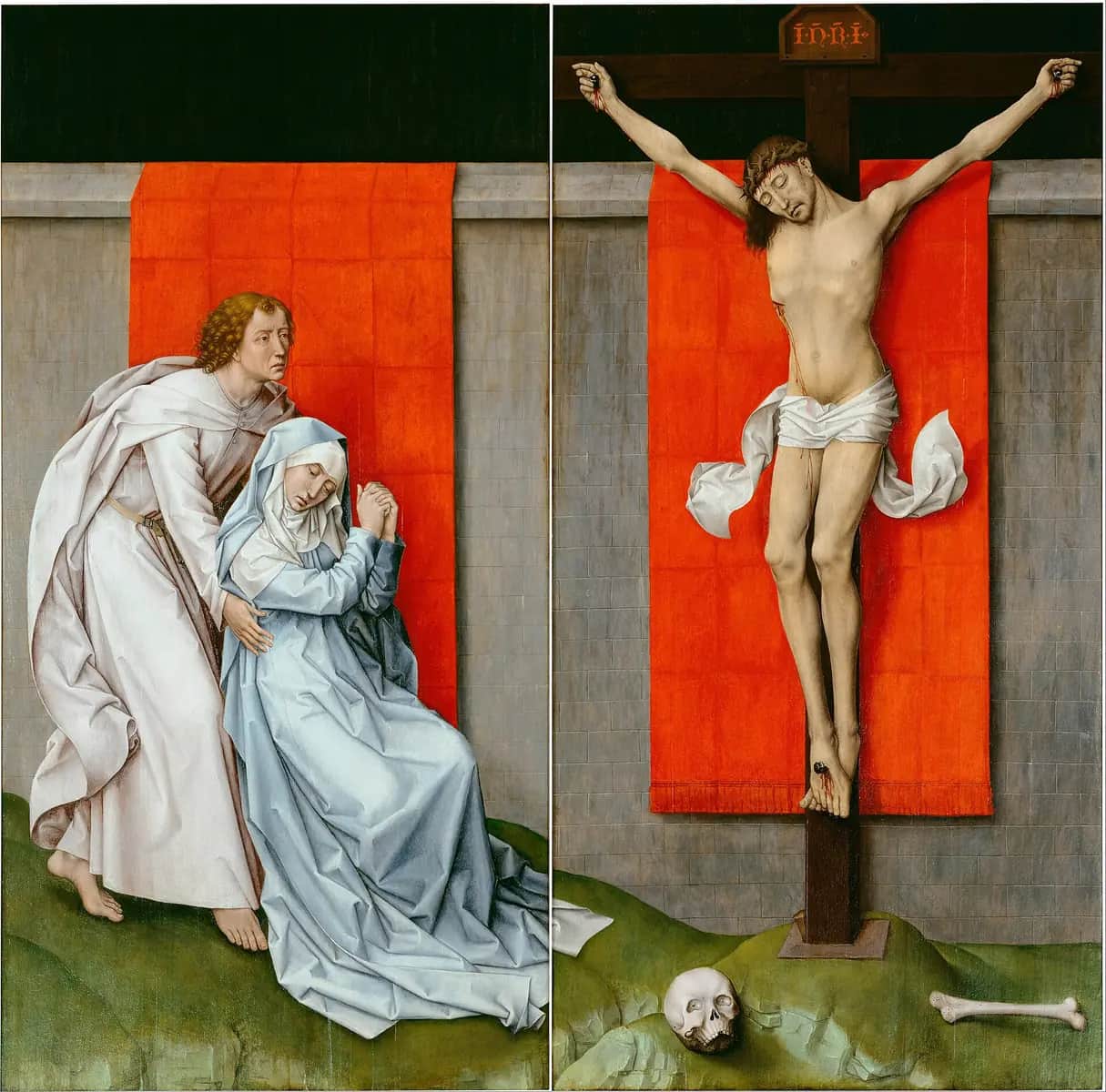
John 19:34 (WEB)
However, one of the soldiers pierced his side with a spear, and immediately blood and water came out.
Catechism · 4
The Sacrament of Baptism
“The blood and water that flowed from the pierced side of the crucified Jesus are types of Baptism and the Eucharist, the sacraments of new life.” — Catechism footnote: Cf. Jn 19:34; 1 Jn 5:6-8.
The Son of God Became Man
“For this reason, the Sacred Heart of Jesus, pierced by our sins and for our salvation,” — Catechism footnote: Cf. Jn 19:34.
"I Believe in the Holy Spirit"
“Thus the Spirit is also personally the living water welling up from Christ crucified” — Catechism footnote: Jn 19:34; 1 Jn 5:8.
The Church in God's Plan
“"The origin and growth of the Church are symbolized by the blood and water which flowed from the open side of the crucified Jesus."” — Catechism footnote: LG 3; cf. Jn 19:34.
Fathers and councils · 32
Origen
- Origen, Against Celsus II.36Book II
“And he that saw it bare record, and his record is true, and he knoweth that he saith the truth.”” — editor's note: Cf. John xix. 34, 35.
Read the whole comment
Irenaeus of Lyons
“Moreover, how could the Lord, with any justice, if He belonged to another father, have acknowledged the bread to be His body, while He took it from that creation to which we belong, and affirmed the mixed cup to be His blood?” — editor's note: “Temperamentum calicis:” on which Harvey remarks that “the mixture of water with the wine in the holy Eucharist was the universal practice of antiquity … the…
Read the whole comment
Tertullian
“…actually and thoroughly suffering, suffered not for any evil action of His own, but “that the Scriptures from the mouth of the prophets might be fulfilled.”” — editor's note: See Matt. xxvi. 56; xxvii. 34, 35; John xix. 23, 24, 28, 32–37.
Read the whole comment“Onward even to the passion does the witness of baptism last: while He is being surrendered to the cross, water intervenes; witness Pilate’s hands: when He is wounded, forth from His side bursts water; witness the soldier’s lance!” — editor's note: John xix. 34. See c. xviii. sub fin.
Read the whole comment“These two baptisms He sent out from the wound in His pierced side, in order that they who believed in His blood might be bathed with the water; they who had been bathed in the water might likewise drink the blood.” — editor's note: John xix. 34. See c. ix. ad fin.
Read the whole comment“Whence, too, it was that there flowed out of the wound in the Lord’s side water and blood, the materials of either baptism.” — editor's note: John xix. 33, 34.
Read the whole comment
John Damascene
“He caused the fountain of remission to well forth for us out of His holy and immaculate side, water for our regeneration, and the washing away of sin and corruption; and blood to drink as the hostage of life eternal.” — editor's note: St. John xix. 34.
Read the whole comment
Cyril of Jerusalem
“…means of water to the illuminated, and a second to holy martyrs, in persecutions, through their own blood, there came out of that saving Side blood and water, to confirm the grace of the confession made for Christ, whether in baptism, or on occasions of martyrdom.” — editor's note: John xix. 34. Cf. Cat. iii. 10. Origen (In Lib. Judic. Hom. vii. § 2): “It is the Baptism of blood alone that can render us purer than the Baptism of water has…
Read the whole comment
Ambrose of Milan
“…remember that the Lord grieved and wept over the death of Lazarus, and was wounded in His passion, and that from the wound there went forth blood and water, and that He gave up His Spirit.” — editor's note: S. John xix. 34.
Read the whole comment
Theodoret of Cyrus
“Eran.—Blood and water.” — editor's note: John xix. 34
Read the whole comment
Augustine of Hippo
“Even when dead, and, on the Cross hanging, with lance they wounded Him.” — editor's note: John xix. 34.
Read the whole comment“Behold when Thou wilt, life Thou layest down, and with lance in the side art pierced, and Sacraments from Thy side flow forth; Thou art taken down from the Tree, wound in linens, laid in the sepulchre, there are set guards lest Thy disciples take Thee away; there cometh the hour of Thy…” — editor's note: John xix. 34.
Read the whole comment“When He slept on the Cross, He bore a sign, yea, He fulfilled what had been signified in Adam: for when Adam was asleep, a rib was drawn from him and Eve was created; so also while the Lord slept on the Cross, His side was transfixed with a spear, and the Sacraments flowed forth, whence the Church was born.” — editor's note: John xix. 34.
Read the whole comment“Three things then we know to have issued from the Body of the Lord when He hung upon the tree: first, the spirit: of which it is written, “And He bowed the head and gave up the spirit:” then, as His side was pierced by the spear, “blood and water.”” — editor's note: John xix. 30, 34.
Read the whole comment“…nothing else, except that the Lord absolutely appeared in this form to the eyes of mortals, and that that liquid actually flowed from the piercing of a side which resembled this.” — editor's note: John xix. 34
Read the whole comment“And it was this also, at which, as we read, Pilate marvelled, when the body of the Lord was asked of him for burial.” — editor's note: Mark xv. 37, 39, 43, 44, and John xix. 30–34
Read the whole comment
John Chrysostom
“For the soldiers when they came, brake the legs of the others, but not those of Christ.” — editor's note: Ver. 32–34. “Then came the soldiers and brake the legs of the first, and of the other which was crucified with him. But when they came to Jesus, and saw that…
Read the whole comment“But another came unto Him, and “pierced His side with a spear.”” — editor's note: John xix. 34. [This occurred later, as the next sentence seems to suggest. But in some New Testament mss., the incident is interpolated at this point in…
Read the whole comment
Jerome
“No watercourse pleasant to the view supplies his wants, but from the Lord’s side he drinks the water of life.” — editor's note: Joh. iv. 14; xix. 34.
Read the whole comment“His side is pierced by the spear, and blood and water flow forth, twin emblems of baptism and of martyrdom.” — editor's note: Joh. xix. 34: Jerome here follows Tertullian and Cyril of Jerusalem.
Read the whole comment
Catena Aurea on John
- John ChrysostomCatena Aurea on John
The Jews who strained at a gnat and swallowed a camel, after their audacious wickedness, reason scrupulously about the day: The Jews therefore because it was the preparation, that the bodies should not remain upon…
Read the whole comment - BedeCatena Aurea on John
Parasceue, i. e. preparation: the sixth day was so called because the children of Israel prepared twice the number of loaves on that day. For that sabbath day was an high day, i. e. on account of the feast of the…
Read the whole comment - Augustine of HippoCatena Aurea on John
Not in order to take away the legs, but to cause death, that they might be taken down from the cross, and the feast clay not be defiled by the sight of such horrid torments.
Read the whole comment - Theophylact of OhridCatena Aurea on John
For it was commanded in the Law that the sun should not set on the punishment of any one; or they were unwilling to appear tormentors and homicides on a feast day.
Read the whole comment - John ChrysostomCatena Aurea on John
How forcible is truth: their own devices it is that accomplish the fulfilment of prophecy: Then came the soldiers and brake the legs of the first, and of the other which was crucified with Him. But when they came to…
Read the whole comment - Theophylact of OhridCatena Aurea on John
To please the Jews, they pierce Christ, thus insulting even His lifeless body. But the insult issues in a miracle: for a miracle it is that blood should flow from a dead body.
Read the whole comment - Augustine of HippoCatena Aurea on John
The Evangelist has expressed himself cautiously; not struck, or wounded, but opened His side: (ἔνυξε, aperuit V.) whereby was opened the gate of life, from whence the sacraments of the Church flowed, without which we…
Read the whole comment - John ChrysostomCatena Aurea on John
This being the source whence the holy mysteries are derived, when thou approachest the awful cup, approach it as if thou wert about to drink out of Christ’s side.
Read the whole comment - Theophylact of OhridCatena Aurea on John
Shame then upon them who mix not water with the wine in the holy mysteries: they seem as if they believed not that the water flowed from the side. Had blood flowed only, a man might have said that there was some life…
Read the whole comment - John ChrysostomCatena Aurea on John
As if to say, I did not hear it from others, but saw it with mine own eyes. And his record is true, he adds, not as if he had mentioned something so wonderful that his account would be suspected, but to stop the…
Read the whole comment - Augustine of HippoCatena Aurea on John
He that saw it knoweth; let him that saw not believe his testimony. He gives testimonies from the Scriptures to each of these two things he relates. After, they brake not His legs, He adds, For these things were…
Read the whole comment - JeromeCatena Aurea on John
This testimony is taken from Zacharias.
Read the whole comment
Cross-references · 15
Cited together in Concerning Virgins III.5.
Cited together in Concerning Virgins III.5.
Cited together in Catechism §1225 and 1 other place.
Cited together in Catechism §1225 and 1 other place.
Cited together in Catechism §1225 and 1 other place.
Cited together in On Baptism Chapter 15.
Cited together in Concerning Virgins III.5.
Cited together in Concerning Virgins III.5.
Cited together in Concerning Virgins III.5.
Cited together in On Baptism Chapter 15.
Cited together in Catechism §1225.
Cited together in Concerning Virgins III.5.
Cited together in Catechism §1225 and 1 other place.
Cited together in Catechism §1225.
Cited together in Concerning Virgins III.5.