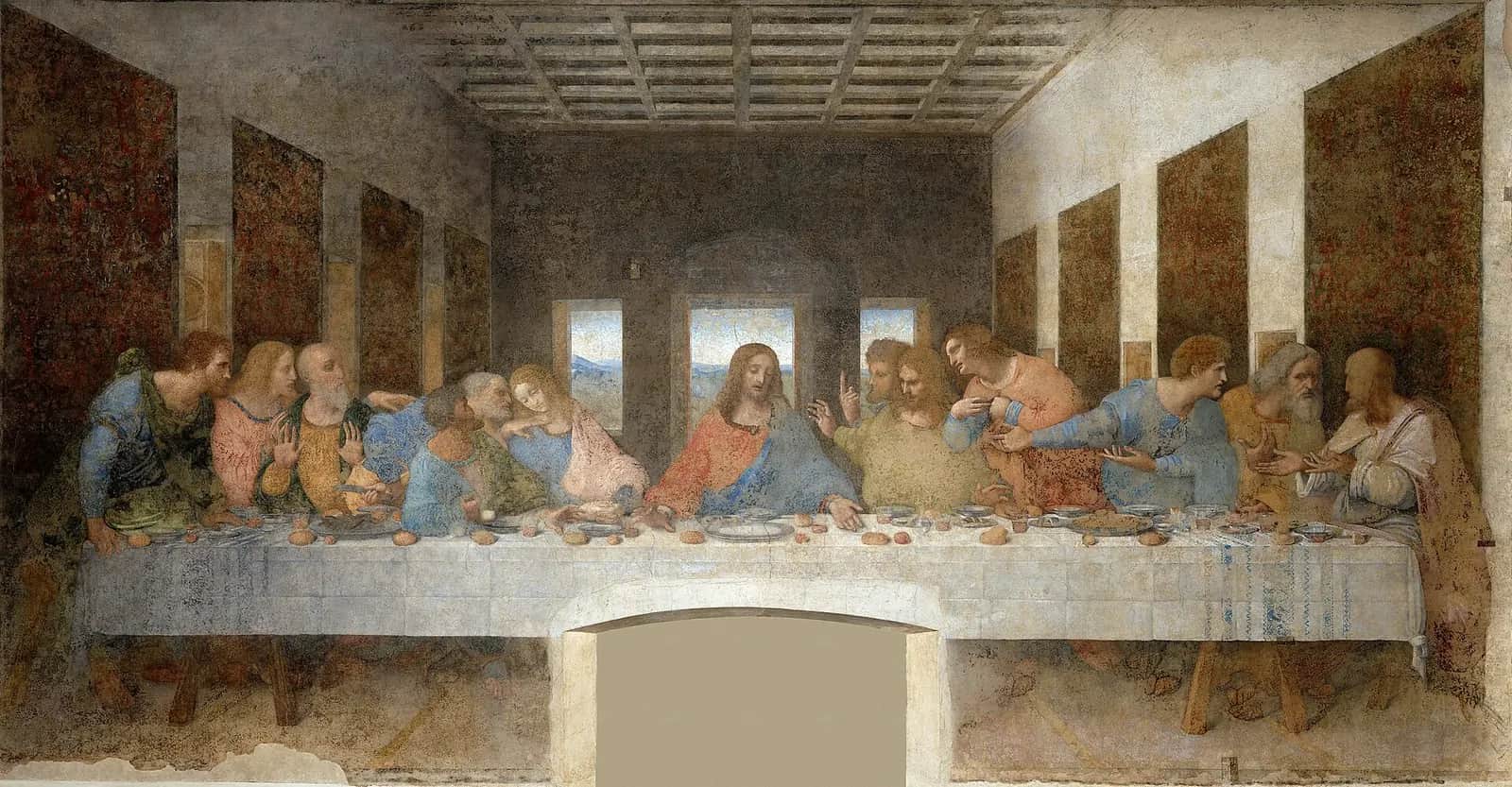
John 6:70 (WEB)
Jesus answered them, “Didn’t I choose you, the twelve, and one of you is a devil?”
Fathers and councils · 43
Jerome
“And the Saviour must be convicted either of ignorance, or of unrighteousness, inasmuch as He said in the Gospel,“Did I not choose you the twelve, and one of you is a devil?”” — editor's note: S. John vi. 70.
Read the whole comment
Tertullian
“First, He was clad in “sordid attire,” that is, in the indignity of passible and mortal flesh, when the devil, withal, was opposing himself to Him—the instigator, to wit, of Judas the traitor—who even after His baptism had tempted Him.” — editor's note: Comp. John vi. 70 and xiii. 2 (especially in Greek, where the word διάβολος is used in each case).
Read the whole comment
Augustine of Hippo
“What hath Christ done to you? who sent this same betrayer, whom He called a devil, who before betraying the Lord could not show good faith even to the Lord’s purse, with the other disciples to preach the kingdom of heaven; that He might show…” — editor's note: John vi. 70.
Read the whole comment“Had He not said to all His disciples, “I have chosen you twelve, and one of you is a devil”?” — editor's note: John vi. 70.
Read the whole comment“For He might have not chosen Judas, because He knew Judas: for He saith to His disciples, “Have not I chosen you twelve, and one out of you is a devil?”” — editor's note: John vi. 70.
Read the whole comment“For the Saviour Himself was not ignorant of him concerning whom He had already said before, “One of you is a devil.”” — editor's note: John vi. 70.
Read the whole comment“What, then, is meant by what He says in another place, “Have I not chosen you twelve, and one of you is a devil?”” — editor's note: Chap. vi. 70.
Read the whole comment
John Chrysostom
“Ver.” — the author cites it
Read the whole comment
Catena Aurea on John
- Augustine of HippoCatena Aurea on John
Such is our Lord’s discourse. The people did not perceive that it had a deep meaning, or, that grace went along with it: but receiving the matter in their own way, and taking His words in a human sense, understood…
Read the whole comment - John ChrysostomCatena Aurea on John
i. e. difficult to receive, too much for their weakness. They thought He spoke above Himself, and more loftily than He had a right to do; and so said they, Who can bear it? which was answering in fact for themselves,…
Read the whole comment - Augustine of HippoCatena Aurea on John
And if His disciples thought that saying hard, what would His enemies think? Yet it was necessary to declare a thing, which would be unintelligible to men. God’s mysteries should draw men’s attention, not enmity.
Read the whole comment - Theophylact of OhridCatena Aurea on John
When you hear, however, of His disciples murmuring, understand not those really such, but rather some who, as far as their air and behaviour went, seemed to be receiving instruction from Him. For among His disciples…
Read the whole comment - Augustine of HippoCatena Aurea on John
They spoke, however, so as not to be heard by Him. But He, who knew what was in them, heard within Himself: When Jesus knew within Himself that His disciples murmured at it, He said unto them, Doth this offend you?
Read the whole comment - Alcuin of YorkCatena Aurea on John
i. e. that I said, you should eat My flesh, and drink My blood.
Read the whole comment - John ChrysostomCatena Aurea on John
The revelation however of these hidden things was a mark of His Divinity: hence the meaning of what follows; And if ye shall see the Son of man ascend up where He was before; supply, What will ye say? He said the…
Read the whole comment - Augustine of HippoCatena Aurea on John
Or, these words are an answer to their mistake. They supposed that He was going to distribute His body in bits: whereas He tells them now, that He should ascend to heaven whole and entire: What and if ye shall see…
Read the whole comment - Theophylact of OhridCatena Aurea on John
Do not suppose from this that the body of Christ came down from heaven, as the heretics Marcion and Apollinarius say; but only that the Son of God and the Son of man are one and the same.
Read the whole comment - John ChrysostomCatena Aurea on John
He tries to remove their difficulties in another way, as follows, It is the spirit that quickeneth, the flesh profiteth nothing: that is to say, You ought to understand My words in a spiritual sense: he who…
Read the whole comment - Augustine of HippoCatena Aurea on John
Or thus, the flesh profiteth nothing. They had understood by His flesh, as it were, of a carcase, that was to be cut up, and sold in the shambles, not of a body animated by the spirit. Join the spirit to the flesh,…
Read the whole comment - Augustine of HippoCatena Aurea on John
For the flesh does not cleanse of itself, but by the Word who assumed it: which Word, being the principle of life in all things, having taken up soul and body, cleanseth the souls and bodies of those that believe. It…
Read the whole comment - John ChrysostomCatena Aurea on John
i. e. are spiritual, have nothing carnal in them, produce no effects of the natural sort; not being under the dominion of that law of necessity, and order of nature established on earth.
Read the whole comment - Augustine of HippoCatena Aurea on John
If then thou understandest them spiritually, they are life and spirit to thee: if carnally, even then they are life and spirit, but not to thee. Our Lord declares that in eating His body, and drinking His blood, we…
Read the whole comment - John ChrysostomCatena Aurea on John
Having spoken of His words being taken carnally, He adds, But there are some of you that believe not. Some, He says, not including His disciples in the number. This insight shews His high nature.
Read the whole comment - Augustine of HippoCatena Aurea on John
He says not, There are some among you who understand not; but gives the reason why they do not understand. The Prophet said, Except ye believe, ye shall not understanda. (Is. 7:9) For how can he who opposes be…
Read the whole comment - John ChrysostomCatena Aurea on John
To let you know that it was before these words, and not after, that the people murmured and were offended, the Evangelist adds, For Jesus knew from the beginning, who they were that believed not, and who should…
Read the whole comment - Theophylact of OhridCatena Aurea on John
The Evangelist wishes to shew us, that He knew all things before the foundation of the world: which was a proof of His divinity.
Read the whole comment - Augustine of HippoCatena Aurea on John
And after distinguishing those who believed from those who did not believe, our Lord gives the reason of the unbelief of the latter, And He said, Therefore said I unto you, that no man can come unto Me, except it…
Read the whole comment - John ChrysostomCatena Aurea on John
As if He said, Men’s unbelief does not disturb or astonish Me: I know to whom the Father hath given to come to Me. He mentions the Father, to shew first that He had no eye to His own glory; secondly, that God was His…
Read the whole comment - Augustine of HippoCatena Aurea on John
So then (our) faith is given to us: and no small gift it is. Wherefore rejoice if thou believest; but be not lifted up, for what hast thou which thou didst not receive? (1 Cor. 4:7.) And that this grace is given to…
Read the whole comment - John ChrysostomCatena Aurea on John
He does not say, withdrewb, but went back, i. e. from being good hearers, from the belief which they once had.
Read the whole comment - Augustine of HippoCatena Aurea on John
Being cut off from the body, their life was gone. They were no longer in the body; they were created among the unbelieving. There went back not a few, but many alter Satan, not alter Christ; as the Apostle says of…
Read the whole comment - John ChrysostomCatena Aurea on John
But it may be asked, what reason was there for speaking words to them which did not edify, but might rather have injured them? It was very useful and necessary; for this reason, they had been just now urgent in…
Read the whole comment - Augustine of HippoCatena Aurea on John
And perhaps this took place for our consolation; since it sometimes happens that a man says what is true, and what He says is not understood, and they which hear are offended and go. Then the man is sorry he spoke…
Read the whole comment - BedeCatena Aurea on John
Our Lord knew well the intentions of the other disciples which stayed, as to staying or going; but yet He put the question to them, in order to prove their faith, and hold it up to imitation: Then said Jesus unto the…
Read the whole comment - John ChrysostomCatena Aurea on John
This was the right way to retain them. Had He praised them, they would naturally, as men do, have thought that they were conferring a favour upon Christ, by not leaving Him: by shewing, as He did, that He did not…
Read the whole comment - Augustine of HippoCatena Aurea on John
As if he said, Thou castest us from Thee: give us another to whom we shall go, if we leave Thee.
Read the whole comment - John ChrysostomCatena Aurea on John
A speech of the greatest love: proving that Christ was more precious to them than father or mother. And that it might not seem to be said, from thinking that there was no one whose guidance they could look to, he…
Read the whole comment - Augustine of HippoCatena Aurea on John
For we believed, in order to know. Had we wished first to know, and then to believe, we could never have been able to believe. This we believe, and know, that Thou art the Christ the Son of God; i. e. that Thou art…
Read the whole comment - John ChrysostomCatena Aurea on John
Peter however having said, We believe, our Lord excepts Judas from the number of those who believed: Jesus answered them, Have not I chosen you twelve, and one of you is a devil? i. e. Do not suppose that, because…
Read the whole comment - BedeCatena Aurea on John
Or we must say, that He elected the eleven for one purpose, the twelfth for another: the eleven to fill the place of Apostles, and persevere in it unto the end; the twelfth to the service of betraying Him, which was…
Read the whole comment - Augustine of HippoCatena Aurea on John
He was elected to be an involuntary and unconscious instrument of producing the greatest good. For as the wicked turn the good works of God to an evil use, so reversely God turns the evil works of man to good. What…
Read the whole comment - Gregory the GreatCatena Aurea on John
One of you is a devil: the bodyb is here named after its head.
Read the whole comment - John ChrysostomCatena Aurea on John
Mark the wisdom of Christ: He neither, by exposing him, makes him shameless and contentious; nor again emboldens him, by allowing him to think himself concealed.
Read the whole comment
Cross-references · 10
Cited together in Tractates on the Gospel of John Tractate 59.
Cited together in Augustine of Hippo on John 6:60–71 (7) (Catena Aurea).
Cited together in Augustine of Hippo on John 6:60–71 (10) (Catena Aurea).
Cited together in Tractates on the Gospel of John Tractate 59.
Cited together in Augustine of Hippo on John 6:60–71 (11) (Catena Aurea).
Cited together in Tractates on the Gospel of John Tractate 59.
Cited together in Augustine of Hippo on John 6:60–71 (8) (Catena Aurea).
Cited together in John Chrysostom on John 6:60–71 (12) (Catena Aurea).
Cited together in John Chrysostom on John 6:60–71 (12) (Catena Aurea).
Cited together in Tractates on the Gospel of John Tractate 59.