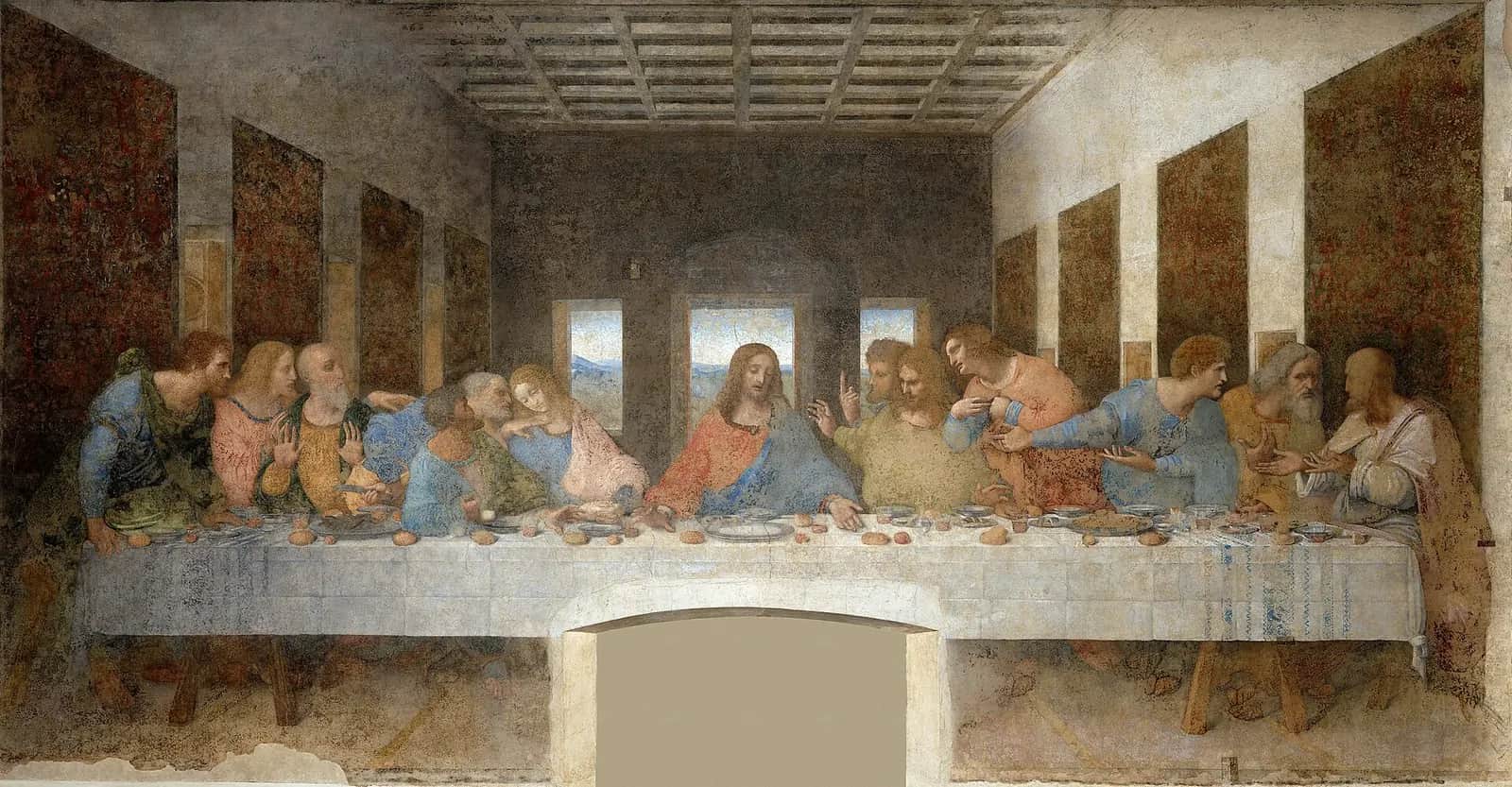
Matthew 26:1 (WEB)
When Jesus had finished all these words, he said to his disciples,
Fathers and councils · 12
Augustine of Hippo
“Matthew continues thus: “And it came to pass, when Jesus had finished all these sayings, He said unto His disciples, Ye know that after two days will be the feast of the passover, and the Son of man shall be betrayed to be crucified.”” — editor's note: Matt. xxvi. 1, 2. [It cannot be determined with certainty how much time is to be included in the phrase “after two days.” Moreover, the difficulty in regard to…
Read the whole comment
John Chrysostom
““And it came to pass, when Jesus had finished these sayings, He said unto His disciples, Ye know that after two days is the passover, and the Son of Man is betrayed to be crucified.”” — editor's note: Matt. xxvi. 1, 2.
Read the whole comment
Catena Aurea on Matthew
- Hilary of PoitiersCatena Aurea on Matthew
After the discourse in which the Lord had declared that He should return in splendour, He announces to them His approaching Passion, that they might learn the close connection between the sacrament of the Cross, and…
Read the whole comment - Rabanus MaurusCatena Aurea on Matthew
“All these sayings,” i.e. about the consummation of the world, and the day of judgment. Or, “finished,” because He had fulfilled in doing and preaching all things from the beginning of the Gospel to His Passion.
Read the whole comment - OrigenCatena Aurea on Matthew
Yet it is not “all” barely, but “all these;” for there were other sayings which He must speak before He should be delivered up.
Read the whole comment - Augustine of HippoCatena Aurea on Matthew
We gather from John’s account, that six days before the Passover, Jesus came to Bethany, and thence entered Jerusalem sitting upon the ass, after which were done the things related to have been done at Jerusalem. We…
Read the whole comment - JeromeCatena Aurea on Matthew
The Passover, called in Hebrew Phase, does not come as most think from πασχεῖν ‘to suffer,’ but from the Hebrew word signifying ‘to pass over;’ because the destroyer passed over when he saw the blood on the doors of…
Read the whole comment - Remigius of AuxerreCatena Aurea on Matthew
Or, because by the help of the Lord the Israelitish people, freed from Egyptian bondage, passed forth into liberty.
Read the whole comment - OrigenCatena Aurea on Matthew
He said not, “After two days” will be, or will come, “the feast of the Passover,” but not meaning the ordinary annual Passover, but that Passover such as had never before been, “the Passover will be offered.” [marg.…
Read the whole comment - Remigius of AuxerreCatena Aurea on Matthew
Mystically, that is called the Passover, because on that day Christ passed out of the world to His Father, from corruption to incorruption, from life to death, or because He redeemed the world by causing it savingly…
Read the whole comment - JeromeCatena Aurea on Matthew
After the two days of the shining light of the Old and of the New Testament, the true Passover is slain for the world. Also our Passover is celebrated when we leave the things of earth, and hasten to the things of…
Read the whole comment - OrigenCatena Aurea on Matthew
He foretels His crucifixion to His disciples, adding, “And the Son of Man shall be delivered to be crucified;” thus fortifying them against that shock of surprise, which the sight of their Master, led forth to…
Read the whole comment
Cross-references · 9
Cited together in Harmony of the Gospels II.79.
Cited together in Harmony of the Gospels II.79.
Cited together in Harmony of the Gospels II.79.
Cited together in Harmony of the Gospels II.79.
Cited together in Harmony of the Gospels II.79.
Cited together in Harmony of the Gospels II.79.
Cited together in Harmony of the Gospels II.79.
Cited together in Harmony of the Gospels II.79.
Cited together in Augustine of Hippo on Matthew 26:1–2 (Catena Aurea).