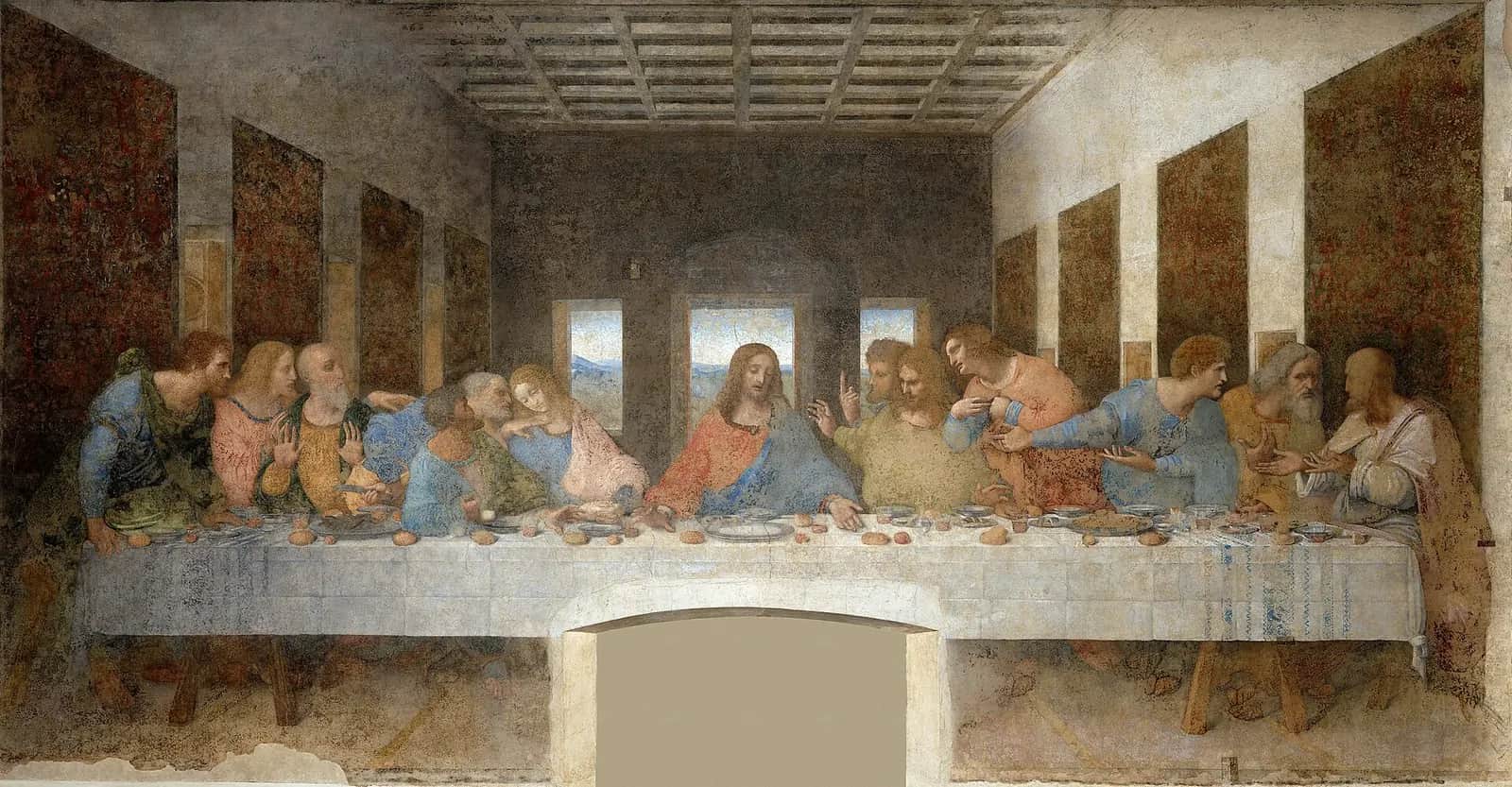
Matthew 26:29 (WEB)
But I tell you that I will not drink of this fruit of the vine from now on, until that day when I drink it anew with you in my Father’s Kingdom.”
Catechism · 2
“Do this in remembrance of me." and likewise the cup after supper, saying, "This cup which is poured out for you is the New Covenant in my blood."” — Catechism footnote: Lk 22:7-20; Cf. Mt 26:17-29; Mk 14:12-25; 1 Cor 11:23-26.
“At the Last Supper the Lord himself directed his disciples' attention toward the fulfillment of the Passover in the kingdom of God: "I tell you I shall not drink again of this fruit of the vine until that day when I drink it new with you in my Father's kingdom."” — Catechism footnote: Mt 26:29; cf. Lk 22:18; Mk 14 25.
Fathers and councils · 27
Gregory of Nyssa
“And even though wine be named by Scripture the “product” of the vine, not even so will our argument with regard to the orthodox doctrine suffer by this identity of name.” — editor's note: γέννημα. E.g. S. Matt. xxvi. 29.
Read the whole comment
Origen
- Origen, De Principiis II.11Book II
“And from the New Testament also they quote the saying of the Saviour, in which He makes a promise to His disciples concerning the joy of wine, saying, “Henceforth I shall not drink of this cup, until I drink it with you new in My Father’s kingdom.”” — editor's note: Matt. xxvi. 29.
Read the whole comment
Cyprian of Carthage
“I say unto you, I will not drink henceforth of this fruit of the vine, until that day in which I shall drink new wine with you in the kingdom of my Father.”” — editor's note: Matt. xxvi. 28, 29.
Read the whole comment
Augustine of Hippo
“For that wine, which from the produce of the vine of the New Testament the Lord is to drink with His saints in the kingdom of His Father, must needs be most sweet and most sound.” — editor's note: Matt. xxvi. 29.
Read the whole comment
John Chrysostom
“Then, when He had delivered it, He saith, “I will not drink of the fruit of this wine, until that day when I drink it new with you in my Father’s kingdom.”” — editor's note: Matt. xxvi. 29. [The word “henceforth” is omitted; “this” is joined with “vine,” and “new” is in a different position in the Greek. All these are variations…
Read the whole comment
Jerome
“For he had himself learned that the Lord Jesus gave to some barley bread, lest they should faint by the way, but offered to others His own body, that they should strive to attain His kingdom;” and immediately afterwards: “The nuptial tie, then, is not to be avoided as a crime, but to be refused as a hard burden.” — editor's note: Matt. xxvi. 26, 29.
Read the whole comment“(2) What is the meaning of Matt. xxvi. 29?” — the author cites it
Read the whole comment
Clement of Alexandria
“And that it was wine which was the thing blessed, He showed again, when He said to His disciples, “I will not drink of the fruit of this vine, till I drink it with you in the kingdom of my Father.”” — editor's note: Mark xvi. 25; Matt. xxvi. 29. [This also is a noteworthy use of the text.]
Read the whole comment
Catena Aurea on Matthew
- Remigius of AuxerreCatena Aurea on Matthew
The Lord having given His disciples His Body under the element of bread [marg. note: sub specie panis], well gives the cup of His Blood to them likewise; shewing what joy He has in our salvation, seeing He even shed…
Read the whole comment - John ChrysostomCatena Aurea on Matthew
He gave thanks to instruct us after what manner we ought to celebrate this mystery, and shewed also thereby that He came not to His Passion against His will. Also He taught us to bear whatsoever we suffer with…
Read the whole comment - JeromeCatena Aurea on Matthew
Thus then the Lord Jesus was at once guest and feast, the eater and the things eaten. [ed. note: ap. Grat. do Consecr. d. ii. 87.]
Read the whole comment - John ChrysostomCatena Aurea on Matthew
“This is my blood of the new testament;” that is, the new promise, covenant, law; for this blood was promised from of old, and this guarantees the new covenant; for as the Old Testament had the blood of sheep and…
Read the whole comment - Remigius of AuxerreCatena Aurea on Matthew
For thus it is read, “Behold the blood of the covenant which the Lord hath made with you.” [Ex 24:8]
Read the whole comment - John ChrysostomCatena Aurea on Matthew
And in calling it blood, He foreshews His Passion, “My blood ... which shall be shed for many.” Also the purpose for which He died, adding, “For the remission of sins;” as much as to say, The blood of the lamb was…
Read the whole comment - Remigius of AuxerreCatena Aurea on Matthew
And it is to be noted, that He says not, For a few, nor, For all, but, “For many;” because He came not to redeem a single nation, but many out of all nations.
Read the whole comment - John ChrysostomCatena Aurea on Matthew
Thus saying, He shews that His Passion is a mystery of the salvation of men, by which also He comforts His disciples. And as Moses said, “This shall be an ordinance to thee for ever,” [Ex 12:24] so Christ speaks as…
Read the whole comment - Remigius of AuxerreCatena Aurea on Matthew
And He taught us to offer not bread only, but wine also, to shew that they who hungered and thirsted after righteousness were to be refreshed by these mysteries.
Read the whole comment - Glossa OrdinariaCatena Aurea on Matthew
As the refreshment of the body is wrought by means of meat and drink, so under the form of meat and drink the Lord has provided for us spiritual refreshment. And it was suitable that for the shewing forth the Lord’s…
Read the whole comment - Cyprian of CarthageCatena Aurea on Matthew
The cup of the Lord is not water only, or wine only, but the two are mixed; so the Lord’s Body cannot be either flour only, or water only, but the two are combined. [ed. note: To signify, as S. Cyprian proceeds to…
Read the whole comment - Ambrose of MilanCatena Aurea on Matthew
If Melchisedech offered bread and wine, what means this mixing of water? Hear the reason. Moses struck the rock, and the rock gave forth abundance of water, but that rock was Christ. Also one of the soldiers with his…
Read the whole comment - Remigius of AuxerreCatena Aurea on Matthew
For it should be known, that as John speaks, “The many waters are nations and people.” [Rev 17:15] And because we ought always to abide in Christ and Christ in us, wine mixed with water is offered, to shew that the…
Read the whole comment - John ChrysostomCatena Aurea on Matthew
And having spoken of His Passion and Cross, He proceeds to speak of His resurrection, “I say unto you, I will not drink henceforth, &c.” By the “kingdom” He means His resurrection. And He speaks this of His…
Read the whole comment - JeromeCatena Aurea on Matthew
Or otherwise; From carnal things the Lord passes to spiritual. Holy Scripture speaks of the people of Israel as of a vine brought up out of Egypt; [marg. note: Ps 80:8, Jer 2:21] of this vine it is then that the Lord…
Read the whole comment - Remigius of AuxerreCatena Aurea on Matthew
Or otherwise; “I will not drink of the fruit of this vine,” i.e. I will no longer take pleasure in the carnal oblations of the Synagogue, among which the immolation of the Paschal lamb held an eminent place. But the…
Read the whole comment - Augustine of HippoCatena Aurea on Matthew
Or otherwise; When He says, “I shall drink it new with you,” He gives us to understand that this is old. Seeing then that He took body of the race of Adam, who is called the old man, and was to give up to death that…
Read the whole comment - Hilary of PoitiersCatena Aurea on Matthew
It seems from this that Judas had not drunk with Him, because He was not to drink hereafter in the kingdom; but He promises to all who partook at this time of this fruit of the vine that they should drink with Him…
Read the whole comment - Glossa OrdinariaCatena Aurea on Matthew
But in support of the opinion of other saints, that Judas did receive the sacraments from Christ, it is to be said, that the words “with you” may refer to the greater part of them, and not necessarily to the whole.
Read the whole comment
Cross-references · 14
Parallel passages
Matthew 26:29 and Mark 14:25 share the same wording (12 words).
Cited together with
Cited together in Catechism §1403.
Cited together in John Chrysostom on Matthew 26:27–29 (4) (Catena Aurea).
Cited together in John Chrysostom on Matthew 26:27–29 (5) (Catena Aurea).
Cited together in Glossa Ordinaria on Matthew 26:27–29 (Catena Aurea).
Cited together in Against Eunomius III.4.
Cited together in Against Eunomius III.4.
Cited together in Catechism §1403.
Cited together in Remigius of Auxerre on Matthew 26:27–29 (5) (Catena Aurea).
Cited together in John Chrysostom on Matthew 26:27–29 (4) (Catena Aurea).
Cited together in Remigius of Auxerre on Matthew 26:27–29 (2) (Catena Aurea).
Cited together in Against Eunomius III.4.
Cited together in Jerome on Matthew 26:27–29 (2) (Catena Aurea).
Cited together in Against Eunomius III.4.