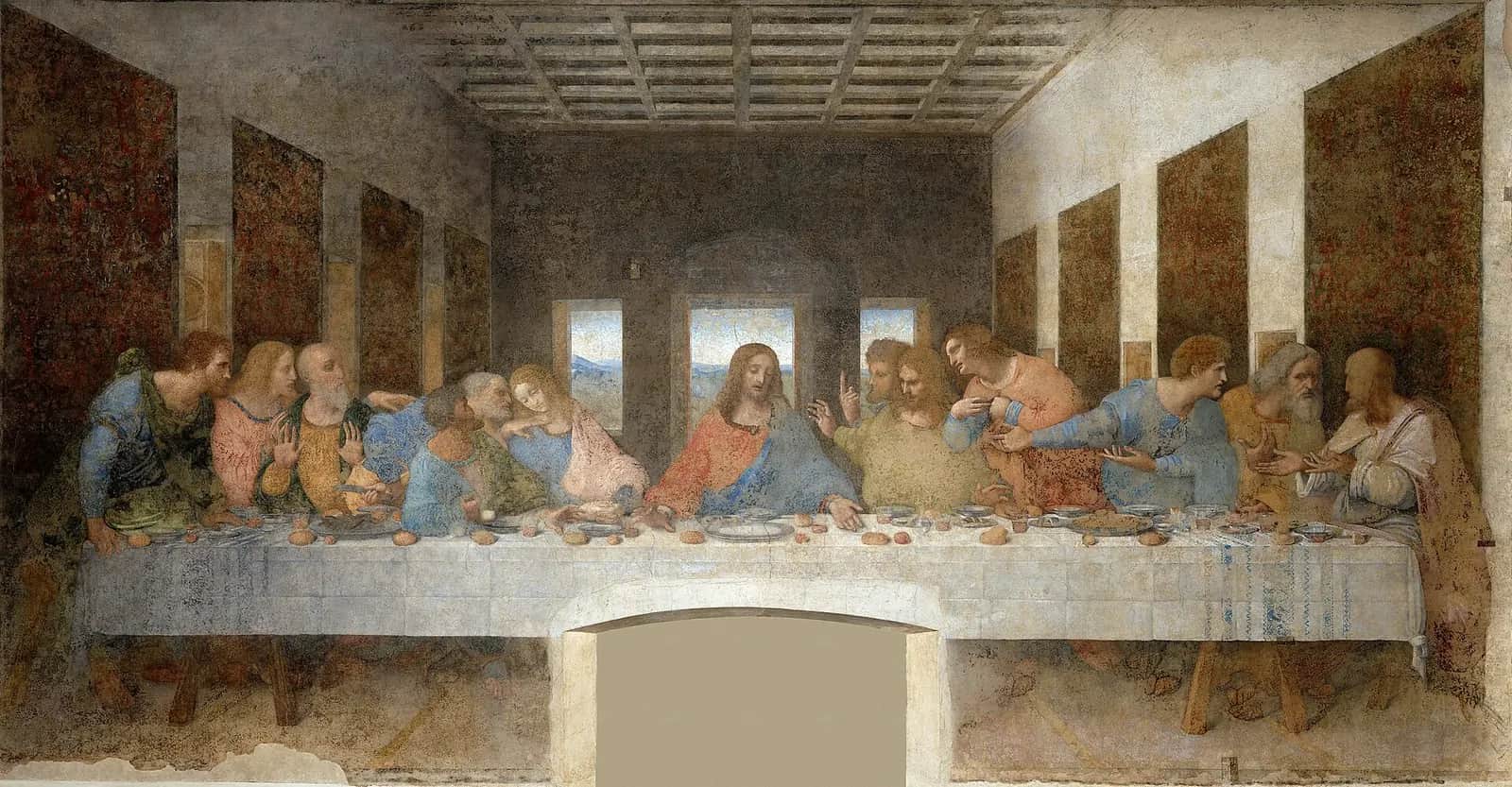
Matthew 26:28 (WEB)
for this is my blood of the new covenant, which is poured out for many for the remission of sins.
Catechism · 7
The Sacrament of the Eucharist
“Do this in remembrance of me." and likewise the cup after supper, saying, "This cup which is poured out for you is the New Covenant in my blood."” — Catechism footnote: Lk 22:7-20; Cf. Mt 26:17-29; Mk 14:12-25; 1 Cor 11:23-26.
“In the Eucharist Christ gives us the very body which he gave up for us on the cross, the very blood which he "poured out for many for the forgiveness of sins."” — Catechism footnote: Mt 26:28.
Sin
“The same is true of the Eucharist, the sacrament of redemption: "This is my blood of the covenant, which is poured out for many for the forgiveness of sins."” — Catechism footnote: Mt 26:28.
The Seven Petitions
“We find the efficacious and undoubted sign of his forgiveness in the sacraments of his Church.” — Catechism footnote: Cf. Mt 26:28; Jn 20:23.
The Mysteries of Christ's Life
“The supreme proof of his love will be the sacrifice of his own life "for the forgiveness of sins".” — Catechism footnote: Mt 26:28.
Jesus Died Crucified
“"This is my blood of the covenant, which is poured out for many for the forgiveness of sins."” — Catechism footnote: Lk 22:19; Mt 26:28; cf. I5.7Cor 5:7.
“…restores man to communion with God by reconciling him to God through the "blood of the covenant, which was poured out for many for the forgiveness of sins".” — Catechism footnote: Mt 26:28; cf. Ex 24:8; Lev 16:15-16; 2 Cor 11:25.
Fathers and councils · 32
Tertullian
“…was different from that which He accepted for His burial; and that the taste of the wine was different from that which He consecrated in memory of His blood.” — editor's note: Matt. xxvi. 27, 28; Luke xxii. 19, 20; 1 Cor. xi. 25.
Read the whole comment“For Christian discipline dates from the renewing of the Testament, and (as we have premised) from the redemption of flesh—that is, the Lord’s passion.” — editor's note: Comp. Matt. xxvi. 28, Mark xiv. 24, Luke xxii. 21, with Heb. ix. 11–20.
Read the whole comment
John Damascene
“For as often as ye eat this bread and drink this cup, ye do shew the death of the Son of man and confess His resurrection until He come.” — editor's note: St. Matt. xxvi. 27, 28; St. Mark xiv. 22–24; St. Luke xxii. 19, 20; 1 Cor. xi. 24–26.
Read the whole comment
Cyril of Jerusalem
“Thou seest that cup here spoken of, which Jesus took in His hands, and gave thanks, and said, This is My blood, which is shed for many for the remission of sins.” — editor's note: Matt. xxvi. 28.
Read the whole comment
Theodoret of Cyrus
“Orth.—You have spoken as a lover of truth should speak, for when the Lord had taken the symbol, He did not say “this is my godhead,” but “this is my body;” and again “this is my blood” and in another place “the bread that I will give is my flesh which I will give for the life of the world.”” — editor's note: Matt. xxvi. 28
Read the whole comment“Through this body too He was made and was called High Priest and Apostle through the mystery whereof He gave to us, saying ‘This is my Body for you’ and ‘my Blood of the New Testament’ (not of the Old), shed for you.”” — editor's note: Matt. xxvi. 28; Mark xiv. 24
Read the whole comment“After taking and breaking it and giving it to His disciples He said, “This is my body which was given for you” or according to the apostle “broken” and again, “This is my blood of the New Testament which is shed for many.”” — editor's note: Matt. xxvi. 28 and Mark xiv. 24
Read the whole comment“…He delivered the divine mysteries and broke the symbol and distributed it, He added “This is my body which is being broken for you for the remission of sins,” and again “This is my blood which is shed for many for the remission of sins,” and again “Except ye eat the flesh of the Son of Man and drink His blood ye have…” — editor's note: 1 Cor. xi. 24. Matt. xxvi. 28. But it is to be noticed that for St. Paul’s word κλώμενον, i.e. “being broken,” Theodoret substitutes θρυπτόμενον, i.e. “being…
Read the whole comment
Cyprian of Carthage
“I say unto you, I will not drink henceforth of this fruit of the vine, until that day in which I shall drink new wine with you in the kingdom of my Father.”” — editor's note: Matt. xxvi. 28, 29.
Read the whole comment
Athanasius of Alexandria
“But now we, eating of the Word of the Father, and having the lintels of our hearts sealed with the blood of the New Testament, acknowledge the grace given us from the Saviour, who said, ‘Behold, I have given unto you to tread upon serpents and scorpions, and over all the power of the enemy.’” — editor's note: Matt. xxvi. 28.
Read the whole comment
John Chrysostom
“But in this case He says, “This is the blood of the New Testament, which is shed for you, for the remission of sins.” ( Matt. xxvi. 28.)” — the author cites it
Read the whole comment“Matt. XXVI. 26-28.” — the author cites it
Read the whole comment
Augustine of Hippo
“This is the “Blood, That was shed for many for the remission of sins.”” — editor's note: Matt. xxvi. 28.
Read the whole comment
Catena Aurea on Matthew
- Remigius of AuxerreCatena Aurea on Matthew
The Lord having given His disciples His Body under the element of bread [marg. note: sub specie panis], well gives the cup of His Blood to them likewise; shewing what joy He has in our salvation, seeing He even shed…
Read the whole comment - John ChrysostomCatena Aurea on Matthew
He gave thanks to instruct us after what manner we ought to celebrate this mystery, and shewed also thereby that He came not to His Passion against His will. Also He taught us to bear whatsoever we suffer with…
Read the whole comment - JeromeCatena Aurea on Matthew
Thus then the Lord Jesus was at once guest and feast, the eater and the things eaten. [ed. note: ap. Grat. do Consecr. d. ii. 87.]
Read the whole comment - John ChrysostomCatena Aurea on Matthew
“This is my blood of the new testament;” that is, the new promise, covenant, law; for this blood was promised from of old, and this guarantees the new covenant; for as the Old Testament had the blood of sheep and…
Read the whole comment - Remigius of AuxerreCatena Aurea on Matthew
For thus it is read, “Behold the blood of the covenant which the Lord hath made with you.” [Ex 24:8]
Read the whole comment - John ChrysostomCatena Aurea on Matthew
And in calling it blood, He foreshews His Passion, “My blood ... which shall be shed for many.” Also the purpose for which He died, adding, “For the remission of sins;” as much as to say, The blood of the lamb was…
Read the whole comment - Remigius of AuxerreCatena Aurea on Matthew
And it is to be noted, that He says not, For a few, nor, For all, but, “For many;” because He came not to redeem a single nation, but many out of all nations.
Read the whole comment - John ChrysostomCatena Aurea on Matthew
Thus saying, He shews that His Passion is a mystery of the salvation of men, by which also He comforts His disciples. And as Moses said, “This shall be an ordinance to thee for ever,” [Ex 12:24] so Christ speaks as…
Read the whole comment - Remigius of AuxerreCatena Aurea on Matthew
And He taught us to offer not bread only, but wine also, to shew that they who hungered and thirsted after righteousness were to be refreshed by these mysteries.
Read the whole comment - Glossa OrdinariaCatena Aurea on Matthew
As the refreshment of the body is wrought by means of meat and drink, so under the form of meat and drink the Lord has provided for us spiritual refreshment. And it was suitable that for the shewing forth the Lord’s…
Read the whole comment - Cyprian of CarthageCatena Aurea on Matthew
The cup of the Lord is not water only, or wine only, but the two are mixed; so the Lord’s Body cannot be either flour only, or water only, but the two are combined. [ed. note: To signify, as S. Cyprian proceeds to…
Read the whole comment - Ambrose of MilanCatena Aurea on Matthew
If Melchisedech offered bread and wine, what means this mixing of water? Hear the reason. Moses struck the rock, and the rock gave forth abundance of water, but that rock was Christ. Also one of the soldiers with his…
Read the whole comment - Remigius of AuxerreCatena Aurea on Matthew
For it should be known, that as John speaks, “The many waters are nations and people.” [Rev 17:15] And because we ought always to abide in Christ and Christ in us, wine mixed with water is offered, to shew that the…
Read the whole comment - John ChrysostomCatena Aurea on Matthew
And having spoken of His Passion and Cross, He proceeds to speak of His resurrection, “I say unto you, I will not drink henceforth, &c.” By the “kingdom” He means His resurrection. And He speaks this of His…
Read the whole comment - JeromeCatena Aurea on Matthew
Or otherwise; From carnal things the Lord passes to spiritual. Holy Scripture speaks of the people of Israel as of a vine brought up out of Egypt; [marg. note: Ps 80:8, Jer 2:21] of this vine it is then that the Lord…
Read the whole comment - Remigius of AuxerreCatena Aurea on Matthew
Or otherwise; “I will not drink of the fruit of this vine,” i.e. I will no longer take pleasure in the carnal oblations of the Synagogue, among which the immolation of the Paschal lamb held an eminent place. But the…
Read the whole comment - Augustine of HippoCatena Aurea on Matthew
Or otherwise; When He says, “I shall drink it new with you,” He gives us to understand that this is old. Seeing then that He took body of the race of Adam, who is called the old man, and was to give up to death that…
Read the whole comment - Hilary of PoitiersCatena Aurea on Matthew
It seems from this that Judas had not drunk with Him, because He was not to drink hereafter in the kingdom; but He promises to all who partook at this time of this fruit of the vine that they should drink with Him…
Read the whole comment - Glossa OrdinariaCatena Aurea on Matthew
But in support of the opinion of other saints, that Judas did receive the sacraments from Christ, it is to be said, that the words “with you” may refer to the greater part of them, and not necessarily to the whole.
Read the whole comment
Cross-references · 20
Parallel passages
Matthew 26:28 and Mark 14:24 share the same wording (14 words).
Cited together with
Cited together in Catechism §610 and 2 other places.
Cited together in Catechism §1365.
Cited together in Catechism §613.
Cited together in Sermons on New Testament Lessons Sermon 84.
Cited together in Catechism §613 and 1 other place.
Cited together in Catechism §613.
Cited together in Catechism §613.
Cited together in John Chrysostom on Matthew 26:27–29 (5) (Catena Aurea).
Cited together in Catechism §613.
Cited together in Catechism §610.
Cited together in Catechism §613.
Cited together in Catechism §613.
Cited together in Remigius of Auxerre on Matthew 26:27–29 (5) (Catena Aurea).
Cited together in John Chrysostom on Matthew 26:27–29 (4) (Catena Aurea).
Cited together in Catechism §613 and 1 other place.
Cited together in Catechism §613.
Cited together in Catechism §613.
Cited together in Jerome on Matthew 26:27–29 (2) (Catena Aurea).
Cited together in Catechism §1846.