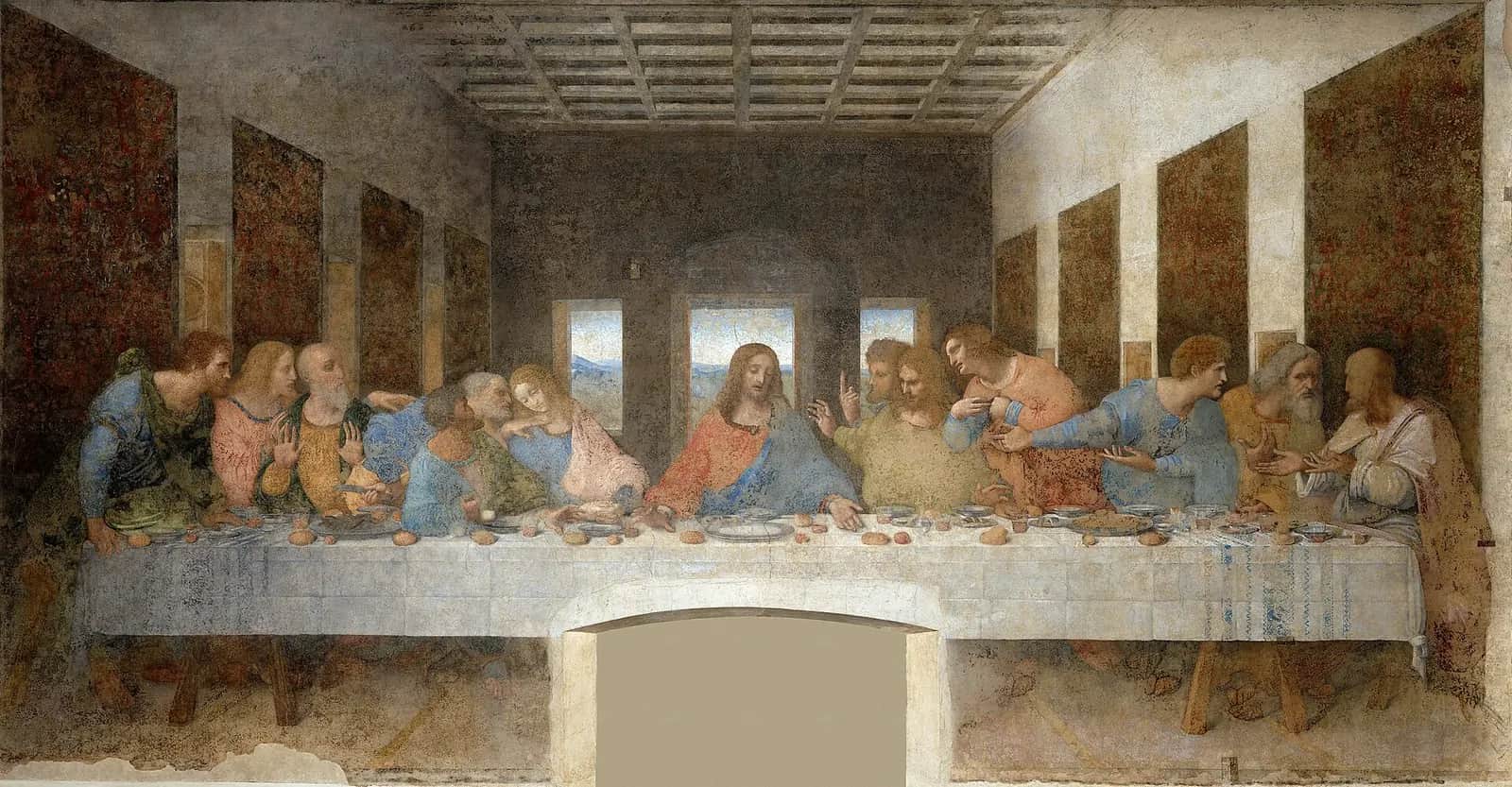
Matthew 26:31 (WEB)
Then Jesus said to them, “All of you will be made to stumble because of me tonight, for it is written, ‘I will strike the shepherd, and the sheep of the flock will be scattered.’
Catechism · 1
“The seed and beginning of the Kingdom are the "little flock" of those whom Jesus came to gather around him, the flock whose shepherd he is.” — Catechism footnote: Lk 12:32; cf. Mt 10:16; 26:31; In 10:1-21.
Fathers and councils · 29
Augustine of Hippo
“The other three also record the same thing.” — editor's note: Matt. xxvi. 30–35; Mark xiv. 26–31; Luke xxii. 31–34.
Read the whole comment“We have introduced the preceding section as it is presented by Matthew.” — editor's note: Matt. xxvi. 30–35.
Read the whole comment
John Chrysostom
“Then “He saith unto them, All ye shall be offended in me.”” — editor's note: Matt. xxvi. 31.
Read the whole comment
Jerome
““It is written,” he says, “I will smite the shepherd, and the sheep of the flock shall be scattered abroad.”” — editor's note: Matt. xxvi. 31; Zech. xiii. 7.
Read the whole comment
Hilary of Poitiers
“After He had said that they should all be offended in Him, but promised that He would go before them into Galilee, Peter protested that though all the rest should be offended, he would remain faithful and not be offended.” — editor's note: St. Matt. xxvi. 31; St. Mark xiv. 27; cf. St. John xvi. 32.
Read the whole comment
Catena Aurea on John
- OrigenCatena Aurea on John
“(Matt. 26:31) But afterwards He cleansed them, so that they needed no more cleansing.” — the author cites it
Read the whole comment
Aphrahat
“And again he said:—The spear shall arise against the shepherd, and against the man, My friend;and it shall smite the shepherd, and the sheep of his flock shall be scattered; and I will turn back My hand upon the pastor.” — editor's note: Zech. xiii. 7; S. Matt. xxvi. 31; S. Mark xiv. 27.
Read the whole comment
Catena Aurea on Matthew
- OrigenCatena Aurea on Matthew
When the disciples had eaten the bread of blessing, and drunk of the cup of thanksgiving, the Lord instructs them in return for these things to sing a hymn to the Father. And they go to the Mount of Olives, that they…
Read the whole comment - Rabanus MaurusCatena Aurea on Matthew
This hymn may be that thanksgiving which in John, Our Lord offers up to the Father, when He lifted up His eyes and prayed for His disciples, and those who should believe through their word. This is that of which the…
Read the whole comment - John ChrysostomCatena Aurea on Matthew
Let them hear this, who like swine with no thought but of eating rise from the table drunk, when they should have given thanks, and closed with a hymn. Let them hear who will not tarry for the final prayer in the…
Read the whole comment - JeromeCatena Aurea on Matthew
After this example of the Saviour, whosoever is filled and is drunken upon the bread and cup of Christ, may praise God and ascend the Mount of Olives, where is refreshment after toil, solace of grief, and knowledge…
Read the whole comment - Hilary of PoitiersCatena Aurea on Matthew
Hereby He shews that men confirmed by the powers of the Divine mysteries, are exalted to heavenly glory in a common joy and gladness.
Read the whole comment - OrigenCatena Aurea on Matthew
Suitably also was the mount of mercy chosen whence to declare the offence of His disciples’ weakness, by One even then prepared not to reject the disciples who forsook Him, but to receive them when they returned to Him.
Read the whole comment - JeromeCatena Aurea on Matthew
He foretels what they should suffer, that they might not after it had befallen them despair of salvation; but doing penitence might be set free.
Read the whole comment - John ChrysostomCatena Aurea on Matthew
In this we see what the disciples were both before and after the cross. They who could not stand with Christ whilst He was crucified, became after the death of Christ harder than adamant. This flight and fear of the…
Read the whole comment - JeromeCatena Aurea on Matthew
And He adds emphatically, “this night,” because as “they that are drunken are drunken by night,” [1 Thess. 5:7] so they that are scandalized are scandalized by night, and in the dark.
Read the whole comment - Hilary of PoitiersCatena Aurea on Matthew
The credit of this prediction is supported by the authority of old prophecy; “It is written, I will smite the shepherd, and the sheep of the flock shall be scattered abroad.”
Read the whole comment - JeromeCatena Aurea on Matthew
This is found in Zacharias in words different; it is said to God in the person of the Prophet, “Smite the shepherd, and the sheep will be scattered abroad.” [Zech 13:7] The good Shepherd is smitten, that He may lay…
Read the whole comment - John ChrysostomCatena Aurea on Matthew
He produces this prophecy to teach them to attend to the things that are written, and to shew that His crucifixion was according to the counsel of God, and (as He does throughout) that He was not a stranger to the…
Read the whole comment - OrigenCatena Aurea on Matthew
Also He foretels this to them, that they who now were somewhat dispersed in consequence of the offence, should be after gathered together by Christ rising again, and going before them into Galilee of the Gentiles.
Read the whole comment - Hilary of PoitiersCatena Aurea on Matthew
But Peter was carried so far by his zeal and affection for Christ, that he regarded neither the weakness of his flesh nor the truth of the Lord’s words; as if what He spake must not come to pass, “Peter answered and…
Read the whole comment - John ChrysostomCatena Aurea on Matthew
What sayest thou, Peter? The Prophet says, “The sheep shall be scattered abroad,” and Christ has confirmed it, yet thou sayest, Never. When He said, “One of you shall betray me,” thou fearedst for thyself, although…
Read the whole comment - JeromeCatena Aurea on Matthew
It is not wilfulness, not falsehood, but the Apostle’s faith, and ardent attachment towards the Lord his Saviour.
Read the whole comment - Remigius of AuxerreCatena Aurea on Matthew
What the One affirms by His power of foreknowledge, the other denies through love; whence we may take a practical lesson, that in proportion as we are confident of the warmth of our faith, we should be in fear of the…
Read the whole comment - OrigenCatena Aurea on Matthew
Whence the other disciples were offended in Jesus, but Peter was not only offended, but what is much more, was suffered to deny Him thrice.
Read the whole comment - Augustine of HippoCatena Aurea on Matthew
Perplexity may be occasioned to some by the great difference, not in words only, but in substance, of the speeches in which Peter is forewarned by Our Lord, and which occasion his presumptuous declaration of dying…
Read the whole comment - OrigenCatena Aurea on Matthew
But you will ask, whether it were possible that Peter should not have been offended, when once the Saviour had said, “All ye shalt be offended in me.” To which one will answer, what is foretold by Jesus must of…
Read the whole comment - Rabanus MaurusCatena Aurea on Matthew
Peter understood the Lord to have foretold that he should deny Him under terror of death, and therefore he declares that though death were imminent, nothing could shake him from his faith; and the other Apostles in…
Read the whole comment - John ChrysostomCatena Aurea on Matthew
[I suppose also that Peter fell into these words through ambition and boastfulness. And they had disputed at supper which of them should be greatest, whence we see that the love of empty glory disturbed them much.…
Read the whole comment
Cross-references · 15
Parallel passages
Matthew 26:31 and Mark 14:27 share the same wording (22 words).
Cited together with
Cross-reference given by the World English Bible's translators.
Cited together in Augustine of Hippo on Matthew 26:30–35 (Catena Aurea).
Cited together in Catechism §764.
Cited together in Origen on John 13:1–5 (2) (Catena Aurea).
Cited together in Origen on John 13:1–5 (2) (Catena Aurea).
Cited together in Origen on John 13:1–5 (2) (Catena Aurea).
Cited together in Origen on John 13:1–5 (2) (Catena Aurea).
Cited together in Origen on John 13:1–5 (2) (Catena Aurea).
Cited together in John Chrysostom on Matthew 26:30–35 (5) (Catena Aurea).
Cited together in Jerome on Matthew 26:30–35 (3) (Catena Aurea).
Cited together in Rabanus Maurus on Matthew 26:30–35 (Catena Aurea).
Cited together in Jerome on Matthew 26:30–35 (4) (Catena Aurea).
Cited together in Catechism §764.
Cited together in Catechism §764.