Matthew 26:42 (WEB)
Again, a second time he went away and prayed, saying, “My Father, if this cup can’t pass away from me unless I drink it, your desire be done.”
Catechism · 2
The Seven Petitions
“It is by his prayer that Jesus vanquishes the tempter, both at the outset of his public mission and in the ultimate struggle of his agony.” — Catechism footnote: Cf. Mt 4:1-11; 26:36-44.
Jesus Died Crucified
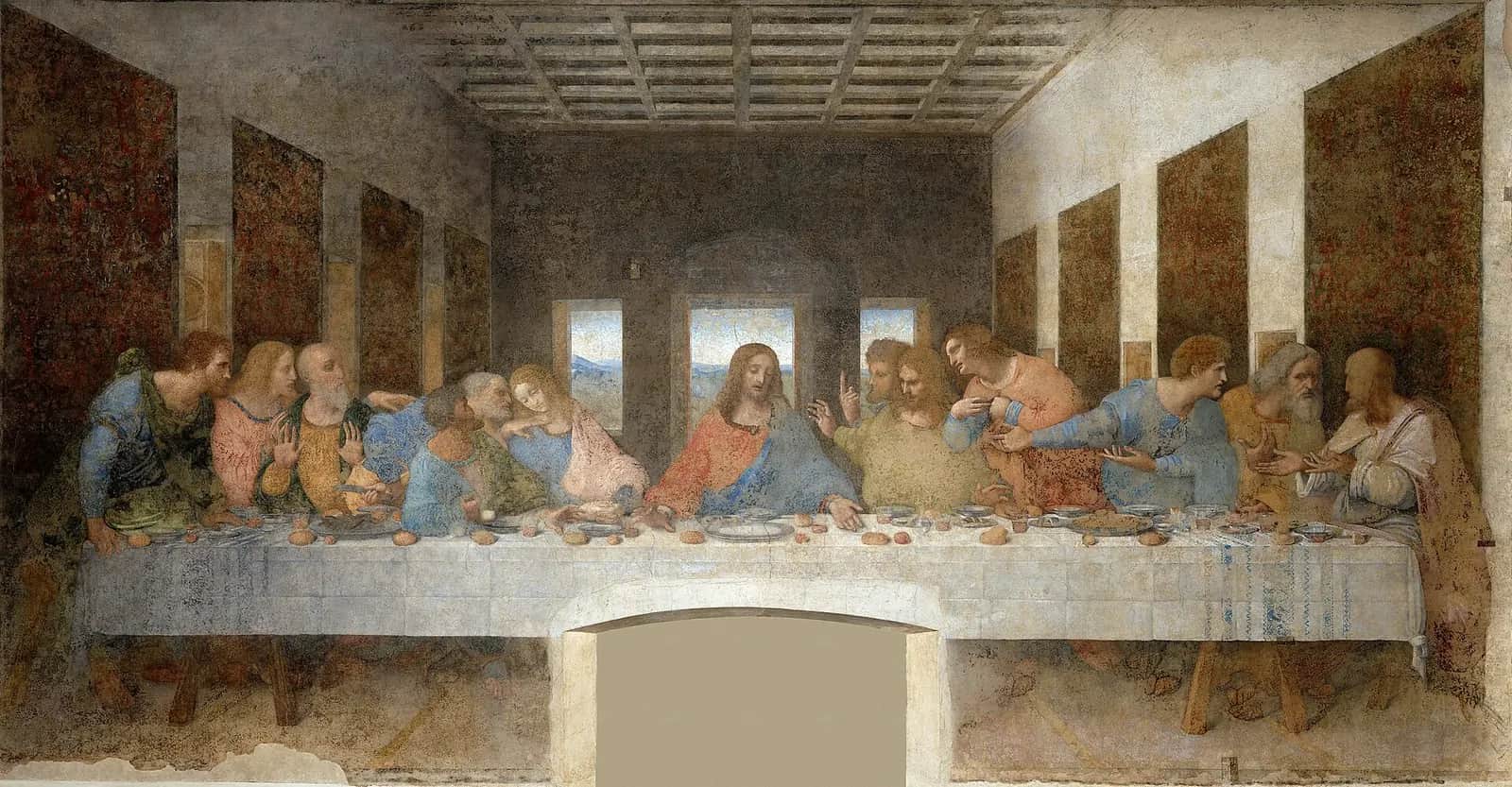
“The cup of the New Covenant, which Jesus anticipated when he offered himself at the Last Supper, is afterwards accepted by him from his Father's hands in his agony in the garden at Gethsemani,” — Catechism footnote: Cf. Mt 26:42; Lk 22:20.
Fathers and councils · 34
Augustine of Hippo
“For unknown to himself every one is before the questioning of temptation: just as of himself Peter in his confidence was ignorant, and by denying learned what kind of powers he had, in his very stumbling he perceived that it was falsely he had been…” — editor's note: Matt. xxvi. 35–69.
Read the whole comment“Matthew then proceeds with his narrative in the same connection as follows: “Then cometh Jesus with them unto a place called Gethsemane.”” — editor's note: Matt. xxvi. 36–46.
Read the whole comment
John Chrysostom
“And again He prayed in the same way, saying, “Father, if this cannot pass from me except I drink it, Thy will be done,”showing here, that He fully harmonizes with God’s will, and that we must always follow this, and seek after it.” — editor's note: Matt. xxvi. 42. [The word “cup” is omitted as in R.V., but “from me” is retained as in the received text.—R.]
Read the whole comment
Hilary of Poitiers
“He knew, too, that the cup could not pass away unless He drank it, for He said, My Father, this cup cannot pass from Me unless I drink it: Thy will be done: that is, with the completion of His Passion, the fear of the cup would pass away which could not pass away unless He drank it: the end of that fear would…” — editor's note: St. Matt. xxvi. 42. The Greek is:—‘My Father, if this cup cannot pass away except I drink of it, Thy will be done.’
Read the whole comment“I am not come to do Mine own will, but the will of Him that sent Me: and again, Therefore hath the Father loved Me because I do all things that are pleasing unto Him: and, Father, Thy will be done.” — editor's note: Cf. St. Matt. xxvi. 39, 42; St. Mark xiv. 36; St. Luke xxii. 42.
Read the whole comment
Leo the Great
“And so, dearly beloved, when the Son of God says, “Father, if it be possible, let this cup pass from Me,” He uses the outcry of our nature, and pleads the cause of human frailty and trembling: that our patience may be strengthened and our fears driven away in the things which we have to bear.” — editor's note: S. Matt. xxvi. 39 and 42.
Read the whole comment“For when the Passion was beginning, to cure and correct our weak fear He had said, “Father, if it be possible, let this cup pass from Me: nevertheless not as I will but as Thou;” and again, “Father, if this cup cannot pass except I drink it, Thy will be done.”” — editor's note: S. Matt. xxvi. 39, 42.
Read the whole comment
Catena Aurea on Matthew
- OrigenCatena Aurea on Matthew
He took with Him the self-confident Peter, and the others, that they might see Him falling on His face and praying, and might learn not to think great things, but little things of themselves, and not to be hasty in…
Read the whole comment - JeromeCatena Aurea on Matthew
Whence He says emphatically, “This cup,” that is, of this people of the Jews, who, if they shall put Me to death, can have no excuse for their ignorance, seeing they have the Law and the Prophets, who speak of Me.
Read the whole comment - OrigenCatena Aurea on Matthew
Then again considering the benefit that would accrue to the whole world from His Passion, He says, “But not as I will, but as thou wilt;” i.e. If it be possible for all these benefits which shall result from My…
Read the whole comment - Augustine of HippoCatena Aurea on Matthew
And that none might think that He limited His Father’s power, He said not, “If thou canst do it,” but “If it may be,” or, “If it be possible;” as much as to say, If thou wilt. For whatever God wills can be done, as…
Read the whole comment - Hilary of PoitiersCatena Aurea on Matthew
Otherwise; He says not, Let this cup pass away from Me, for that would be the speech of one who feared it; but He prays that it may pass not so as that He should be passed over, but that when it has passed from Him,…
Read the whole comment - Augustine of HippoCatena Aurea on Matthew
Christ thus as man shews a certain private human will, in which He who is our head figures both His own will and ours when He says, “Let it pass from me.” For this was His human will choosing something as apart for…
Read the whole comment - Leo the GreatCatena Aurea on Matthew
This speech of the Head is the health of the whole body, this saying is instruction to the faithful, animates the confessor, crowns the martyr. For who could vanquish the hatred of the world, or the whirlwind of…
Read the whole comment - OrigenCatena Aurea on Matthew
And though Jesus went but a “little forward,” they could not watch one hour in His absence; let us therefore pray that Jesus may never depart even a little from us.
Read the whole comment - John ChrysostomCatena Aurea on Matthew
He “finds them sleeping,” both because it was a late hour of the night, and their eyes were heavy with sorrow.
Read the whole comment - Hilary of PoitiersCatena Aurea on Matthew
When then He returned to His disciples and found them sleeping, He rebukes Peter, “Could ye not watch one hour with me?” He addresses Peter rather than the rest, because be had most loudly boasted that he would not…
Read the whole comment - John ChrysostomCatena Aurea on Matthew
But as they had all said the same, He charges them all with weakness; they had chosen to die with Christ, and yet could not even watch with Him.
Read the whole comment - OrigenCatena Aurea on Matthew
Finding them thus sleeping, He rouses them with a word to hearken, and commands them to watch; “Watch and pray, that ye enter not into temptation;” that first we should watch, and so watching pray. He watches who…
Read the whole comment - JeromeCatena Aurea on Matthew
It is impossible that the human mind should not be tempted, therefore He says not “Watch and pray” that ye be not tempted, but “that ye enter not into temptation,” that is, that temptation vanquish you not.
Read the whole comment - Hilary of PoitiersCatena Aurea on Matthew
And why He thus encouraged them to pray that they might not enter into temptation, He adds, “For the spirit indeed is willing, but the flesh is weak;” this He says not of Himself, but addresses them.
Read the whole comment - JeromeCatena Aurea on Matthew
This is against those rash persons who think that whatever they believe they can perform. The more confident we are of our zeal, the more mistrustful should we be of the frailty of the flesh.
Read the whole comment - OrigenCatena Aurea on Matthew
Here it should be enquired, whether as all men’s flesh is weak, so all men’s spirit is willing, or whether only that of the saints; and whether in unbelievers the spirit is not also dull, as the flesh is weak. In…
Read the whole comment - Remigius of AuxerreCatena Aurea on Matthew
Otherwise; In these words He shews that He took real flesh of the Virgin, and had a real soul, saying that His spirit is willing to suffer, but His flesh weak in fearing the pain of Passion.
Read the whole comment - OrigenCatena Aurea on Matthew
There were, I conclude, two ways in which this cup of Passion might pass from the Lord. If He should drink it, it would pass away from Him, and afterwards from the whole race of mankind also; if He should not drink…
Read the whole comment - John ChrysostomCatena Aurea on Matthew
That He prays for this a second and a third time, comes of the feelings belonging to human frailty, through which also He feared death, thus giving assurance that He was truly made man. For in Scripture when any…
Read the whole comment - JeromeCatena Aurea on Matthew
Or otherwise; He prays a second time that if Nineveh, or the Gentile world, cannot be saved unless the gourd, i.e. the Jews, be withered, His Father’s will may be done, which is not contrary to the Son’s will, who…
Read the whole comment - Hilary of PoitiersCatena Aurea on Matthew
Otherwise, He bare in His own body all the infirmities of us His disciples who should suffer, and nailed to His cross all wherein we are distressed; and therefore that cup cannot pass from Him, unless He drink it,…
Read the whole comment - JeromeCatena Aurea on Matthew
Christ singly prays for all, as He singly suffers for all. “Their eyes were heavy,” i.e. an oppression and stupefaction came on as their denial drew near.
Read the whole comment - OrigenCatena Aurea on Matthew
And I suppose that the eyes of their body were not so much affected as the eyes of their mind, because the Spirit was not yet given them. Wherefore He does not rebuke them, but goes again and prays, teaching us that…
Read the whole comment - JeromeCatena Aurea on Matthew
He prayed the third time, that in the mouth of two or three witnesses every word might be established.
Read the whole comment - Rabanus MaurusCatena Aurea on Matthew
Or, The Lord prayed thrice, to teach us to pray for pardon of sins past, defence against present evil, and provision against future perils, and that we should address every prayer to Father, Son, and Holy Spirit, and…
Read the whole comment - Augustine of HippoCatena Aurea on Matthew
Nor is that an absurd interpretation which makes Our Lord pray thrice because of the threefold temptation of His Passion. To the temptation of curiosity is opposed the fear of death; for as the one is a yearning for…
Read the whole comment - Remigius of AuxerreCatena Aurea on Matthew
Or, He prays thrice for the Apostles, and for Peter in particular, who was to deny Him thrice.
Read the whole comment
Cross-references · 16
Parallel passages
Matthew 26:42 and Mark 14:39 share the same wording (6 words).
Cited together with
Cited together in Catechism §612.
Cited together in Catechism §612.
Cited together in Catechism §612.
Cited together in Sermons Sermon 58.
Cited together in Catechism §612.
Cited together in Catechism §612.
Cited together in Catechism §612.
Cited together in Catechism §612.
Cited together in Catechism §612.
Cited together in Catechism §612.
Cited together in Catechism §612.
Cited together in John Chrysostom on Matthew 26:39–44 (3) (Catena Aurea).
Cited together in Jerome on Matthew 26:39–44 (4) (Catena Aurea).
Cited together in Sermons Sermon 58.
Cited together in Sermons Sermon 58.