The idea
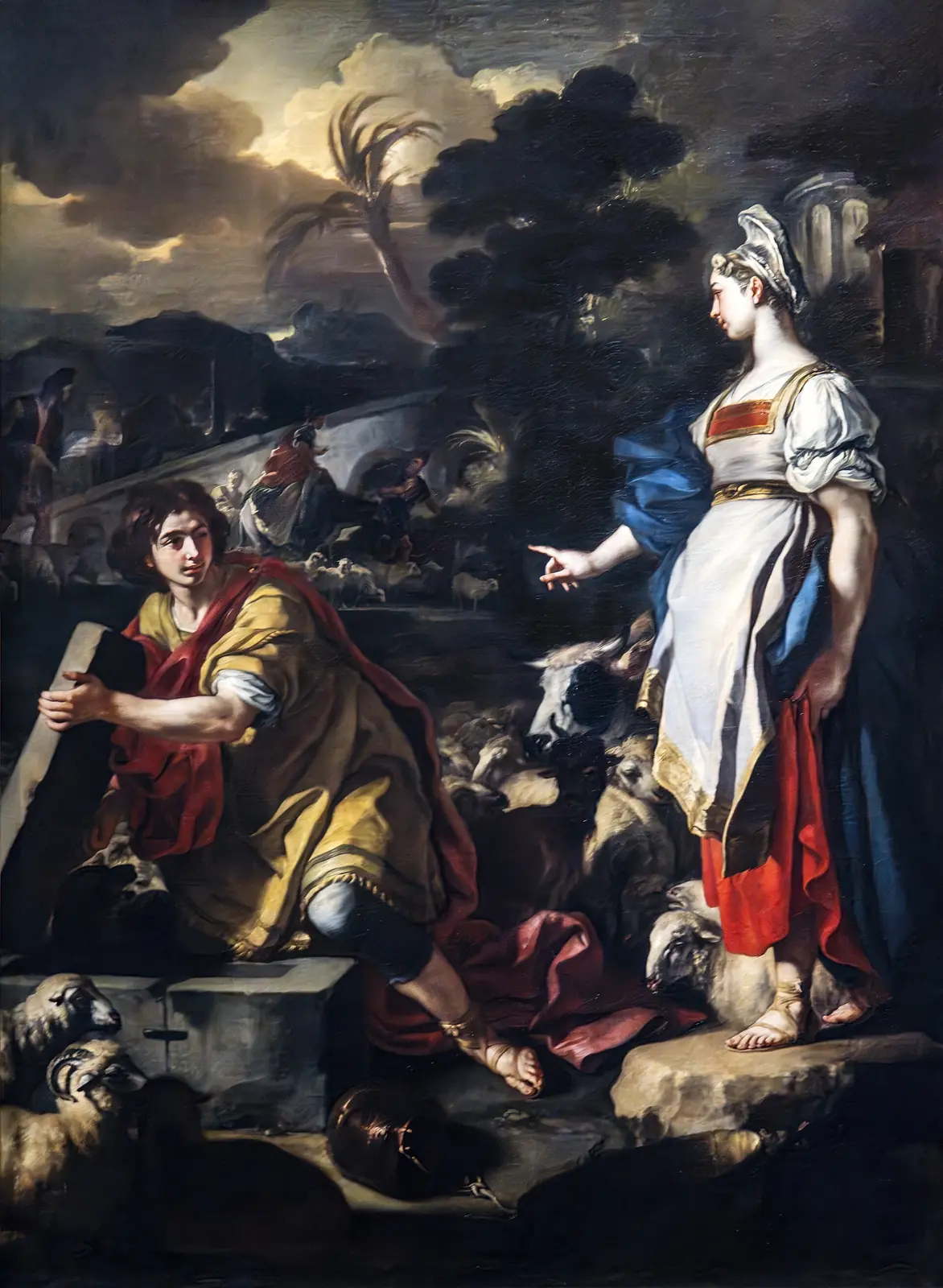
Rachel was the beloved but barren wife, in painful rivalry with Leah, until 'God remembered Rachel' and opened her womb to bear Joseph. The beloved wife whose long sorrow turns to fruitfulness prefigures Mary, whose sorrow at the cross becomes spiritual motherhood.
Key verses
- Genesis 30:22 — 'God remembered Rachel'… and she bore a son, Joseph.
- Genesis 29:31, Genesis 29:17, Genesis 30:1 — Rachel beloved yet barren — 'Give me children, or else I die' — while Leah bears children.
The connection
| Old Testament root | New Testament fulfilment | |
|---|---|---|
| Barren Rachel remembered, made fruitful | → | Mary's sorrow turned to motherhood |
Rachel was the beloved but barren wife until 'God remembered' her and gave her Joseph. Pitre sees a foreshadowing of Mary, whose sorrow is likewise turned to fruitfulness in a spiritual motherhood born of grief.