The idea
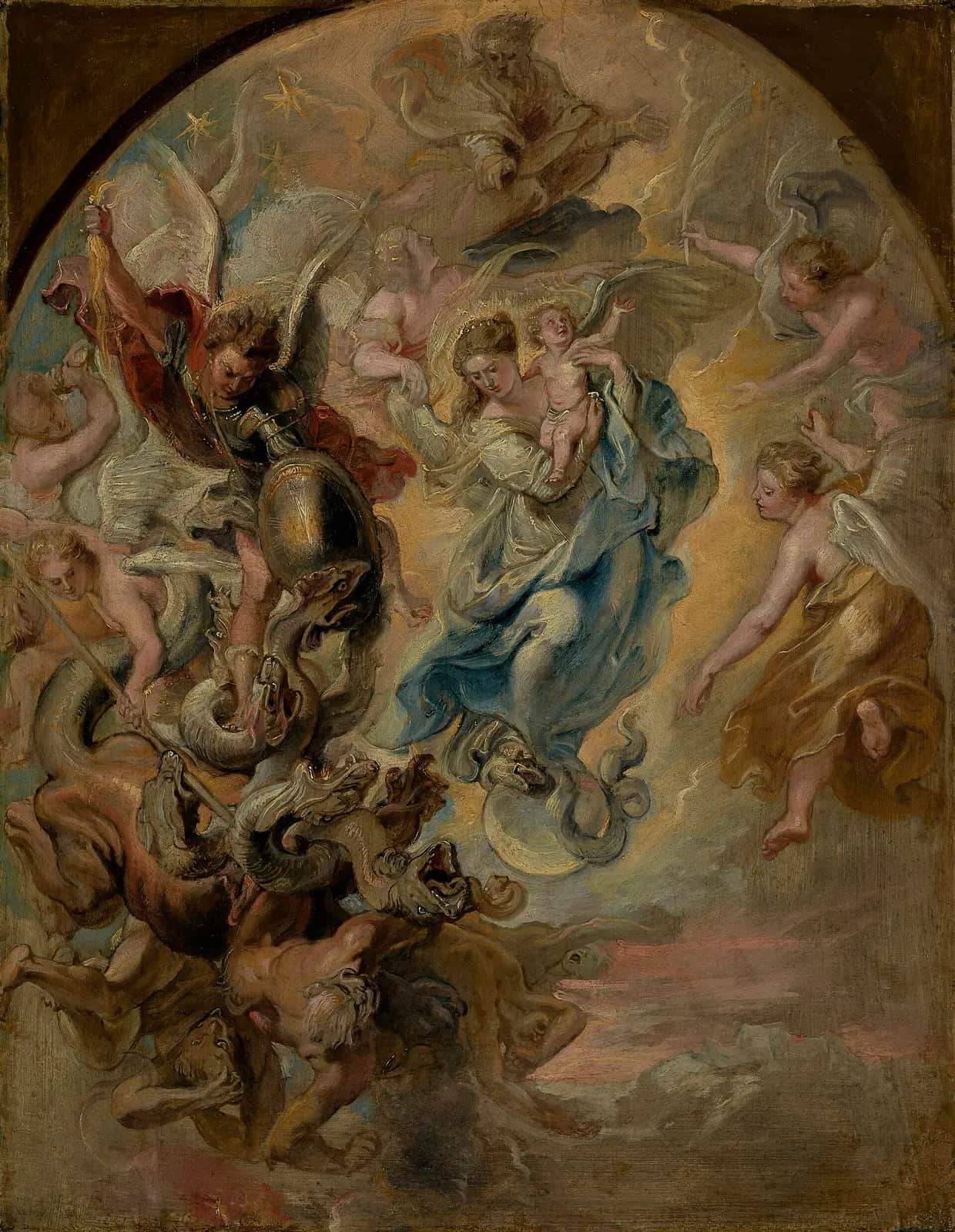
At the cross. Revelation's Woman 'in anguish to give birth' and Jesus' image of a woman's sorrowful 'hour' turning to joy point to Mary's true travail at Calvary, where she brings forth God's children. 'Birth pangs of the Messiah' was a Jewish term for the tribulations before the age of salvation.
Key verses
- Revelation 12:2 — the Woman 'in anguish for delivery.'
- John 16:21 — a woman in labor has sorrow 'because her hour is come,' then joy; John 16:20 — 'your sorrow shall be turned into joy.'
- Revelation 12:5 — the child 'caught up' to the throne the moment he is born: a symbol of death and resurrection, not an infancy (pp 126–127).
The connection
| Old Testament root | New Testament fulfilment | |
|---|---|---|
| The birth pangs before salvation | → | Mary's travail at the cross births the Church |
The Woman of Revelation cries out in labor, and Jesus likens a woman's sorrowful 'hour' turning to joy. Pitre locates Mary's real travail at Calvary, where her suffering brings forth the children of God — the Church.
Sources
- Modern scholars Pitre cites — André Feuillet, 'the pains of childbirth correspond to Calvary' (p 126)
- John Paul II — the Woman's pangs 'refer to the Mother of Jesus at the Cross' (p 134)