The idea
The book ends with six paragraphs of the same shape, one per typology, each ending 'it does not take anything away from Jesus; instead…': behold Mary and you see the New Eve, and so the New Adam; the new Ark, and so the Bread of Life and the new Moses; the queen mother, and so Immanuel, 'God with us'; the mother of the Messiah, and so salvation through suffering, her sufferings 'the birth pangs of the resurrection'; the new Rachel, and so the new Joseph, whose beloved younger brothers and sisters we are; and the mother of the beloved disciple, and so our own mother. Then the last turn: 'You will discover that Mary was beholding you long before you ever looked at her… Because that's how it is with mothers. When a mother gives birth, she sees her child long before the child can even open its eyes to see her. Perhaps that is one reason why Jesus speaks first to Mary.' She, like Jesus, 'is not dead… She already tastes the glory of the resurrection and the new creation.'
Key verses
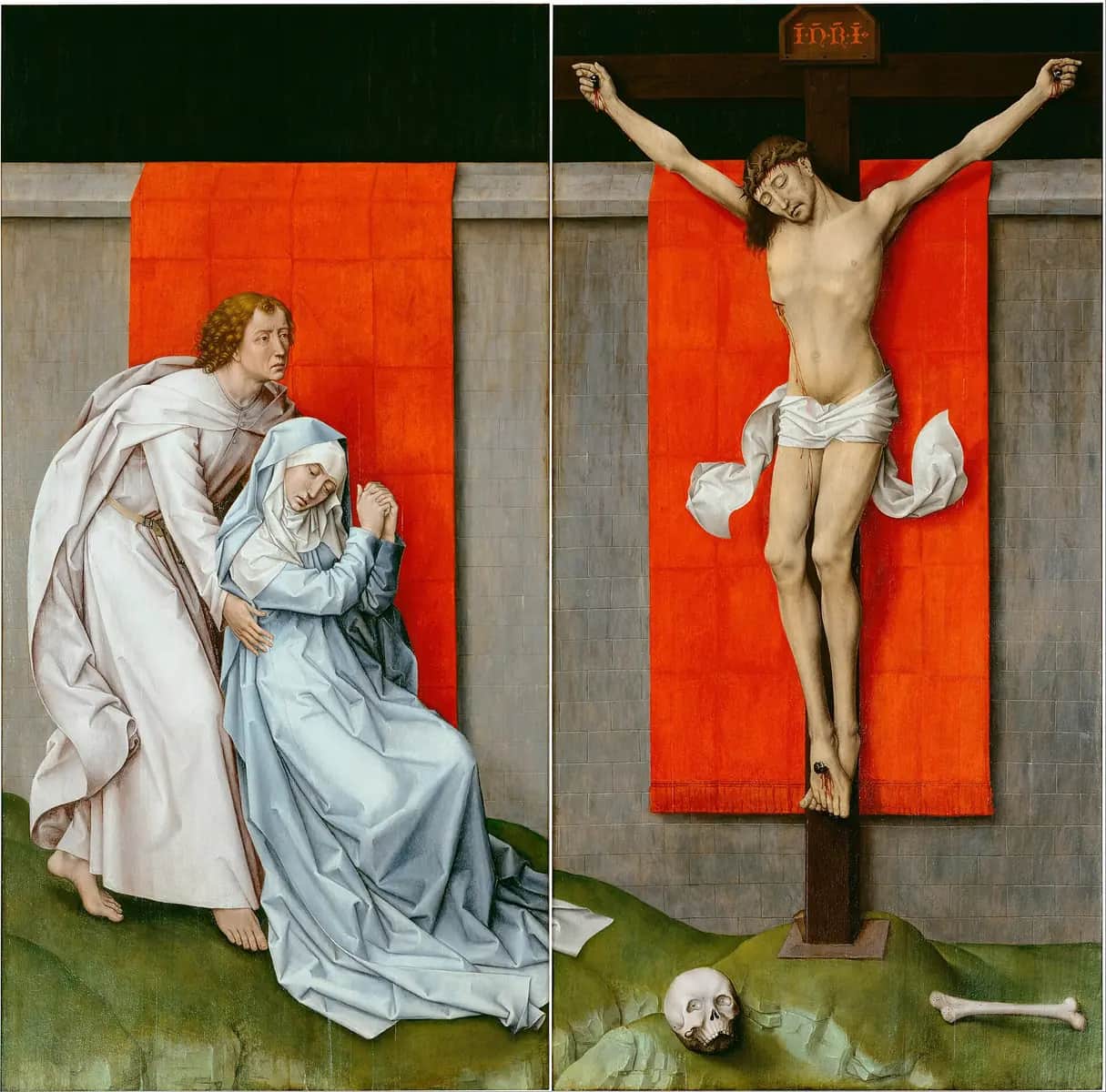
- John 19:26 — Jesus speaks first to Mary: 'Woman, behold thy son.'
- John 19:27 — 'Behold thy mother.'
- Genesis 3:15 — the New Eve — the first of the six summaries.
- Revelation 12:1 — the crowned mother, alive in heaven.
The connection
| Old Testament root | New Testament fulfilment | |
|---|---|---|
| Eve, Ark, queen mother, mother of the Messiah, Rachel | → | Mary, and in each case Jesus — Adam, Moses, Immanuel, Servant, Joseph |
The six summaries are the book's own index of itself, and each keeps the rule stated in chapter 1: every truth about Mary reveals a truth about her Son. The final invitation is not a doctrine but a relationship — to be beheld by a mother who saw you first.