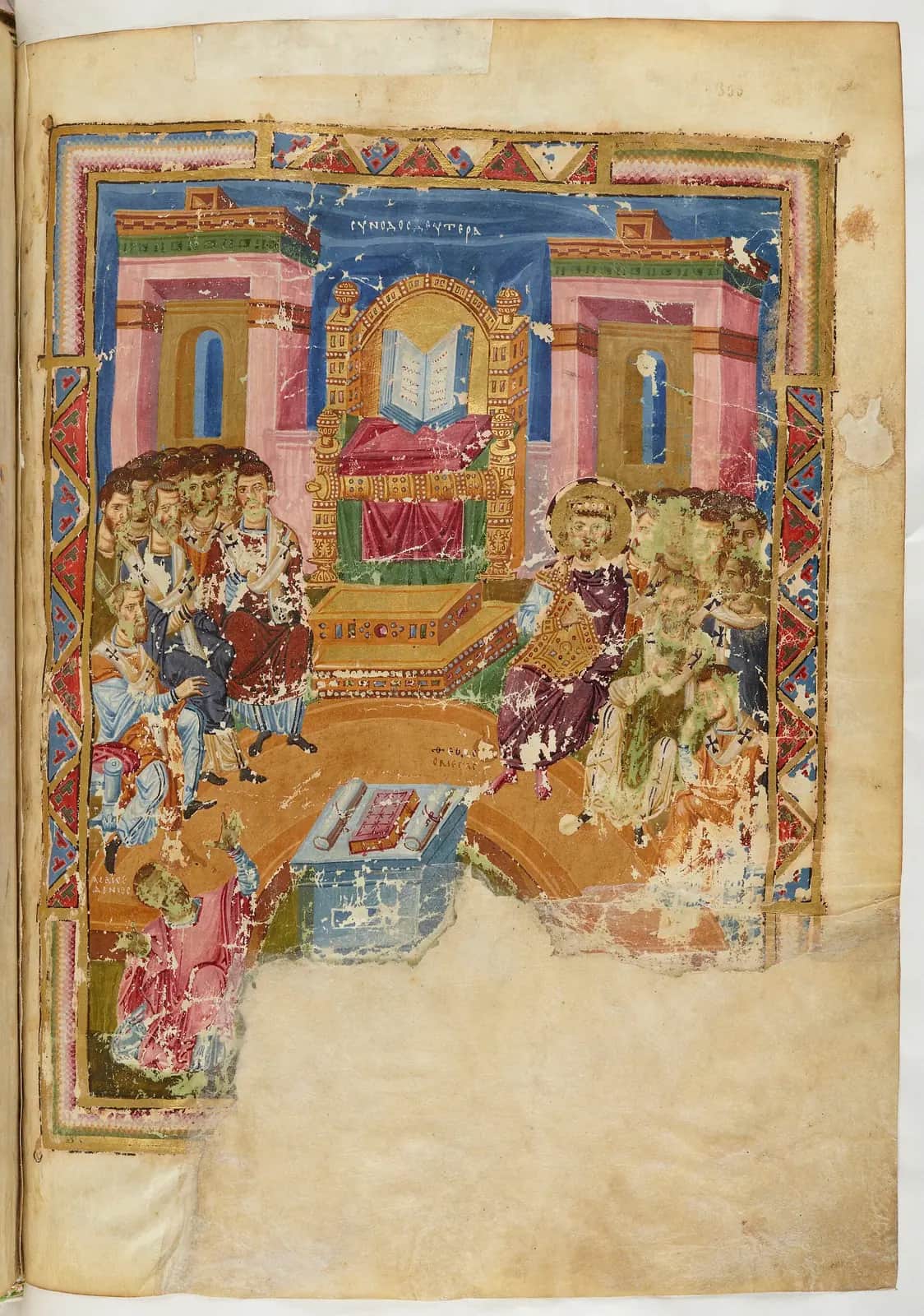
(Found in Labbe, Concilia, Tom. II., 945.)
To the most religious Emperor Theodosius, the Holy Synod of Bishops assembled in Constantinople out of different Provinces.
We begin our letter to your Piety with thanks to God, who has established the empire of your Piety for the common peace of the Churches and for the support of the true Faith. And, after rendering due thanks unto God, as in duty bound we lay before your Piety the things which have been done in the Holy Synod. When, then, we had assembled in Constantinople, according to the letter of your Piety, we first of all renewed our unity of heart each with the other, and then we pronounced some concise definitions, ratifying the Faith of the Nicene Fathers, and anathematizing the heresies which have sprung up, contrary thereto. Besides these things, we also framed certain Canons for the better ordering of the Churches, all which we have subjoined to this our letter. Wherefore we beseech your Piety that the decree of the Synod may be ratified, to the end that, as you have honoured the Church by your letter of citation, so you should set your seal to the conclusion of what has been decreed. May the Lord establish your empire in peace and righteousness, and prolong it from generation to generation; and may he add unto your earthly power the fruition of the heavenly kingdom also. May God by the prayers (εὐχαῖς τῶν ἁγίων) of the Saints, show favour to the world, that you may be strong and eminent in all good things as an Emperor most truly pious and beloved of God.
Reproduced in full. Translation: Nicene and Post-Nicene Fathers, series 2, vol. 14 (Percival, 1900), public domain (Public domain).