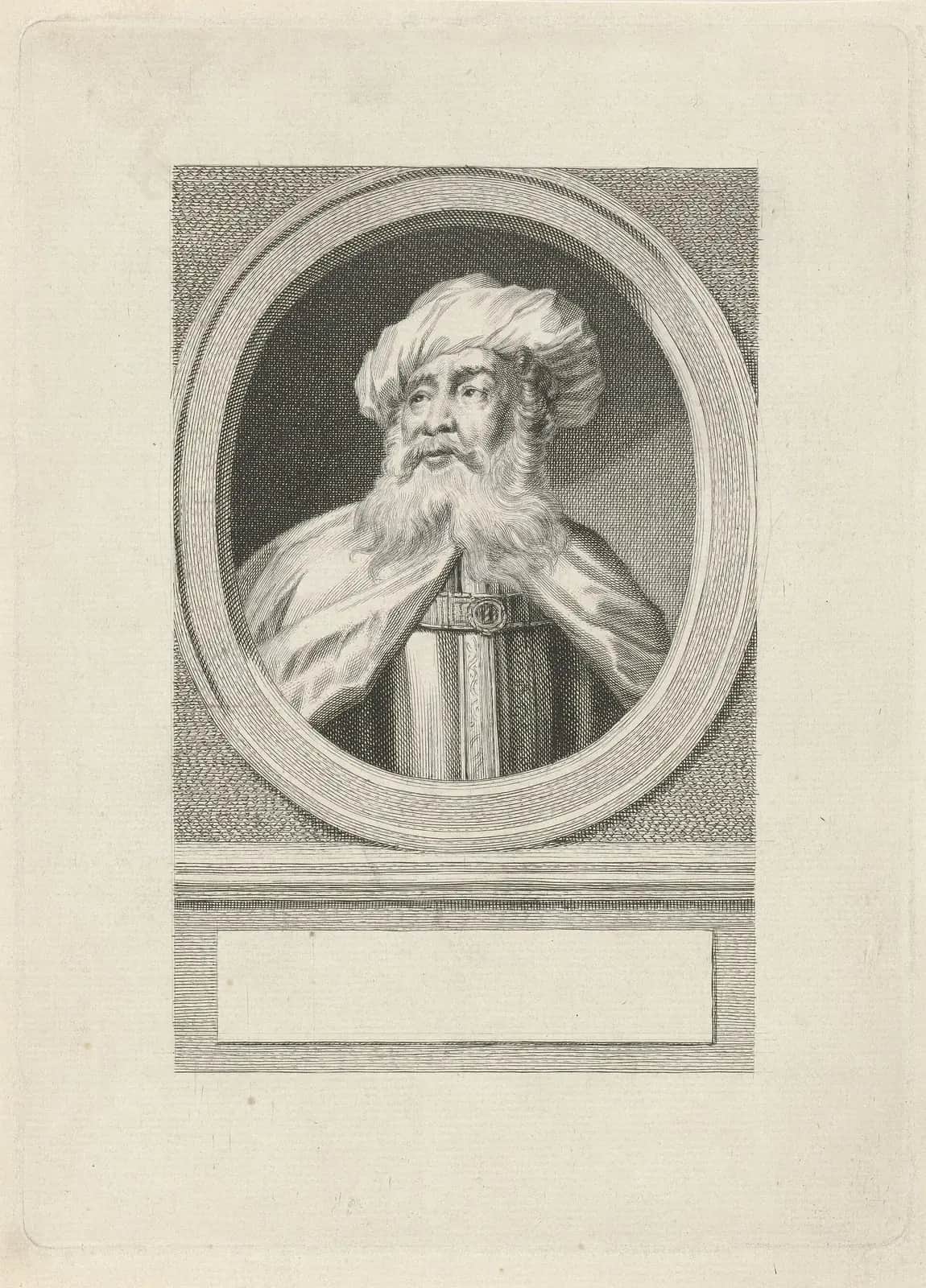
Herod had nine wives, by seven of whom he had a numerous issue. By Josida, his first born Antipater - by Mariamine, Alexander and Aristobulus - by Mathuca, a Samaritan woman, Archelaus - by Cleopatra of Jerusalem, Herod, who was afterwards tetrarch, and Philip. The three first were put to death by Herod; and after his death, Archelaus seized the throne by occasion of his father’s will, and the question of the succession was carried before Augustus Caesar. After some delay, he made a distribution of the whole of Herod’s dominions in accordance with the Senate’s advice. To Archelaus he assigned one half, consisting of Idumaea and Judaea, with the title of tetrarch, and a promise of that of king if he shewed himself deserving of it. The rest he divided into two tetrarchates, giving Galilee to Herod the tetrarch, Ituraea and Trachonitis to Philip. Thus Archelaus was after his father’s death a duarch, which kind of sovereignty is here called a kingdom.
Reproduced in full. Translation: Oxford 1841 (Newman), public domain (Public domain).