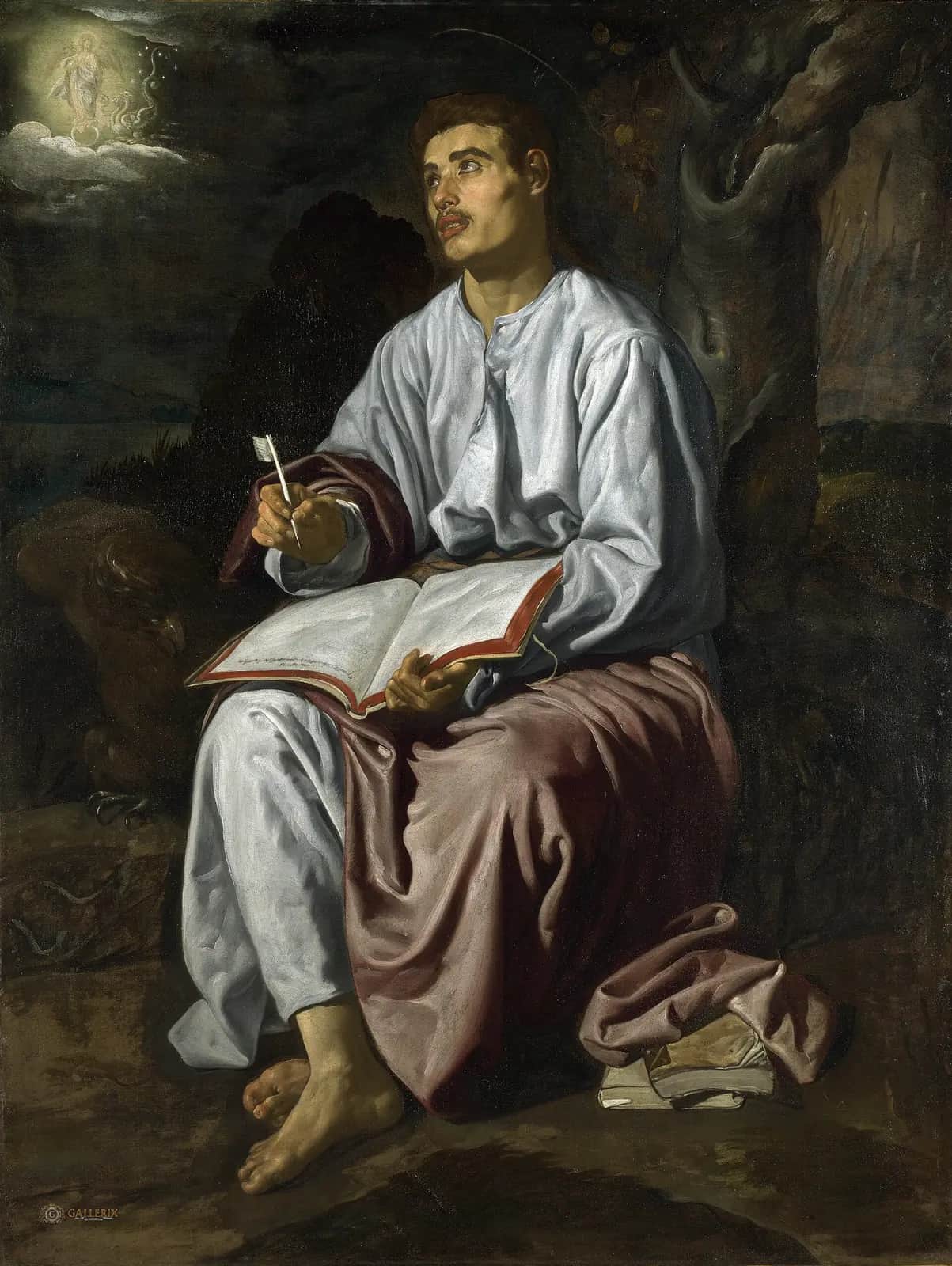
And a great sign was seen in heaven: a woman clothed with the sun, and the moon was under her feet, and on her head a crown of twelve stars; and she was with child, and she cries out in labour and in pain to give birth.
The vision means to describe for us more fully the things concerning the Antichrist, of whom it made brief mention earlier. But the Lord’s becoming man was the occasion of his rising up and of his being put forward by Satan, since it made the world its own and subjected it (this is why the Antichrist will be raised up: to turn the world away from Christ again and persuade it to desert back to Satan). And the beginning of the Lord’s becoming man was his conception in the flesh and his birth. So the vision, bringing what it is about to relate into order and sequence, begins its account from Christ’s conception in the flesh, and paints for us the Theotokos.
For what does it say? And a sign was seen in heaven: a woman clothed with the sun, and the moon under her feet. It speaks of the mother of our Saviour, as has been said. Fittingly the vision pictures her in heaven and not on earth: as pure in soul and body, as equal to the angels, as a citizen of heaven, as the one who contained and gave flesh to the God who rests in heaven (“Heaven,” he says, “is my throne”), and as having nothing in common with the earth and the evils in it, but wholly lofty, wholly worthy of heaven, even though she was of our own human nature and substance. For the Virgin is of one substance with us. Let the unholy teaching of Eutyches, who makes the Virgin out to be of another substance than ours, be banished outside the divine courts together with his other teachings of a body in appearance only.
What does it mean by saying that she was clothed with the sun, and had the moon under her feet? The inspired prophet Habakkuk, prophesying of the Lord, says, The sun was lifted up, and the moon stood still in her order, for light, calling our Saviour Christ the sun of righteousness, or else the preaching of the Gospel. When he was lifted up and increased, he says, the moon, that is the law of Moses, stood still and received no further increase; for after Christ’s appearing it no longer took proselytes from the nations as before, but suffered loss and decrease. Understand this, then, here too: the holy Virgin is sheltered by the spiritual sun. For so the prophet too calls the Lord, when he says of Israel, Fire fell upon them, and they did not see the sun. And the moon, that is, worship under the law and the way of life under the law, being brought low and become much less than it was, is under her feet, overcome by the brightness of the Gospel. He did well to call the things of the law a moon, since they too were lit by the sun, that is by Christ, as the visible moon is lit by the visible sun.
As for what is meant, it would have been more natural to say, not that the woman was clothed with the sun, but that the woman clothed the sun held in her womb. But to show in the vision too that the Lord, even while carried in the womb, was the shelter of his own mother and of all creation, it said that he clothed the woman. The divine angel said something like it to the holy Virgin: The Spirit of the Lord will come upon you, and the power of the Most High will overshadow you. For to overshadow, to shelter and to clothe mean the same.
And on her head, it says, a crown of twelve stars. For the Virgin is crowned with the twelve apostles, who preach Christ, and she is preached together with him.
And she was with child, it says, and she cries out in labour and in pain to give birth. And yet Isaiah says of her, Before she who was in labour gave birth, and before the pain of labour came, she escaped and bore a male; and Gregory, in the thirteenth discourse of his Interpretation of the Song, says of the Lord: whose bearing in the womb remains without union, whose birth is undefiled, whose travail is painless. If, then, according to so great a prophet and the Church’s teacher, the Virgin escaped the pain of labour, how does it say here that she cries out in labour and in pain to give birth? What is said is no contradiction, God forbid; there can be nothing contrary in the one and the same [Spirit] who spoke through both. You will understand “cries out and is in pain” here in this way.
Until the divine angel told Joseph that what she carried was from the Holy Spirit, the Virgin was, as we may suppose, in distress, ashamed before the man she was betrothed to, and wondering whether he might suspect she was with child from a secret union. This distress and grief the vision, speaking figuratively, called a cry and pain, and that is not surprising. For the inspired Moses too, when he was praying to God in his mind and was in distress (for he saw Israel hemmed in by desert, sea and enemies), was told by God, Why do you cry to me? So now too the vision calls the grief of the Virgin’s mind and heart a cry.
But you who by your ineffable birth loosed the distress of your spotless handmaid and mother according to the flesh, and my Lady, the holy Theotokos, loose my sins too. For glory befits you for ever. Amen.
[Discourse seven] Having completed in part the contemplation concerning our common Lady, the holy ever-virgin and Theotokos Mary, he hands on to us another, saying:
Greek text (Hoskier, pp. 135–138 (end of discourse 6))
καὶ σημεῖον μέγα ὤφθη ἐν τῷ οὐρανῷ, γυνὴ περιβεβλημένη τὸν ἥλιον, καὶ ἡ σελήνη ἦν ὑποκάτω τῶν ποδῶν αὐτῆς, καὶ ἐπὶ τῆς κεφαλῆς αὐτῆς στέφανος ἀστέρων δώδεκα· καὶ ἐν γαστρὶ ἔχουσα, καὶ κράζει ὠδίνουσα καὶ βασανιζομένη τεκεῖν.
τὰ κατὰ τὸν ἀντίχριστον ἡμῖν τελεώτερον ἡ ὀπτασία διαγράψαι βούλεται, οὗ μνήμην βραχεῖαν ἐν τοῖς ἔμπροσθεν πεποίηται. ἀλλ᾽ ἐπειδὴ τοῦ ἀναστῆναι τοῦτον καὶ ὑπὸ τοῦ Σατανᾶ προχειρισθῆναι πρόφασις γεγένηται ἡ τοῦ Κυρίου ἐνανθρώπησις, τὸν κόσμον οἰκειωσαμένη καὶ ὑποτάξασα — ταύτης γὰρ χάριν ὁ ἀντίχριστος διεγερθήσεται, ἐφ᾽ ᾧ τε πάλιν τὸν κόσμον ἀποστῆσαι μὲν τοῦ Χριστοῦ, πεῖσαι δὲ πρὸς τὸν Σατανᾶν ἐξ ὑποστροφῆς αὐτομολῆσαι — καὶ ἐπειδὴ πάλιν ἀρχὴ τῆς τοῦ Κυρίου ἐνανθρωπήσεως ἡ κατὰ σάρκα σύλληψις αὐτοῦ καὶ γέννησις ὑπῆρξεν, εἰς τάξιν τινὰ καὶ εἱρμὸν ἄγουσα ἡ θεωρία τὰ περὶ ὧν μέλλει διηγεῖσθαι, ἀπὸ τῆς τοῦ Χριστοῦ κατὰ σάρκα συλλήψεως τὴν ἀρχὴν τοῦ διηγήματος πεποίηται, καὶ τὴν θεοτόκον ἡμῖν ζωγραφεῖ.
τί γάρ φησι καὶ σημεῖον ὤφθη ἐν τῷ οὐρανῷ, γυνὴ περιβεβλημένη τὸν ἥλιον· καὶ ἡ σελήνη ὑποκάτω τῶν ποδῶν αὐτῆς; περὶ μὲν τῆς μητρὸς τοῦ σωτῆρος ἡμῶν φησιν, ὡς εἴρηται. εἰκότως δὲ αὐτὴν ἡ ὀπτασία ἐν τῷ οὐρανῷ καὶ οὐκ ἐν τῇ γῇ γράφει, ὡς καθαρὰν ψυχὴν καὶ σώματι, ὡς ἰσάγγελον, ὡς οὐρανοπολῖτιν, ὡς τὸν ἐν οὐρανῷ ἐπαναπαυόμενον θεόν — ὁ οὐρανὸς γάρ μοί φησι θρόνος — χωρήσασαν καὶ σαρκώσασαν, καὶ ὡς μηδὲν κοινὸν πρὸς τὴν γῆν ἔχουσαν καὶ τὰ ἐν αὐτῇ κακά, ἀλλ᾽ ὅλην ὑψηλήν, ὅλην οὐρανοῦ ἀξίαν εἰ καὶ τῆς ἡμετέρας καὶ ἀνθρωπίνης ὑπῆρχε φύσεώς τε καὶ οὐσίας. ὁμοούσιος γὰρ ἡμῖν ἡ παρθένος· τὸ γὰρ Εὐτυχοῦς ἀνόσιον δόγμα τὸ καὶ τὴν παρθένον ἑτερούσιον ἡμῖν τερατευόμενον σὺν τοῖς ἄλλοις αὐτοῦ δόγμασι τῆς δοκήσεως ἔξω που τῶν θείων αὐλῶν ἐξοριζέσθω.
τί βούλεται τὸ λέγειν αὐτὴν περιβεβλῆσθαι τὸν ἥλιον, καὶ τὴν σελήνην ἔχειν ὑποκάτω τῶν ποδῶν αὐτῆς; ὁ θεσπέσιος προφήτης Ἀμβακοὺμ περὶ τοῦ Κυρίου προφητεύων φησὶν ἐπήρθη ὁ ἥλιος καὶ ἡ σελήνη ἔστη ἐν τῇ τάξει αὐτῆς εἰς φῶς, ἥλιον λέγων τῆς δικαιοσύνης τὸν σωτῆρα ἡμῶν Χριστόν, ἢ γοῦν τὸ εὐαγγελικὸν κήρυγμα. οὗ φησιν ὑψωθέντος καὶ αὐξηθέντος, ἡ σελήνη, τουτέστιν ὁ Μωυσέως νόμος, ἔστη καὶ οὐκέτι προσθήκην ἐδέξατο· οὐ γὰρ ἔτι μετὰ τὴν Χριστοῦ ἐπιφάνειαν ἐκ τῶν ἐθνῶν ἔλαβε προσηλύτους ὡς τὸ πρίν, ἀλλὰ καὶ ἀφαίρεσιν καὶ μείωσιν ὑπέμεινε. τοῦτο οὖν μὴ νοήσεις καὶ ἐνταῦθα σκέπεσθαι τὴν ἁγίαν παρθένον τῷ ἡλίῳ τῷ νοητῷ· οὕτω γὰρ τὸν Κύριον καὶ ὁ προφήτης καλεῖ περὶ τοῦ Ἰσραὴλ λέγων ἔπεσεν πῦρ ἐπ᾽ αὐτοὺς καὶ οὐκ εἶδον τὸν ἥλιον· ἡ δέ γε σελήνη, τουτέστιν ἡ κατὰ νόμον ἱερουργία καὶ ἡ κατὰ νόμον πολιτεία, ἅτε ὑποβιβασθεῖσα καὶ παρὰ πολὺ μείων ἑαυτῆς γενομένη, ὑπὸ πόδας ἐστί, νικηθεῖσα τῇ εὐαγγελικῇ λαμπρότητι. καλῶς δὲ τὰ ἐν νόμῳ σελήνην ὠνόμασεν, ὡς καὶ αὐτὰ ὑπὸ τοῦ ἡλίου τουτέστι Χριστοῦ φωταγωγηθέντα, ὥσπερ καὶ ἡ αἰσθητὴ σελήνη ὑπὸ τοῦ ἡλίου τοῦ αἰσθητοῦ.
ὡς δὲ πρὸς τὸ δηλούμενον, ἀκολουθότερον ἦν εἰπεῖν τῷ ἡλίῳ μὴ περιβεβλῆσθαι τὴν γυναῖκα, ἀλλὰ τὴν γυναῖκα περιβεβληκέναι τὸν ἐν γαστρὶ περιεχόμενον ἥλιον· ἀλλ᾽ ἵνα δείξῃ καὶ ἐν τῇ ὀπτασίᾳ ὅτι κυοφορούμενος ὁ Κύριος τῆς οἰκείας μητρὸς καὶ πάσης κτίσεως ὑπῆρχε σκέπη, αὐτὸν ἔφη περιβεβληκέναι τὴν γυναῖκα. ὅμοιον ἔφη καὶ ὁ θεῖος ἄγγελος πρὸς τὴν ἁγίαν παρθένον· πνεῦμα Κυρίου ἐπελεύσεται ἐπὶ σὲ καὶ δύναμις ὑψίστου ἐπισκιάσει σοι. τὸ γὰρ ἐπισκιάζειν, τὸ σκέπειν, καὶ περιβεβληκέναι ταὐτόν ἐστιν κατὰ δύναμιν.
καὶ ἐπὶ τῆς κεφαλῆς αὐτῆς φησι στέφανος ἀστέρων δώδεκα. στεφανοῦται γὰρ ἡ παρθένος τοῖς δώδεκα ἀποστόλοις κηρύσσουσι Χριστὸν συγκηρυσσομένη.
καὶ ἐν γαστρὶ ἔχουσά φησι καὶ κράζει ὠδίνουσα καὶ βασανιζομένη τεκεῖν· καί τοί φησιν ὁ Ἡσαΐας περὶ αὐτῆς πρὶν τὴν ὠδίνουσαν τεκεῖν καὶ πρὶν ἐλθεῖν τὸν πόνον τῶν ὠδίνων, ἐξέφυγε καὶ ἔτεκεν ἄρσεν· καὶ ὁ Γρηγόριος ἐν λόγῳ δεκάτῳ τρίτῳ τῆς Ἑρμηνείας τοῦ Ἄσματος περὶ τοῦ Κυρίου φησὶν οὗ ἀσυνδύαστος μένει ἡ κυοφορία, ἀμόλυντος δὲ ἡ λοχεία. ἀνώδυνος δὲ ἡ ὠδίς. εἰ οὖν παρὰ τῷ τοσούτῳ προφήτῃ καὶ τῷ τῆς ἐκκλησίας διδασκάλῳ τὸν πόνον τῶν ὠδίνων ἐκπέφευγεν ἡ παρθένος, πῶς ἐνταῦθα κράζει ὠδίνουσα καὶ βασανιζομένη τεκεῖν; οὐκ ἐναντιότης τὸ εἰρημένον, μὴ γένοιτο· οὐδὲν γὰρ ἂν εἴη ἐναντίον παρὰ τῷ ἑνὶ καὶ τῷ αὐτῷ τῷ δι᾽ ἀμφοτέρων λαλήσαντι, ἀλλὰ τὸ ἐνταῦθα κράζει καὶ βασανίζεται οὕτω νοήσεις.
ἄχρι οὗ ὁ θεῖος ἄγγελος τῷ Ἰωσὴφ εἶπε περὶ αὐτῆς ὅτι ἐκ Πνεύματος Ἁγίου ἐστὶ τὸ κυοφορούμενον, ἐν ἀθυμίαις ἦν ὡς εἰκὸς ἡ παρθένος ἐρυθριῶσα τὸν μνηστευσάμενον, καὶ λογιζομένη μὴ ἄρα πως ὑπονοήσοι ἐκ λαθραίων γάμων αὐτὴν ὠδίνειν· ἣν ἀθυμίαν καὶ λύπην κατὰ τοὺς τῆς τροπῆς νόμους κραυγὴν καὶ βάσανον ὠνόμασε, καὶ οὐ θαυμαστόν. καὶ γὰρ καὶ τῷ θεσπεσίῳ Μωυσῇ νοητῶς ἐντυγχάνοντι τῷ Θεῷ καὶ ἀθυμοῦντι — ἑώρα γὰρ ἐν ἐρήμῳ τὸν Ἰσραὴλ καὶ θαλάσσῃ καὶ πολεμίοις κεκυκλωμένον — εἴρηται παρὰ τοῦ Θεοῦ τί βοᾷς πρός με; οὕτω καὶ νῦν τὴν εἰς νοῦν καὶ καρδίαν λυπηρὰν διάθεσιν τῆς παρθένου, κραυγὴν ἡ ὀπτασία φησίν.
ἀλλ᾽ ὁ τῆς ἀχράντου δούλης σου καὶ κατὰ σάρκα μητρός, ἐμῆς δὲ δεσποίνης, τῆς ἁγίας θεοτόκου τὴν ἀθυμίαν λύσας τῷ ἀρρήτῳ σου τόκῳ, λῦσον καὶ τὰς ἐμὰς ἁμαρτίας· πρέπει γάρ σοι ἡ δόξα εἰς τὸν αἰῶνα, ἀμήν.
[Λόγος ἕβδομος] πληρώσας ἐν μέρει τὴν θεωρίαν τῆς περὶ τῆς κοινῆς δεσποίνης τῆς ἁγίας ἀειπαρθένου καὶ θεοτόκου Μαρίας, ἄλλην ἡμῖν παραδίδωσι λέγων·
H. C. Hoskier, The Complete Commentary of Oecumenius on the Apocalypse (Ann Arbor: University of Michigan, 1928), public domain.
Reproduced in full. Translation: Translation: Catena Fidei (2026), CC BY 4.0, from the Greek of H. C. Hoskier, The Complete Commentary of Oecumenius on the Apocalypse (Ann Arbor: University of Michigan, 1928), public domain (CC BY).