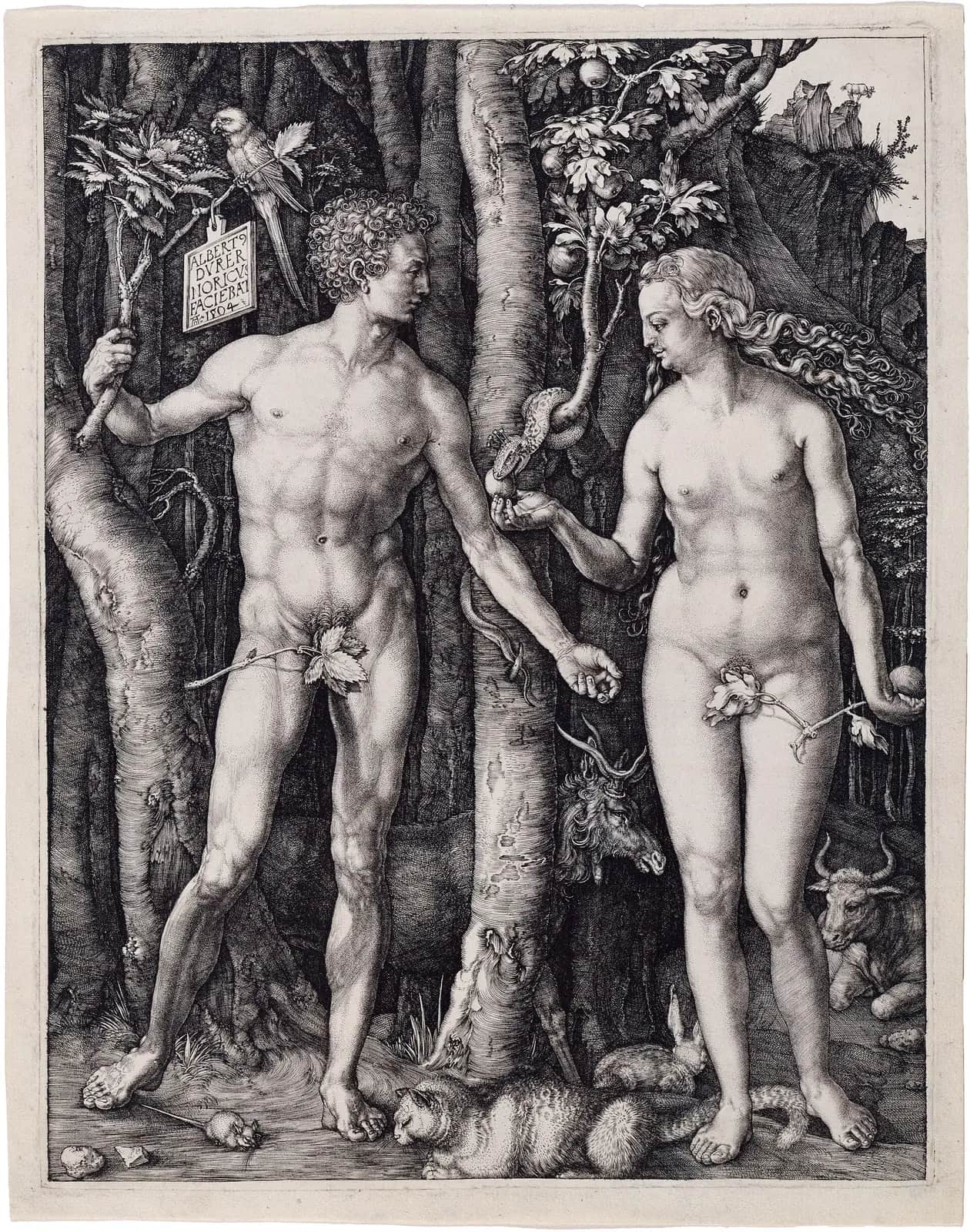
Genesis 3:9 (WEB)
The LORD God called to the man, and said to him, “Where are you?”
Catechism · 6
In the Old Testament
“What is this that you have done?"” — Catechism footnote: Gen 3:9, 13.
Man's Capacity for God
“…part of believers; currents of thought hostile to religion; finally, that attitude of sinful man which makes him hide from God out of fear and flee his call.” — Catechism footnote: Cf. GS 19-21; Mt 13:22; Gen 3:8-10; Jon 1:3.
The Fall
“This is what man's first sin consisted of.” — Catechism footnote: Cf. Gen 3:1-11 ; Rom 5:19.
“They become afraid of the God of whom they have conceived a distorted image - that of a God jealous of his prerogatives.” — Catechism footnote: Cf. Gen 3:5-10.
“The harmony in which they had found themselves, thanks to original justice, is now destroyed: the control of the soul's spiritual faculties over the body is shattered; the union of man and woman becomes subject to tensions, their relations henceforth marked by lust and domination.” — Catechism footnote: Cf. Gen 3:7-16.
“On the contrary, God calls him and in a mysterious way heralds the coming victory over evil and his restoration from his fall.” — Catechism footnote: Cf. Gen 3:9, 15.
Fathers and councils · 18
Irenaeus of Lyons
“Wherefore also the Scripture, pointing out what should come to pass, says, that when Adam had hid himself because of his disobedience, the Lord came to him at eventide, called him forth, and said, “Where art thou?”” — editor's note: Gen. iii. 9.
Read the whole comment
Tertullian
“…as He always did to take upon Him man’s actual component substances, body and soul, making inquiry of Adam (as if He were ignorant), “Where art thou, Adam?”—repenting that He had made man, as if He had lacked foresight; tempting Abraham, as if ignorant of what was in man; offended with persons, and then reconciled…” — editor's note: Gen. iii. 9.
Read the whole comment“Much more friendly was this voice than, “Adam, where art thou?”” — editor's note: Gen. iii. 9 (in LXX.).
Read the whole comment“God calls out to Adam, Where art thou? as if ignorant where he was; and when he alleged that the shame of his nakedness was the cause (of his hiding himself), He inquired whether he had eaten of the tree, as if He were in doubt.” — editor's note: Gen. iii. 9, 11.
Read the whole comment
Athanasius of Alexandria
- Athanasius of Alexandria, Against the Arians III.5Discourse III
“In Paradise God asks, ‘Adam, where art Thou’ and He inquires of Cain also, ‘Where is Abel thy brother?’” — editor's note: Gen. iii. 9; iv. 9. This seems taken from Origen, in Matt. t. 10. §14. vid. also Pope Gregory and Chrysost. infr.
Read the whole comment
Ambrose of Milan
“So you find Adam concealing himself, when he knew that God was present, and wishing to be hidden when called by God with that voice which wounded the soul of him who was hiding: “Adam, where art thou?”” — editor's note: Gen. iii. 9.
Read the whole comment“And when he recognized his error, feeling the reproach of a guilty conscience, he would fain have hidden himself, but he could not be hidden, and so God said to him: “Adam, where art thou?” that is, what wast thou before? where hast thou now begun to be?” — editor's note: Gen. iii. 9.
Read the whole comment
Gregory the Great
“…to acknowledge that the Lord did not know in what places Adam and Eve had hidden themselves after their sin, when He said in Paradise, Adam, where art thou (Gen. iii. 9)? or when He chides Cain saying, Where is Abel thy brother (Gen. iv. 9)?” — the author cites it
Read the whole comment
Augustine of Hippo
“For if an angel is able to use air, mist, cloud, fire, and any other natural substance or corporal species; and man to use face, tongue, hand, pen, letters, or any other significants, for the purpose of intimating the secret things of his own mind: in a word, if,…” — editor's note: [Judg. xiii. 20. This mysterious subject may be illustrated from Holy Scripture so as to justify our author’s very broad statement. It throws light on Gen.…
Read the whole comment“…of the Lord God, walking in the garden in the cool of the evening, and hid himself among the trees of the garden; and when God said, “Adam, where art thou?” replied, “I heard Thy voice, and I was afraid because I was naked, and I hid myself from Thy face.”” — editor's note: Gen. iii. 8–10
Read the whole comment“(This was intimated by the words He uttered, when the man, stupefied by fear, had hid himself, “Adam, where art thou?”—words which He used not in ignorance of inquiry, but warning him to consider where he was, since God was not with him.)” — editor's note: Gen. iii. 9.
Read the whole comment“Similar in character was God’s voice in Paradise after man had sinned: “Adam, where art thou?”” — editor's note: Gen. iii. 9.
Read the whole comment
John Chrysostom
“When he heard, “Adam, where art thou?” ( Gen. iii. 9 ), he said, “I heard Thy voice, and I was afraid, because I am naked, and I hid myself.” ( Gen. iii. 10.)” — the author cites it
Read the whole comment“For the, “Adam, where art thou?” ( Gen. iii. 9 ), and, “That I may know whether they have done altogether according to the cry of it” ( Gen. xviii. 21 ); and, “Now I know that thou fearest God”…” — the author cites it
Read the whole comment“For He Himself likewise saith, “Adam, where art thou?”and, “The cry of Sodom and Gomorrah is waxed great before me.” — editor's note: Gen. iii. 9.
Read the whole comment
Hilary of Poitiers
“For it was said to Adam when he had sinned: Adam, where art thou?” — editor's note: Gen. iii. 9.
Read the whole comment
Catena Aurea on Matthew
- John ChrysostomCatena Aurea on Matthew
“That He says, “Whom think ye is that faithful and wise servant,” does not imply ignorance, for even the Father we find asking a question, as that, “Adam, where art thou?” [Gen 3:9]” — the author cites it
Read the whole comment
Gregory of Nazianzus
“This is why the heathen rage and the peoples imagine vain things; why tree is set over against tree, hands against hand, the one stretched out in self indulgence, the others in generosity; the one unrestrained, the others fixed by nails, the one expelling Adam, the other reconciling the ends of the earth.” — editor's note: Gen. iii. 6–23.
Read the whole comment
Cross-references · 55
Cited together in Epistles, Books IX–XIV X.11.
Cited together in Against Praxeas Chapter 16.
Cited together in Concerning Repentance II.11.
Cited together in Letters Letter 5.
Cited together in Letters Letter 5.
Cited together in Epistles, Books IX–XIV X.11.
Cited together in Letters Letter 5.
Cited together in Letters Letter 5.
Cited together in Letters Letter 5.
Cited together in Letters Letter 5.
Cited together in Letters Letter 5.
Cited together in Concerning Repentance II.11.
Cited together in Concerning Repentance II.11.
Cited together in Concerning Repentance II.11.
Cited together in Concerning Repentance II.11.
Cited together in Concerning Repentance II.11.
Cited together in Concerning Repentance II.11.
Cited together in Epistles, Books IX–XIV X.11.
Cited together in Against Praxeas Chapter 16.
Cited together in Against Heresies V.15.
Cited together in Against Praxeas Chapter 16.
Cited together in Against Heresies V.15.
Cited together in Against Heresies V.15.
Cited together in Against Heresies V.15.
Cited together in Against Praxeas Chapter 16.
Cited together in Catechism §29.
Cited together in Letters Letter 5.
Cited together in Catechism §29.
Cited together in Letters Letter 5.
Cited together in Letters Letter 5.
Cited together in John Chrysostom on Matthew 24:45–51 (Catena Aurea).
Cited together in John Chrysostom on Matthew 24:45–51 (Catena Aurea).
Cited together in John Chrysostom on Matthew 24:45–51 (Catena Aurea).
Cited together in John Chrysostom on Matthew 24:45–51 (Catena Aurea).
Cited together in John Chrysostom on Matthew 24:45–51 (Catena Aurea).
Cited together in John Chrysostom on Matthew 24:45–51 (Catena Aurea).
Cited together in John Chrysostom on Matthew 24:45–51 (Catena Aurea).
Cited together in Against Praxeas Chapter 16 and 1 other place.
Cited together in Against Praxeas Chapter 16.
Cited together in Against Heresies V.15.
Cited together in Against Heresies V.15.
Cited together in Against Heresies V.15.
Cited together in Concerning Repentance II.11.
Cited together in Catechism §399.
Cited together in Catechism §400.
Cited together in Catechism §397.
Cited together in Catechism §400.
Cited together in Letters Letter 5.
Cited together in The Five Books Against Marcion II.25.
Cited together in Catechism §2568.
Cited together in Catechism §2568.
Cited together in Catechism §2568.
Cited together in The Five Books Against Marcion II.25.
Cited together in Against Heresies V.15.
Cited together in Catechism §400 and 1 other place.