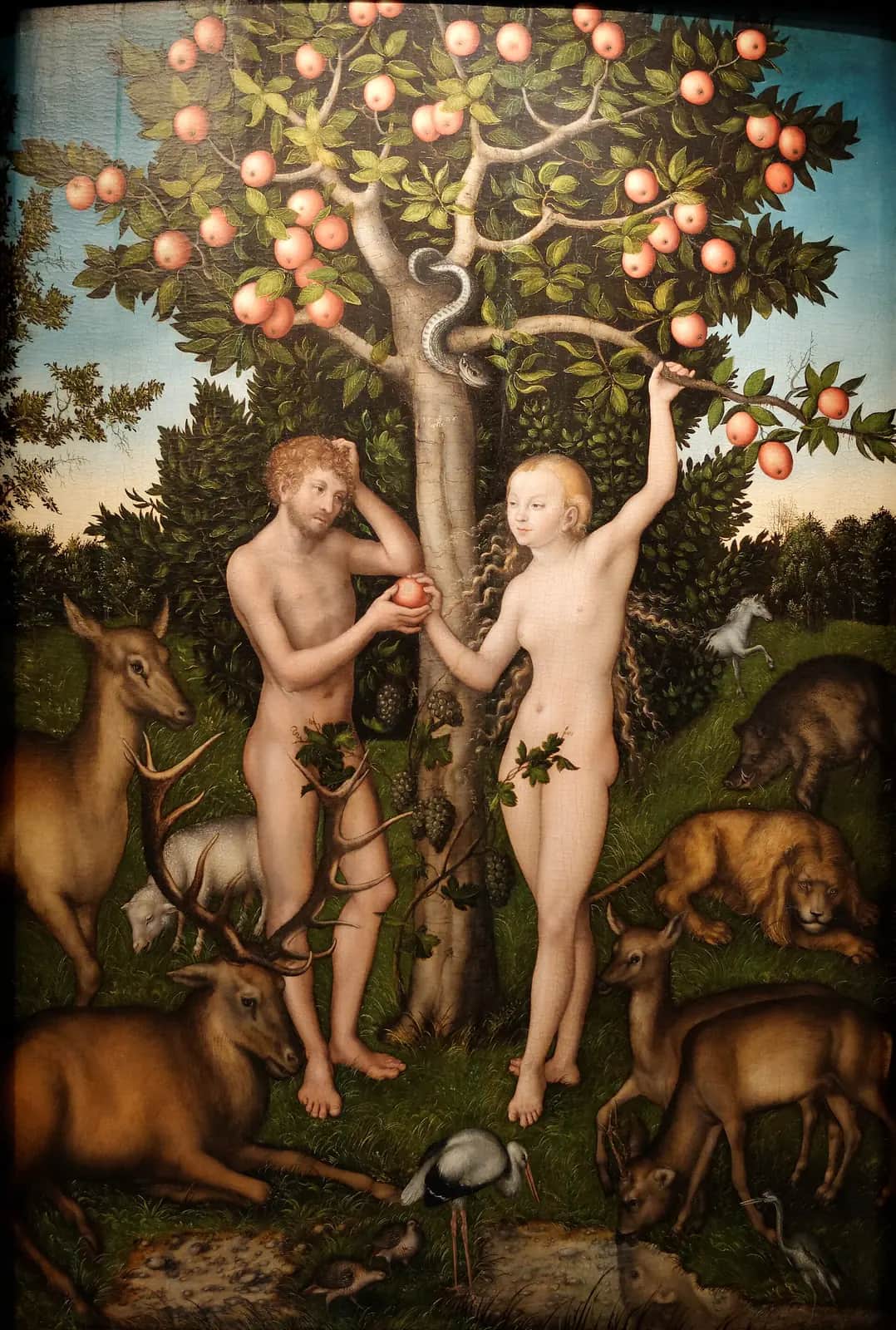
Genesis 2:17 (WEB)
but you shall not eat of the tree of the knowledge of good and evil; for in the day that you eat of it, you will surely die.”
Catechism · 5
"I Believe in the Resurrection of the Body"
“In a sense bodily death is natural, but for faith it is in fact "the wages of sin."” — Catechism footnote: Rom 6:23; cf. Gen 2:17.
“Death is a consequence of sin. the Church's Magisterium, as authentic interpreter of the affirmations of Scripture and Tradition, teaches that death entered the world on account of man's sin.” — Catechism footnote: Cf. Gen 2:17; 3:3; 3:19; Wis 1:13; Rom 5:12; 6:23; DS 1511.
Man
“As long as he remained in the divine intimacy, man would not have to suffer or die.” — Catechism footnote: Cf. Gen 2:17; 3:16, 19.
The Fall
“A spiritual creature, man can live this friendship only in free submission to God. the prohibition against eating "of the tree of the knowledge of good and evil" spells this out: "for in the day that you eat of it, you shall die."” — Catechism footnote: Gen 2:17.
“Finally, the consequence explicitly foretold for this disobedience will come true: man will "return to the ground",” — Catechism footnote: Gen 3:19; cf. 2:17.
Fathers and councils · 29
Tertullian
“So much has been settled by the voice of God; such is the contract with everything which is born: so that even from this the frigid conceit of Epicurus is refuted, who says that no such debt is due from…” — editor's note: Gen. ii. 17. [Not ex natura, but as penalty.]
Read the whole comment“For in the beginning of the world He gave to Adam himself and Eve a law, that they were not to eat of the fruit of the tree planted in the midst of paradise; but that, if they did contrariwise, by death they were to die.” — editor's note: See Gen. ii. 16, 17; iii. 2, 3.
Read the whole comment“Adam had received from God the law of not tasting “of the tree of recognition of good and evil,” with the doom of death to ensue upon tasting.” — editor's note: See Gen. ii. 16, 17.
Read the whole comment“To secure the observance of this law, Goodness likewise took counsel by help of this sanction: “In the day that thou eatest thereof, thou shalt surely die.”” — editor's note: Gen. ii. 17.
Read the whole comment
Gregory of Nyssa
“Accordingly the first man lived many hundred years after his disobedience, and yet God lied not when He said, “In the day that ye eat thereof ye shall surely die.”” — editor's note: Cf. Gen. ii. 17
Read the whole comment- Gregory of Nyssa, On Virginity On Virginity.12On Virginity
“…to grasp the knowledge of the opposite to the good, as well as that of the good itself; they were to keep themselves from “the knowledge of good and evil,” and to enjoy the Good in its purity, unmixed with one particle of evil: and to enjoy that, is in my judgment nothing else than to be ever with God, and to…” — editor's note: Gen. ii. 17.
Read the whole comment
Irenaeus of Lyons
“…shalt eat food; but from the tree of knowledge of good and evil, from this ye shall not eat: for in the day that ye shall eat of it, ye shall die by death;” he then, lying against the Lord, tempted man, as the Scripture says that the serpent said to the woman: “Has God indeed said this, Ye shall not eat from every…” — editor's note: Gen. ii. 16, 17.
Read the whole comment
Athanasius of Alexandria
“For we shall no more hear, ‘In the day that thou eatest thereof, thou shalt surely die,’ but ‘Where I am, there ye’ shall ‘be also;’ so that we may say, ‘We are His workmanship, created unto good works.’” — editor's note: Gen. ii. 17.
Read the whole comment
John Damascene
“But of the tree of the knowledge of good and evil, thou shalt not eat of it: for in the day that thou eatest thereof thou shalt surely die.” — editor's note: Ibid. 17.
Read the whole comment
Cyril of Jerusalem
“To him it was said, In the day wherein ye eat, ye shall surely die; but thou to-day hast obeyed the faith, to-day is thy salvation.” — editor's note: Gen. ii. 17.
Read the whole comment
Theodoret of Cyrus
“For we learn that when God forbade Adam to partake of the tree of knowledge He added “on the day that ye eat thereof ye shall surely die.”” — editor's note: Gen. ii. 17
Read the whole comment
Gregory the Great
“For God had said, In the hour ye eat thereof, in death ye shall die (Gen. ii. 17).” — the author cites it
Read the whole comment“For if the soul of Adam, who was the first to sin, did not die by sin, how was it said to him concerning the forbidden tree, In the day that ye eat thereof ye shall surely die (Gen. ii. 17)?” — the author cites it
Read the whole comment
Augustine of Hippo
“For think not that punishment was not inflicted upon him, or that God had said to no purpose, “Thou shalt surely die;” or that we suffer anything in this life, except from that death which we earned by the original sin.…Whence then do His “arrows stick fast in” him?” — editor's note: Gen. ii. 17.
Read the whole comment“For the Lord smote man with the sentence: “What day ye shall have touched it,” He saith, “with death ye shall die.”” — editor's note: Gen. ii. 17.
Read the whole comment“God is for our Captain, the devil a deserter: the Captain gave a commandment, the deserter suggested guile: where were thine ears between precept and deceit? was the devil better than God?” — editor's note: Gen. ii. 17, iii. 5.
Read the whole comment“But man heard the sentence, “Thou shalt surely die.”” — editor's note: Gen. ii. 17.
Read the whole comment“…God said to that first man whom he had placed in Paradise, referring to the forbidden fruit, “In the day that thou eatest thereof thou shalt surely die,” that threatening included not only the first part of the first death, by which the soul is deprived of God; nor only the subsequent part of the first death, by…” — editor's note: Gen. ii. 17.
Read the whole comment“It may perhaps be supposed that because God said, “Ye shall die the death,” and not “deaths,” we should understand only that death which occurs when the soul is deserted by God, who is its life; for it was not deserted by God, and so deserted Him, but deserted Him, and so was deserted by Him.” — editor's note: Gen. ii. 17.
Read the whole comment“…death, which consists in the separation of soul and body, was also signified by God when He said, “In the day thou eatest thereof thou shalt surely die,” it ought not on that account to seem absurd that they were not dismissed from the body on that very day on which they took the forbidden and death-bringing…” — editor's note: Gen. ii. 17.
Read the whole comment“For the first covenant, which was made with the first man, is just this: “In the day ye eat thereof, ye shall surely die.”” — editor's note: Gen. ii. 17.
Read the whole comment“God had threatened him with this punishment of death if he should sin, leaving him indeed to the freedom of his own will, but yet commanding his obedience under pain of death; and He placed him amid the happiness of Eden, as it…” — editor's note: Gen. ii. 17
Read the whole comment“For he, in whom we all then were, received this sentence, “Thou shalt surely die;” nor can the divine sentence be made void.” — editor's note: Gen. ii. 17.
Read the whole comment
John Chrysostom
“Since Adam also died on the day that he ate of the tree; for so ran the decree, “In the day that ye eat of the tree, ye shall die” ( Gen. ii. 17 , LXX.); yet he lived.” — the author cites it
Read the whole comment
Jerome
“And when, last of all, He says, “Thou shalt surely die,” once more, say, “Marriage indeed must end in death; but the life on which I have resolved is independent of sex.” — editor's note: Gen. ii. 17.
Read the whole comment
Aphrahat
“For He laid a commandment on Adam and said to him, In the day that thou shalt eat of the tree, thou shalt surely die.” — editor's note: Gen. ii. 17.
Read the whole comment“Clearly, when God laid down the commandment for Adam, He warned him, and said:—On the day that thou shalt eat of the tree of the knowledge of good and evil, thou shalt die the death.” — editor's note: Gen. ii. 17.
Read the whole comment
Hippolytus of Rome
“Now, a prohibitory law is as follows: “Of every tree that is in paradise thou mayest freely eat; but of the tree of the knowledge of good and evil thou mayest not eat.”” — editor's note: Gen. ii. 16, 17.
Read the whole comment“…the following injunction: “Of every tree that is in paradise thou mayest freely eat, but thou mayest not eat of the tree of the knowledge of good and evil,” which is Naas.” — editor's note: Gen. ii. 16, 17.
Read the whole comment
Cross-references · 53
Cited together in Against Heresies V.23.
Cited together in Against Heresies V.23.
Cited together in Catechism §1008 and 1 other place.
Cited together in Against Heresies V.23.
Cited together in Catechism §400.
Cited together in Catechism §400.
Cited together in Catechism §400 and 1 other place.
Cited together in Catechism §400.
Cited together in Catechism §400.
Cited together in Catechism §400.
Cited together in Catechism §400.
Cited together in Catechism §400.
Cited together in Catechism §400.
Cited together in Catechism §376 and 2 other places.
Cited together in Catechism §400.
Cited together in Catechism §376 and 2 other places.
Cited together in A Treatise on the Soul Chapter 50.
Cited together in The City of God XVI.27.
Cited together in The Refutation of All Heresies V.15.
Cited together in The Refutation of All Heresies V.15.
Cited together in The Refutation of All Heresies V.15.
Cited together in The Refutation of All Heresies V.15.
Cited together in The Refutation of All Heresies V.15.
Cited together in The Refutation of All Heresies V.15.
Cited together in The Five Books Against Marcion II.4.
Cited together in On Fasting Chapter 3.
Cited together in Sermons on New Testament Lessons Sermon 47.
Cited together in Sermons on New Testament Lessons Sermon 47.
Cited together in Sermons on New Testament Lessons Sermon 47.
Cited together in On Virginity On Virginity.12.
Cited together in The City of God XVI.27.
Cited together in On Virginity On Virginity.12.
Cited together in Catechism §1008.
Cited together in Catechism §1008.
Cited together in Catechism §1008.
Cited together in Sermons on New Testament Lessons Sermon 47.
Cited together in The City of God XVI.27.
Cited together in Epistles, Books I–VIII VII.22.
Cited together in A Treatise on the Soul Chapter 50.
Cited together in The City of God XVI.27.
Cited together in Catechism §400 and 2 other places.
Cited together in Catechism §1006.
Cited together in Catechism §1006.
Cited together in Catechism §1006.
Cited together in Catechism §1006.
Cited together in Catechism §1006.
Cited together in Catechism §1006.
Cited together in Catechism §1006 and 1 other place.
Cited together in Catechism §1008.
Cited together in Catechism §1006.
Cited together in A Treatise on the Soul Chapter 50.
Cited together in Against Heresies V.23.
Cited together in A Treatise on the Soul Chapter 50.