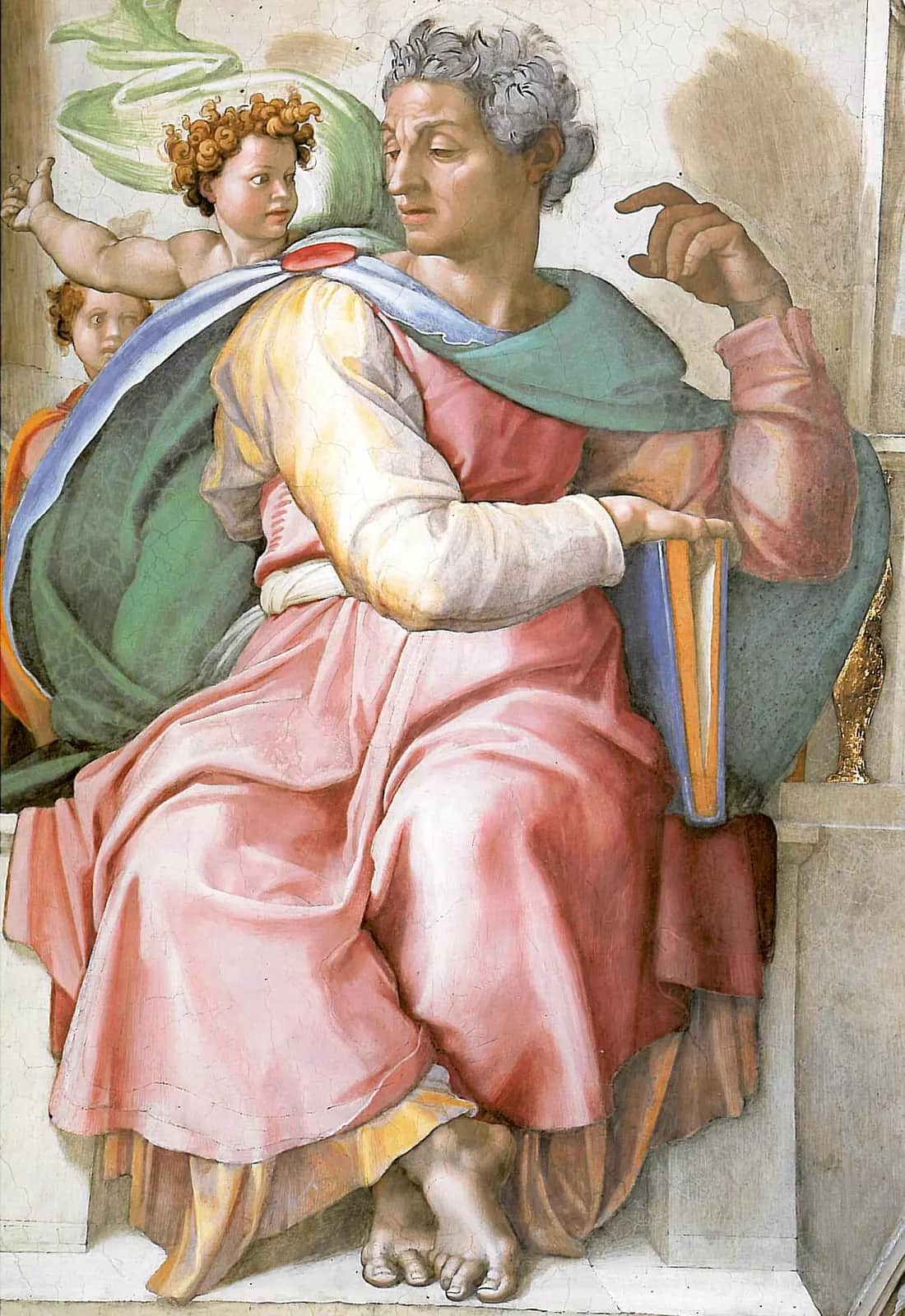
Isaiah 5:4 (WEB)
What could have been done more to my vineyard, that I have not done in it? Why, when I looked for it to yield grapes, did it yield wild grapes?
Fathers and councils · 8
John Chrysostom
“That is, the Jews being on the point of ruin, and of being given over to extreme punishment; lest any from their wickedness should calumniate His providence, He saith, “What ought I to have done to this vineyard, that I have not done?”” — editor's note: Is. v. 4. [Chrysostom varies from the LXX., introducing με δει, to strengthen his argument.—R.]
Read the whole comment“And He implies that there was nothing that ought to have been done for their salvation, and was omitted; which thing the prophetsaith of the vineyard; “What ought I to have done to this vineyard, and have not done it?” — editor's note: Isa. v. 4 [LXX.]
Read the whole comment“…unto all, fulfilling His part, although foreknowing the results; that it may be in His power to say, “What ought I to have done, that I have not done?”” — editor's note: Is. v. 4.
Read the whole comment“And there indeed He saith, “What ought I to have done to my vineyard, that I did not;”and elsewhere again, “What transgression have your fathers found in me?”” — editor's note: Is. v. 4.
Read the whole comment
Catena Aurea on Matthew
- John ChrysostomCatena Aurea on Matthew
“For He that sowed put no difference between rich and poor, wise or foolish, but spoke to all alike; filling up his own part, though foreseeing all things that should come to pass, so that He might say, “What ought I to have done that I have not done? [Isa 5:4]” — the author cites it
Read the whole comment
Aphrahat
“And thus He said to the judges:—Judge between Me and My vineyard, what further, O ye judges, should I have done to My vineyard, that I did not do?” — editor's note: Is. v. 1–6.
Read the whole comment
Leo the Great
“…now tasted the vinegar, the produce of that vineyard which had degenerated in spite of its Divine Planter, and had turned to the sourness of a foreign vine, the Lord says, “it is finished;” that is, the Scriptures are fulfilled: there is no more for Me to abide from the fury of the raging people: I have endured…” — editor's note: The reference is perhaps to Is. v. 1–5.
Read the whole comment
Augustine of Hippo
“For how could that be a true vine which was expected to bring forth grapes and brought forth thorns?” — editor's note: Isa. v. 4.
Read the whole comment
Cross-references · 24
Cited together in Tractates on the Gospel of John Tractate 80.
Cited together in Homilies on Matthew Homily 12.
Cited together in Homilies on Matthew Homily 12.
Cited together in Homilies on Matthew Homily 12.
Cited together in Homilies on Matthew Homily 12.
Cited together in John Chrysostom on Matthew 13:1–9 (7) (Catena Aurea).
Cited together in John Chrysostom on Matthew 13:1–9 (7) (Catena Aurea).
Cited together in John Chrysostom on Matthew 13:1–9 (7) (Catena Aurea).
Cited together in John Chrysostom on Matthew 13:1–9 (7) (Catena Aurea).
Cited together in John Chrysostom on Matthew 13:1–9 (7) (Catena Aurea).
Cited together in John Chrysostom on Matthew 13:1–9 (7) (Catena Aurea).
Cited together in John Chrysostom on Matthew 13:1–9 (7) (Catena Aurea).
Cited together in John Chrysostom on Matthew 13:1–9 (7) (Catena Aurea).
Cited together in John Chrysostom on Matthew 13:1–9 (7) (Catena Aurea).
Cited together in Homilies on Matthew Homily 12.
Cited together in Homilies on Matthew Homily 12.
Cited together in Homilies on Matthew Homily 12.
Cited together in Homilies on Matthew Homily 12.
Cited together in Homilies on Matthew Homily 12.
Cited together in Homilies on Matthew Homily 12.
Cited together in Homilies on Matthew Homily 12.
Cited together in Homilies on Matthew Homily 12.
Cited together in Sermons Sermon 55.
Cited together in Sermons Sermon 55.