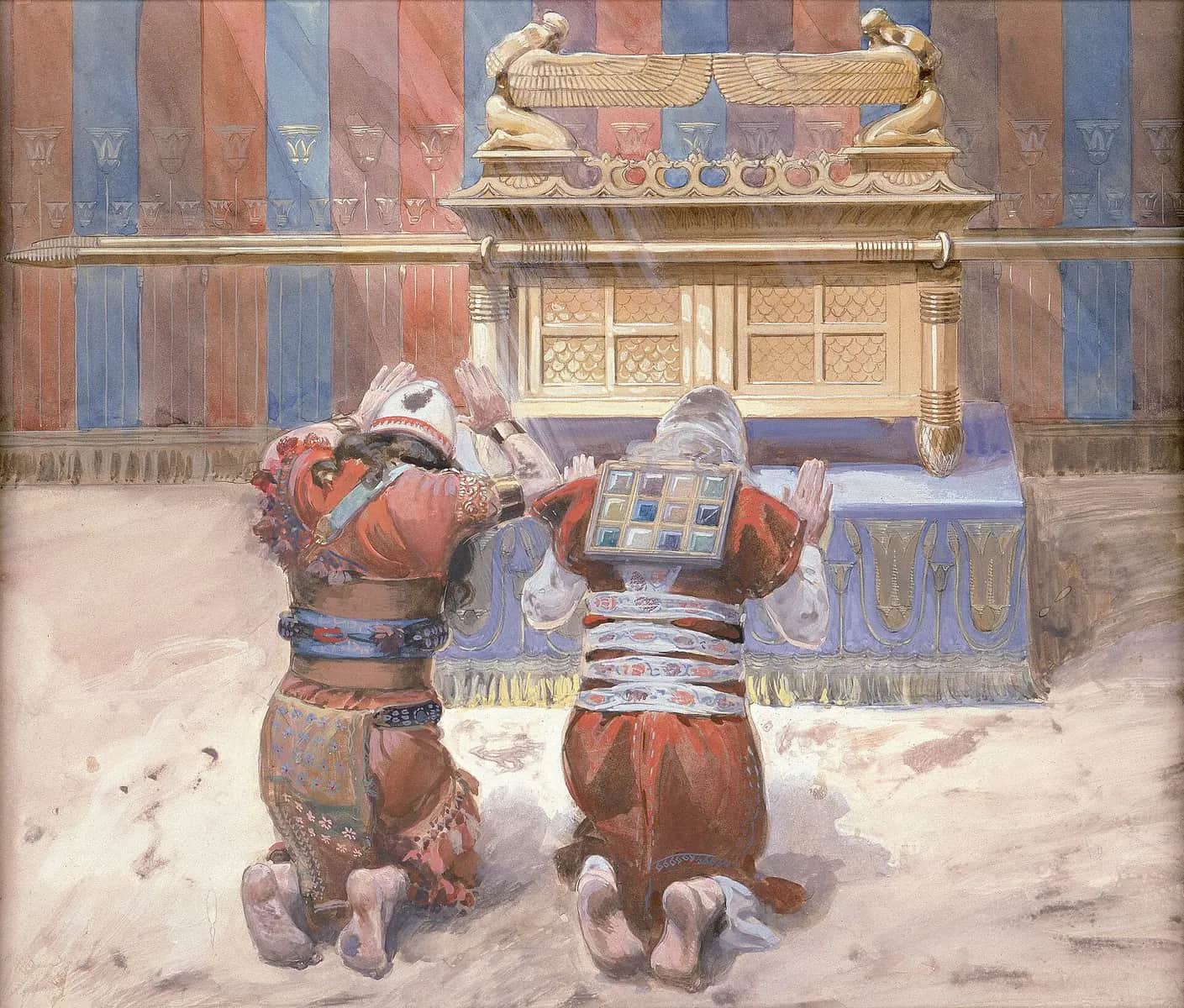
Exodus 12:23 (WEB)
For the LORD will pass through to strike the Egyptians; and when he sees the blood on the lintel, and on the two door posts, the LORD will pass over the door, and will not allow the destroyer to come in to your houses to strike you.
Fathers and councils · 10
Origen
- Origen, Against Celsus VI.43Book VI
“And, further, who else could the destroying angel mentioned in the Exodus of Moses be, than he who was the author of destruction to them that obeyed him, and did not withstand his wicked deeds, nor struggle against them?” — editor's note: Cf. Ex. xii. 23.
Read the whole comment - Origen, De Principiis III.3Book III
“…the book of Exodus that he wished to slay Moses, because he was taking his departure for Egypt; and afterwards, also, who he is that is called the destroying angel, as well as he who in the book of Leviticus is called Apopompæus, i.e., Averter, regarding whom Scripture says, “One lot for the Lord, and one lot for…” — editor's note: Ex. xii. 23, exterminator. Percussor, Vulgate; ὀλοθρεύων, Sept.
Read the whole comment
John Damascene
“This is the seal that the destroyer may not touch you, as saith the Scripture.” — editor's note: Exod. xii. 23.
Read the whole comment
Cyril of Jerusalem
“Further; if the lamb under Moses drove the destroyer far away, did not much rather the Lamb of God, which taketh away the sin of the world, deliver us from our sins?” — editor's note: Ex. xii. 23.
Read the whole comment
Athanasius of Alexandria
“5), in which, my beloved brethren, we should use more prolonged prayers, and fastings, and watchings, that we may be enabled to anoint our lintels with precious blood, and to escape the destroyer.” — editor's note: Exod. xii. 7, 23.
Read the whole comment
Jerome
“While they were keeping their sheep they found the Lamb of God; whose fleece bright and clean was made wet with the dew of heaven when it was dry upon all the earth beside, and whose blood when sprinkled on the doorposts drove off the destroyer of Egypt and took away the sins of the world.” — editor's note: Ex. xii. 21–23.
Read the whole comment“Thus alone will the destroyer of Egypt find no place to attack you; thus alone will the first-born of your soul escape the fate of the first-born of the Egyptians; thus alone will you be able with the prophet to say: “my heart is fixed, O God, my heart is fixed; I will sing and give praise.” — editor's note: Exod. xii. 23, 29.
Read the whole comment
Leo the Great
“His threshold the angel of destruction does not cross, for it is marked with the Lamb’s blood and the sign of the cross.” — editor's note: Cf. Exod. xii. 23; and below, 1 Cor. v. 8, and Rom. viii. 35.
Read the whole comment
Augustine of Hippo
“And that sealing—for it had a real significance—was said to keep away the destroyer from the houses that were sealed: Christ’s seal drives away the destroyer from us, if we receive the Saviour into our hearts.” — editor's note: Ex. xii. 22, 23.
Read the whole comment“…means passover; because the pascha was then celebrated for the first time by God’s people, when, in their flight from Egypt, they passed over the Red Sea.” — editor's note: Ex. xiv. 29. A curious mistake of Augustin’s to derive the name of the feast from Israel’s passing over the Red Sea, instead of Jehovah’s passing over the…
Read the whole comment
Cross-references · 18
Cited together in Sermons Sermon 55.
Cited together in Sermons Sermon 55.
Cited together in Sermons Sermon 55.
Cited together in Sermons Sermon 55.
Cited together in An Exact Exposition of the Orthodox Faith IV.11.
Cited together in An Exact Exposition of the Orthodox Faith IV.11.
Cited together in Sermons Sermon 55.
Cited together in Sermons Sermon 55.
Cited together in Sermons Sermon 55.
Cited together in Sermons Sermon 55.
Cited together in Sermons Sermon 55.
Cited together in Sermons Sermon 55.
Cited together in Sermons Sermon 55.
Cited together in An Exact Exposition of the Orthodox Faith IV.11.
Cited together in Sermons Sermon 55.
Cited together in An Exact Exposition of the Orthodox Faith IV.11.
Cited together in An Exact Exposition of the Orthodox Faith IV.11.
Cited together in An Exact Exposition of the Orthodox Faith IV.11.