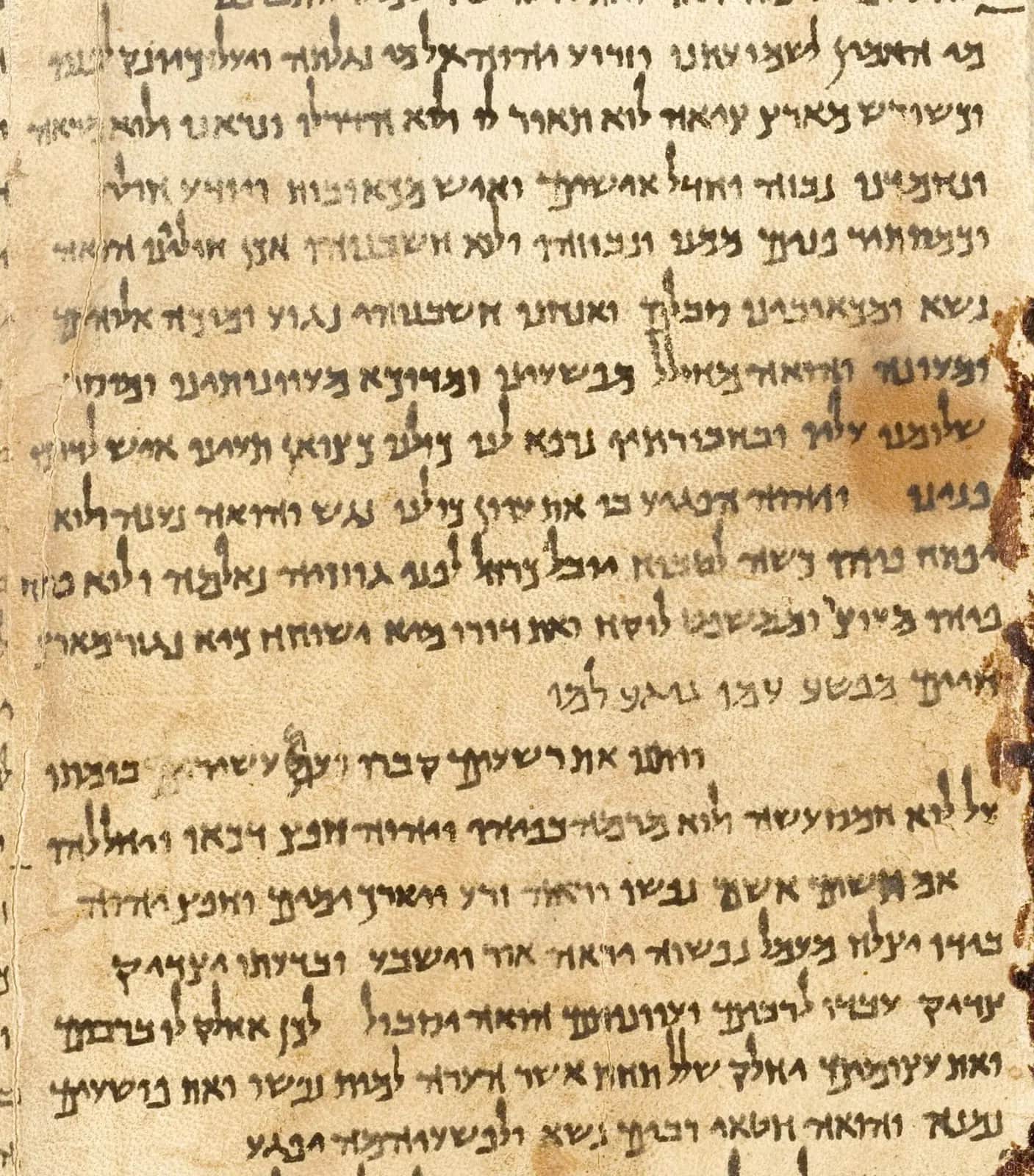
Isaiah 53:4 (WEB)
Surely he has borne our sickness and carried our suffering; yet we considered him plagued, struck by God, and afflicted.
Catechism · 3
The Anointing of the Sick
“Moved by so much suffering Christ not only allows himself to be touched by the sick, but he makes their miseries his own: "He took our infirmities and bore our diseases."” — Catechism footnote: Mt 8:17; cf. Isa 53:4.
The Mysteries of Christ's Life
“…atones for our disobedience; - in his word which purifies its hearers;- in his healings and exorcisms by which "he took our infirmities and bore our diseases";” — Catechism footnote: Mt 8:17; cf. Is 53:4.
"I Believe in the Holy Spirit"
The Messiah's characteristics are revealed above all in the "Servant songs." These songs proclaim the meaning of Jesus' Passion and show how he will pour out the Holy Spirit to give life to the many: not as an outsider, but by embracing our "form as slave."
Fathers and councils · 28
Origen
“And who shall describe His generation? because His life is taken away from the earth; because of the iniquities of My people was He led unto death.”” — editor's note: Cf. Isa. liii. 1–8 in the Septuagint version (Roman text).
Read the whole comment
Irenaeus of Lyons
“…be strengthened,” and that “the dead which are in the grave shall arise,” and that He Himself “shall take [upon Him] our weaknesses, and bear our sorrows,”— [all these] proclaimed those works of healing which were accomplished by Him.” — editor's note: Isa. liii. 4.
Read the whole comment
Athanasius of Alexandria
“…said, ‘Has redeemed us from the curse,’ and ‘has carried,’ as Isaiah has said, ‘our sins,’ and as Peter has written, ‘has borne them in the body on the wood’); so, if it is said in the Proverbs ‘He created,’ we must not conceive that the whole Word is in nature a creature, but that He put on the created body and…” — editor's note: Gal. iii. 13; Is. liii. 4; 1 Pet. ii. 24
Read the whole comment“We were far off, and are brought nigh, we were strangers, and have become His, Who suffered for us, and was nailed on the cross, Who bore our sins, as the prophet saith, and was afflicted for us, that He might put away from all of us grief, and sorrow, and sighing.” — editor's note: Isa. liii. 4.
Read the whole comment
Hippolytus of Rome
“For “Himself hath borne our infirmities, and carried our diseases; and for our sakes He was afflicted,” as Isaiah the prophet has said.” — editor's note: Isa. liii. 4.
Read the whole comment“…(lit. = deficient) above all men; a man smitten and familiar with bearing infirmity, (for His face was turned away); He was despised, and esteemed not.”” — editor's note: Isa. liii. 2–5.
Read the whole comment
Catena Aurea on Luke
- Augustine of HippoCatena Aurea on Luke
“(See Isa. 53:4; 52:15.)” — the author cites it
Read the whole comment
Cyril of Jerusalem
“Be not then ashamed of the Crucified, but be thou also bold to say, He beareth our sins, and endureth grief for us, and with His stripes we are healed.” — editor's note: Isa. liii. 4, 5.
Read the whole comment
Theodoret of Cyrus
“He says “the expression ‘He was made Flesh’ seems to be parallel to His being said to have been made sin and a curse, not because the Lord was transmuted into these,—for how could He?—but because He accepted these when He took on Him our iniquities and bore our infirmities.”” — editor's note: Isaiah liii. 4
Read the whole comment“Similarly the prophet Isaiah writes “A man of sorrows and acquainted with grief.…Surely He hath borne our griefs and carried our sorrows,” and shortly afterwards he says “Who shall declare His generation?”” — editor's note: Is. liii. 3, 4
Read the whole comment
Ambrose of Milan
“Not Thy wounds, but mine, hurt Thee, Lord Jesus; not Thy death, but our weakness, even as the Prophet saith: “For He is afflicted for our sakes”—and we, Lord, esteemed Thee afflicted, when Thou grievedst not for Thyself, but for me.” — editor's note: Isa. liii. 4.
Read the whole comment“Thou wilt say then: “Have I not borne all your sufferings?” — editor's note: Isa. liii. 4.
Read the whole comment“…He had taken not only our body, but also the weaknesses of that body, even as it is written: “Surely He hath taken our infirmities and borne our sicknesses.”” — editor's note: Isa. liii. 4. Cf. S. Matt. viii. 17.
Read the whole comment“How, save by means of the flesh, was He made partaker with us, or by what, save by bodily death, brake He the chains of death?” — editor's note: Particeps noster—our partner, companion, sharing all our labours (and taking the lion’s share, too). Isa. liii. 4.
Read the whole comment
Augustine of Hippo
“Was it, O Lord Jesus Christ, that Thou wast silent, and like a sheep for a victim wast being led, and didst not open before the shearer Thy mouth, and we thought Thee to be set in smiting and in grief, and knowing how to bear weakness?” — editor's note: Isa. liii. 4.
Read the whole comment“Another Prophet says of Him, that He grieved for us: and the Evangelist says, “And He took with Him Peter and the two sons of Zebedee, and began to be sorrowful and very heavy:” and our Lord Himself saith unto them of Himself, “My soul is exceeding sorrowful, even unto death.”” — editor's note: Isa. liii. 4.
Read the whole commentThe Fulfilment of the Prophecies Concerning Christ. 47. Wherefore let those evil applauders of Christ, who refuse to become Christians, desist from making the allegation that Christ did not teach that their gods were…
Read the whole comment
John Chrysostom
“…that from the miracles themselves we have no more; and He saith, that Esaias also spake of these things; “He took our infirmities, and bare our sicknesses.”” — editor's note: Isa. liii. 4. The Evangelist seems to quote the Hebrew, not the LXX. [The explanation given in the Homily agrees with the LXX., “he bare our sins and suffered…
Read the whole comment
Basil the Great
““I was naked,” He says, “and ye clothed me;” and so when another is in prison He speaks of Himself as imprisoned, for He Himself took away our sins and bare our sicknesses.” — editor's note: cf. Isa. liii. 4 and Matt. viii. 17.
Read the whole comment
Hilary of Poitiers
“To this article of our faith the prophet bears witness when he says, He beareth our sins and grieveth for us: and we esteemed Him stricken, smitten, and afflicted: He was wounded for our transgressions and made weak for our sins.” — editor's note: Isai. liii. 4, 5. Hilary translates from the Septuagint. The Hebrew and the Vulgate differ, cf. the English Version, “Surely He hath borne our griefs” (instead…
Read the whole comment
Gregory of Nazianzus
“But we show that our warfare is in behalf of Christ by fighting as Christ, the peaceable and meek, Who has borne our infirmities, fought.” — editor's note: Ib. viii. 17; Isai. liii. 4.
Read the whole comment“For though He both took on Him our sins and bare our diseases, yet He did not Himself suffer aught that needed healing.” — editor's note: Isa. liii. 4.
Read the whole comment
Catena Aurea on John
- OrigenCatena Aurea on John
“But He Who offered the lamb for a sacrifice, was God hid in human form, the great Priest, He who saith below, No man taketh it (My life) from Me, but I lay it down of Myself: (John 10:18) whence this name, the Lamb of God: for He carrying our sorrows, (Isaiah 53:4.” — the author cites it
Read the whole comment
Catena Aurea on Matthew
- Rabanus MaurusCatena Aurea on Matthew
“For Jonah, that is The Dove, or The mourner, is a sign of Him on whom the Holy Spirit descended in the form of a Dove, and “who bare our sorrows.” [Isa 53:4]” — the author cites it
Read the whole comment
Tertullian
“…and He was without beauty: His form was disfigured;” “marred more than the sons of men; a man stricken with sorrows, and knowing how to bear our infirmity;” “placed by the Father as a stone of stumbling and a rock of offence;” “made by Him a little lower than the angels;” declaring Himself to be “a worm and not a…” — editor's note: See Isa. lii. 14; liii. 3, 4.
Read the whole comment“And likewise as a healer: “For,” says he, “He hath taken away our infirmities, and carried our sorrows.”” — editor's note: Isa. liii. 4.
Read the whole comment“He was therefore the very Christ of Isaiah, the healer of our sicknesses.” — editor's note: See Isa. liii. 4.
Read the whole comment
Cyprian of Carthage
“And God has delivered Him for our sins; and He, because He was afflicted, opened not His mouth.”” — editor's note: Isa. liii. 1–7. [See p. 516, supra.]
Read the whole comment
Cross-references · 40
Cited together in Exposition of the Christian Faith III.1.
Cited together in Catechism §517 and 2 other places.
Cited together in Rabanus Maurus on Matthew 12:38–40 (2) (Catena Aurea).
Cited together in Rabanus Maurus on Matthew 12:38–40 (2) (Catena Aurea).
Cited together in Exposition of the Christian Faith II.7.
Cited together in Catechism §517.
Cited together in Augustine of Hippo on Luke 15:25–32 (Catena Aurea).
Cited together in Augustine of Hippo on Luke 15:25–32 (Catena Aurea).
Cited together in Augustine of Hippo on Luke 15:25–32 (Catena Aurea).
Cited together in Augustine of Hippo on Luke 15:25–32 (Catena Aurea).
Cited together in Augustine of Hippo on Luke 15:25–32 (Catena Aurea).
Cited together in Augustine of Hippo on Luke 15:25–32 (Catena Aurea).
Cited together in Augustine of Hippo on Luke 15:25–32 (Catena Aurea).
Cited together in Catechism §1505 and 1 other place.
Cited together in Origen on John 1:29–31 (2) (Catena Aurea).
Cited together in Origen on John 1:29–31 (2) (Catena Aurea).
Cited together in Catechism §517.
Cited together in Catechism §517.
Cited together in Exposition of the Christian Faith II.7.
Cited together in Catechism §517.
Cited together in Exposition of the Christian Faith II.7.
Cited together in Catechism §517.
Cited together in Catechism §517.
Cited together in Catechism §517.
Cited together in Origen on John 1:29–31 (2) (Catena Aurea).
Cited together in Exposition of the Christian Faith II.7.
Cited together in Catechism §517.
Cited together in Catechism §517.
Cited together in Exposition of the Christian Faith III.1.
Cited together in Exposition of the Christian Faith III.1.
Cited together in Exposition of the Christian Faith III.1.
Cited together in Exposition of the Christian Faith III.1.
Cited together in Exposition of the Christian Faith II.7.
Cited together in The Five Books Against Marcion III.16.
Cited together in Exposition of the Christian Faith III.1.
Cited together in Augustine of Hippo on Luke 15:25–32 (Catena Aurea).
Cited together in The Five Books Against Marcion III.16.
Cited together in Against Celsus I.54.
Cited together in Against Celsus I.54 and 1 other place.
Cross-reference given by the World English Bible's translators.