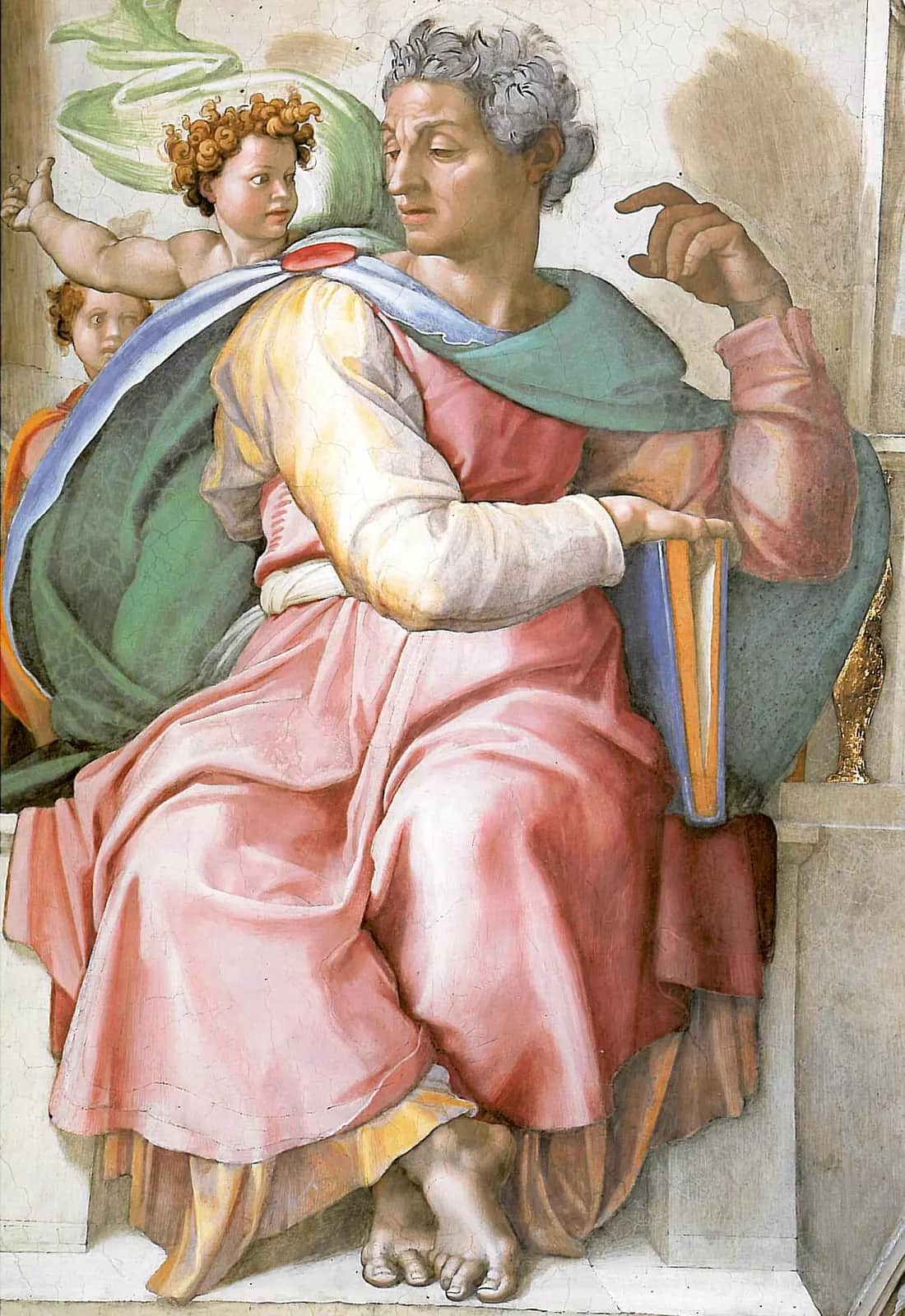
Isaiah 7:15 (WEB)
He shall eat butter and honey when he knows to refuse the evil and choose the good.
Fathers and councils · 9
Irenaeus of Lyons
“Butter and honey shall He eat: before He knows or chooses out things that are evil, He shall exchange them for what is good; for before the child knows good or evil, He shall not consent to evil, that He may choose that which is good.”” — editor's note: Isa. vii. 10–17.
Read the whole comment
Tertullian
“…the virgin shall conceive, and bear a son, and ye shall call his name Emmanuel” (which is, interpreted, “God with us”): “butter and honey shall he eat;”: “since, ere the child learn to call father or mother, he shall receive the power of Damascus and the spoils of Samaria, in opposition to the king of the…” — editor's note: See Isa vii. 15.
Read the whole comment
Origen
- Origen, De Principiis IV.1Book IV
“…truly deem the city of God, and cut off at the same time the chariots of Ephraim, and the horse from Jerusalem; that He ought also to eat butter and honey, in order to choose the good before He should come to know how to bring forth evil.” — editor's note: Cf. Isa. vii. 15.
Read the whole comment - Origen, De Principiis IV.2Book IV
“…cut off “the chariots of Ephraim, and the horse from Jerusalem,” nor eaten butter and honey, and, before knowing or preferring the evil, had selected the good.” — editor's note: Cf. Isa. vii. 15.
Read the whole comment
Justin Martyr
“But God shall bring on thee, and on thy people, and on the house of thy father, days which have not yet come upon thee since the day in which Ephraim took away from Judah the king of Assyria.’” — editor's note: Isa. vii. 10–17 with Isa. viii. 4 inserted. The last clause may also be translated, “in which He took away from Judah Ephraim, even the king of Assyria.”
Read the whole comment“…thy people, and on the house of thy father, days which have not yet come upon thee since the day in which Ephraim took away from Judah the king of Assyria.’ ” And I continued: “Now it is evident to all, that in the race of Abraham according to the flesh no one has been born of a virgin, or is said to have been born…” — editor's note: Isa. vii. 10–17, with Isa. viii. 4 inserted between vers. 16 and 17.
Read the whole comment
Jerome
“This young child, this mere boy, who is fed on butter and honey, and who is reared among curdled mountains, quickly grows up to manhood, speedily spoils all that is opposed to him in you, and when the time is ripe plunders [the spiritual] Damascus and puts in chains the king of [the spiritual] Assyria.” — editor's note: Isa. vii. 14, 15.
Read the whole comment
Clement of Alexandria
“But he that prophesies the birth of the child says: “Butter and honey shall He eat.”” — editor's note: Isa. vii. 15.
Read the whole comment
Cyprian of Carthage
“Butter and honey shall He eat; before that He knows to prefer the evil, He shall exchange the good.”” — editor's note: Isa. vii. 10–15. The ordinary reading here is, “before He knows, to refuse the evil and to choose the good.” The reading in the text, however, is more…
Read the whole comment
Cross-references · 4
Cited together in Dialogue with Trypho Chapter 43 and 1 other place.
Cited together in Dialogue with Trypho Chapter 43.
Cited together in Three Books of Testimonies Against the Jews II.10.
Cited together in Three Books of Testimonies Against the Jews II.10.