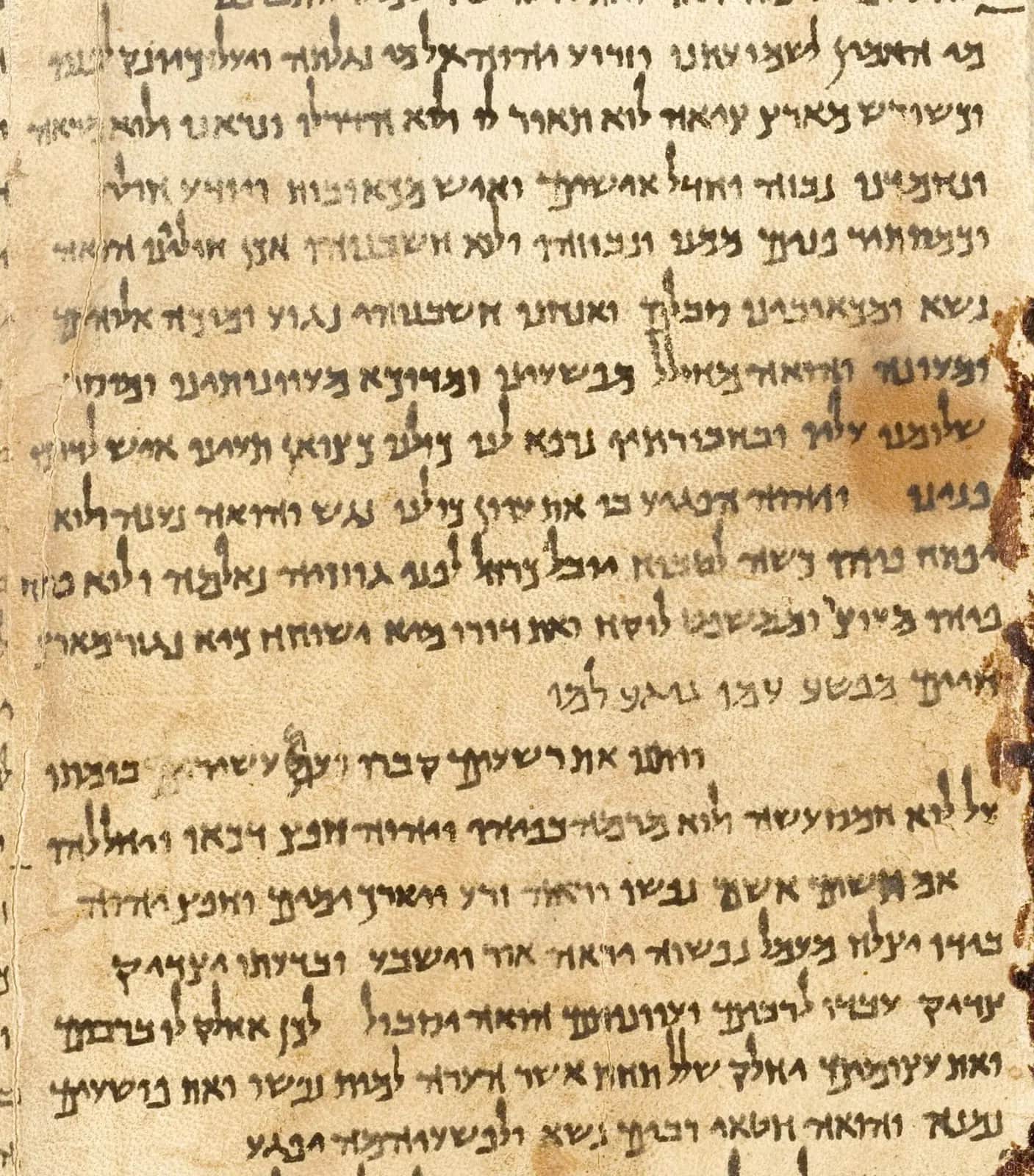
Isaiah 53:8 (WEB)
He was taken away by oppression and judgment. As for his generation, who considered that he was cut off out of the land of the living and stricken for the disobedience of my people?
Catechism · 3
Jesus Died Crucified
“In particular Jesus' redemptive death fulfils Isaiah's prophecy of the suffering Servant.” — Catechism footnote: Cf. Is 53:7-8 and Acts 8:32-35.
Jesus Christ Was Buried
“Both of these statements can be said of Christ: "He was cut off out of the land of the living",” — Catechism footnote: Is 53:8.
"I Believe in the Holy Spirit"
The Messiah's characteristics are revealed above all in the "Servant songs." These songs proclaim the meaning of Jesus' Passion and show how he will pour out the Holy Spirit to give life to the many: not as an outsider, but by embracing our "form as slave."
Fathers and councils · 40
Origen
“And who shall describe His generation? because His life is taken away from the earth; because of the iniquities of My people was He led unto death.”” — editor's note: Cf. Isa. liii. 1–8 in the Septuagint version (Roman text).
Read the whole comment
Irenaeus of Lyons
“As for the prophet, he declares respecting Him, “Who shall describe His generation?”” — editor's note: Isa. liii. 8.
Read the whole comment““But who shall declare His nativity? for His life shall be taken away from the earth.” [Philip declared] that this was Jesus, and that the Scripture was fulfilled in Him; as did also the believing eunuch himself: and, immediately requesting to be baptized, he said, “I believe Jesus Christ to be the Son of God.”” — editor's note: Acts viii. 32; Isa. liii. 7, 8.
Read the whole comment“For this reason [it is, said], “Who shall declare His generation?” since “He is a man, and who shall recognise Him?”” — editor's note: Isa. liii. 8.
Read the whole comment
Tertullian
““By the crimes,” he says, “of my people was He led unto death; and I will give the evil for His sepulture, and the rich for His death, because He did not wickedness, nor was guile found in his mouth; and God willed to redeem His soul from death,” and so forth.” — editor's note: Isa. liii. 8, 9, 10, (in LXX.).
Read the whole comment“The Scripture which he was readingfalls in opportunely with his faith: Philip, being requested, is taken to sit beside him; the Lord is pointed out; faith lingers not; water needs no waiting for; the work is completed, and the apostle snatched away.” — editor's note: Acts viii. 28, 30, 32, 33, and Isa. liii. 7, 8, especially in LXX. The quotation, as given in Acts, agrees nearly verbatim with the Cod. Alex. there.
Read the whole comment“Therefore, asks Isaiah, “who shall declare His generation?”” — editor's note: Isa. liii. 8.
Read the whole comment
Cyril of Jerusalem
“He is called a Way, not one trodden by feet, but leading to the Father in heaven; He is called a Sheep, not an irrational one, but the one which through its precious blood cleanses the world from its sins, which is led before the shearers, and knows when to be silent.” — editor's note: Ib. i. 29; Is. liii. 7, 8; Acts viii. 32.
Read the whole comment“As the Son of David, He is subject to time, and to handling, and to genealogical descent: but as Son according to the Godhead, He is subject neither to time nor to place, nor to genealogical descent: for His generation who shall declare?” — editor's note: Isa. liii. 8. Compare § 7, below.
Read the whole comment“And again; for the transgression of my people was He led to death; and I will give the wicked for His burial, and the rich for His death.” — editor's note: Ib. vv. 8, 9.
Read the whole comment
Eusebius of Caesarea
“Wherefore also the divine Spirit says in the prophecies, “Who shall declare his generation?”” — editor's note: Isa. liii. 8.
Read the whole comment
Ambrose of Milan
“And if the name John restored speech to his father, I, too, ought not to despair that although dumb I may yet receive speech, if I speak of Christ, of Whom, according to the prophet’s word: “Who shall declare the generation?”” — editor's note: Isa. liii. 8.
Read the whole comment“Again, we read: “Who shall declare His generation?”” — editor's note: Is. liii. 8.
Read the whole comment“…brought forth without any father, begotten as God without mother, and was without history of descent, for it is written: “His generation who shall declare?”” — editor's note: Isa. liii. 8.
Read the whole comment
Justin Martyr
“Isaiah then asserted in regard to the generation of Christ, that it could not be declared by man, in words already quoted: ‘Who shall declare His generation? for His life is taken from the earth: for the transgressions of my people was He led to death.’” — editor's note: Isa. liii. 8.
Read the whole comment“The passage, then, which Isaiah records, ‘Who shall declare His generation? for His life is taken away from the earth,’—does it not appear to you to refer to One who, not having descent from men, was said to be delivered over to death by God for the transgressions of the…” — editor's note: Isa. liii. 8.
Read the whole comment“…swore, ‘after the order of Melchizedek,’ and what this prediction means; and the prophecy of Isaiah which says, ‘His burial is taken away from the midst,’ I have already said, referred to the future burying and rising again of Christ; and I have frequently remarked that this very Christ is the Judge of all the…” — editor's note: Isa. liii. 8.
Read the whole comment
Theodoret of Cyrus
““Who” says the prophet “shall declare His generation?”” — editor's note: Is. liii. 8
Read the whole comment“It is said by the Spirit of prophecy, ‘Who shall declare His generation?’” — editor's note: Isai. liii. 8
Read the whole comment“Similarly the prophet Isaiah writes “A man of sorrows and acquainted with grief.…Surely He hath borne our griefs and carried our sorrows,” and shortly afterwards he says “Who shall declare His generation?”” — editor's note: Isaiah liii. 8
Read the whole comment
Augustine of Hippo
“And thus, “and He shall live,” that was despised in death: for, as another Prophet saith, “there shall be taken away from the earth the life of Him.”” — editor's note: Isa. liii. 8.
Read the whole comment“From what is secret, from what is hidden; from Myself, from My substance; this is the meaning of “from the womb;” for, “Who shall declare His generation?”” — editor's note: Isa. liii. 8.
Read the whole commentThe Fulfilment of the Prophecies Concerning Christ. 47. Wherefore let those evil applauders of Christ, who refuse to become Christians, desist from making the allegation that Christ did not teach that their gods were…
Read the whole comment“For that heavenly and eternal generation, in virtue of which He is the only-begotten Son of God, before every creature, because all things were made by Him, is so ineffable, that it is of it that the word of the prophet must be understood when he says, “Who shall declare His generation?”” — editor's note: Isa. liii. 8.
Read the whole comment“He then was begotten coeternal, of which generation the Prophet said, “His generation who shall declare?” begotten of the Father without time, He was born of the Virgin in the fullness of times.” — editor's note: Is. liii. 8. [See R.V.]
Read the whole comment“Behold one lamp.” — editor's note: Isa. liii. 5–8.
Read the whole comment
John Chrysostom
“While they held this dialogue one with the other, He held His peace, fulfilling that saying of the Prophet, that “He openeth not his mouth: in His humiliation His judgment was taken away.” ( Isa. liii. 7, 8 , LXX.)” — the author cites it
Read the whole comment“And before me the Prophet Esaias hath told thee this; wherewhen proclaiming His passion, and His great care for the world, and admiring who He was, and what He became, and whither He descended, he cried out loud and clear, saying thus, “Who shall declare His generation?”” — editor's note: Isaiah liii. 8. [Here γενεν occurs; not the term used by Matthew, but in the phrase “that other generation,” γννησιν, occurs.—R.]
Read the whole comment“And not this only, but that He should not even plead for Himself; “For this man,” he saith, “openeth not His mouth:” and that He should be unjustly condemned; “For in His humiliation,” saith he, “His judgment was taken away.”” — editor's note: Isa. liii. 8, from LXX.
Read the whole comment“Even as the prophet declaring this self-same thing from of old, said, “In His humiliation His judgment was taken away.”” — editor's note: Isa. liii. 8, LXX., see margin of our version.
Read the whole comment
Catena Aurea on Matthew
- JeromeCatena Aurea on Matthew
“We read in Isaiah, “Who shall declare His generation?” [Isa 53:8] But it does not follow that the Evangelist contradicts the Prophet, or undertakes what he declares impossible; for Isaiah is speaking of the generation of the Divine nature; St. Matthew of the incarnation of the human.” — the author cites it
Read the whole comment - JeromeCatena Aurea on Matthew
“They pierced my hands and my feet;” [Ps 22:16] and in another place, “He is led as a sheep to the slaughter;” and, “By the iniquities of my people was He led to death.” [Isa 53:7-8]
Read the whole comment
Ephrem the Syrian
“Thy Father is in Heaven, Thy Mother is on earth; who shall declare Thee?” — editor's note: Is. liii. 8.
Read the whole comment
Hilary of Poitiers
“Nor ought any exposition to be made of them for the reason and consideration that they are not contained in the divine Scriptures, and that they are above man’s understanding, nor can any man declare the birth of the Son, of whom it is written, Who shall declare His generation?” — editor's note: Is. liii. 8.
Read the whole comment“Next mark the Holy Ghost proclaiming Who shall declare His generation?” — editor's note: Isai. liii. 8.
Read the whole comment
John Cassian
“For according to the Evangelist He has a genealogy “without father,” when born in the flesh: and according to the Apostle, the Lord has not, when begotten in His Divine nature “without mother;” as Isaiah says: “But who shall declare His generation?”” — editor's note: Isa. liii. 8.
Read the whole comment
Leo the Great
“For we believe that what Isaiah says, “who shall declare his generation?” applies not only to that mystery, whereby the Son of God is co-eternal with the Father, but also to this birth whereby “the Word became flesh.”” — editor's note: Isaiah liii. 8.
Read the whole comment
Hippolytus of Rome
“For since the foundation of the doctrine with them is the man Adam, and they say that concerning him it has been written, “Who shall declare his generation?” learn how, partly deriving from the Gentiles the undiscoverable and diversified generation of the man, they fictitiously apply it to Christ.” — editor's note: Isa. liii. 8.
Read the whole comment
Cyprian of Carthage
“And He bare the sins of many, and was delivered for their offences.”” — editor's note: Isa. liii. 7–9, 12.
Read the whole comment
Jerome
“That single thing was too much for him, and he says,“Who shall declare his generation?”” — editor's note: Is. liii. 8.
Read the whole comment
Cross-references · 54
Cited together in Dialogue with Trypho Chapter 118.
Cited together in Catechism §627.
Cited together in Catechism §627.
Cited together in Jerome on Matthew 1:1 (2) (Catena Aurea) and 2 other places.
Cited together in Sermons Sermon 23.
Cited together in Catechism §627.
Cited together in Jerome on Matthew 26:55–58 (2) (Catena Aurea).
Cited together in Jerome on Matthew 26:55–58 (2) (Catena Aurea).
Cited together in Jerome on Matthew 26:55–58 (2) (Catena Aurea).
Cited together in Jerome on Matthew 26:55–58 (2) (Catena Aurea).
Cited together in Concerning Virgins I.1.
Cited together in Concerning Virgins I.1.
Cited together in Harmony of the Gospels II.2.
Cited together in Harmony of the Gospels II.2.
Cited together in Harmony of the Gospels II.2.
Cited together in Concerning Virgins I.1.
Cited together in Catechism §627.
Cited together in Concerning Virgins I.1.
Cited together in Catechism §627.
Cited together in Catechism §627.
Cited together in Catechism §627.
Cited together in Catechism §627.
Cited together in Nineteen Hymns on the Nativity of Christ in the Flesh Hymn 8.
Cited together in Nineteen Hymns on the Nativity of Christ in the Flesh Hymn 8.
Cited together in Concerning Virgins I.1.
Cited together in Concerning Virgins I.1.
Cited together in Nineteen Hymns on the Nativity of Christ in the Flesh Hymn 8.
Cited together in Nineteen Hymns on the Nativity of Christ in the Flesh Hymn 8.
Cited together in Catechism §627.
Cited together in Catechism §627.
Cited together in Jerome on Matthew 26:55–58 (2) (Catena Aurea).
Cited together in Dialogue with Trypho Chapter 63.
Cited together in Dialogue with Trypho Chapter 63.
Cited together in Dialogue with Trypho Chapter 63.
Cited together in Dialogue with Trypho Chapter 63.
Cited together in Dialogue with Trypho Chapter 63.
Cited together in Dialogue with Trypho Chapter 63.
Cited together in Nineteen Hymns on the Nativity of Christ in the Flesh Hymn 8.
Cited together in Nineteen Hymns on the Nativity of Christ in the Flesh Hymn 8.
Cited together in Dialogue with Trypho Chapter 63.
Cited together in Dialogue with Trypho Chapter 63 and 1 other place.
Cited together in Concerning Virgins I.1.
Cited together in Dialogue with Trypho Chapter 43.
Cited together in Dialogue with Trypho Chapter 43.
Cited together in Dialogue with Trypho Chapter 43.
Cited together in Dialogue with Trypho Chapter 43.
Cited together in Dialogue with Trypho Chapter 43.
Cited together in Dialogue with Trypho Chapter 43.
Cited together in Dialogue with Trypho Chapter 43.
Cited together in Dialogue with Trypho Chapter 43.
Cited together in Dialogue with Trypho Chapter 43.
Cited together in Against Celsus I.54.
Cited together in Dialogue with Trypho Chapter 118 and 1 other place.
Cross-reference given by the World English Bible's translators.