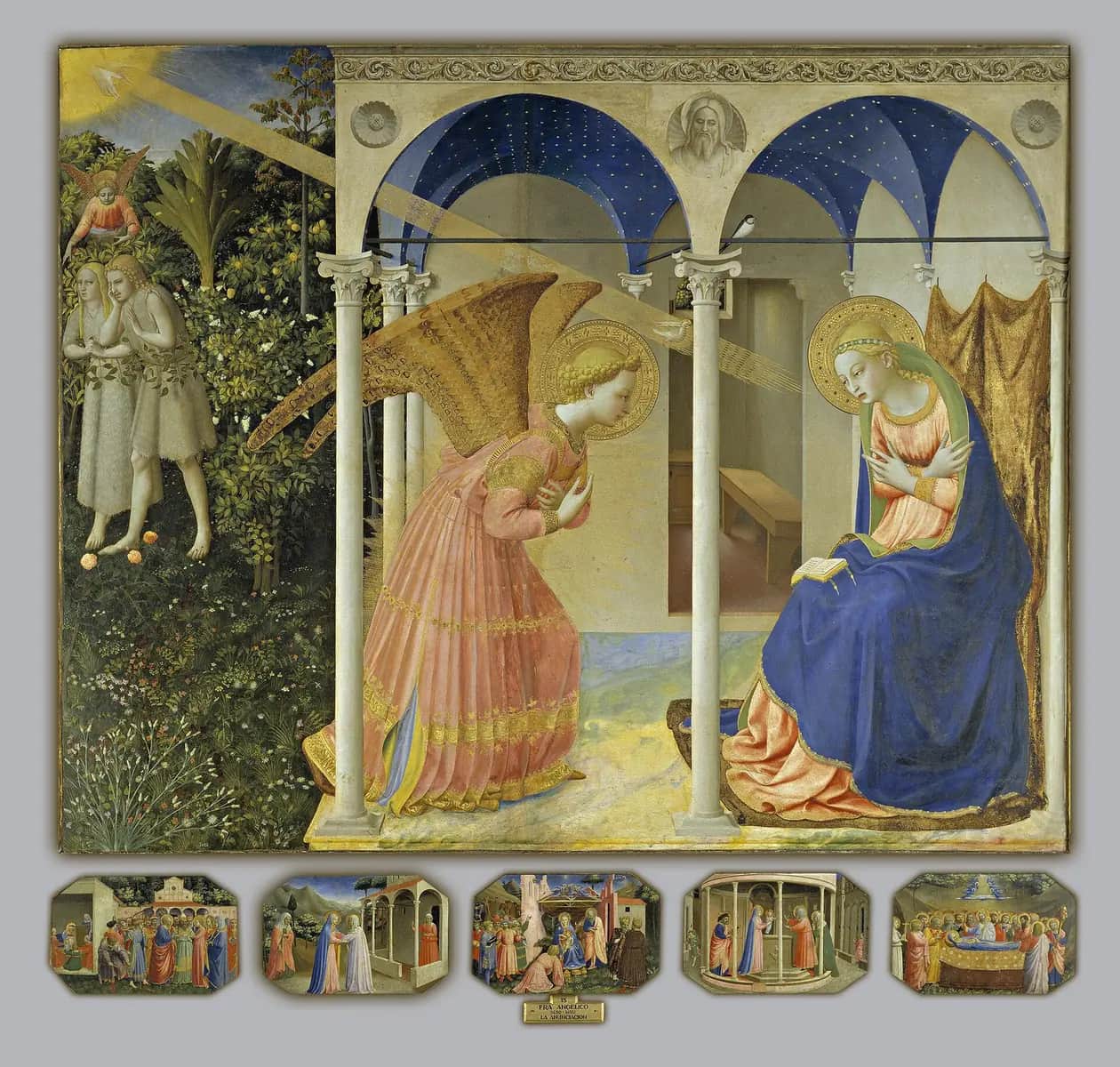
Luke 1:2 (WEB)
even as those who from the beginning were eyewitnesses and servants of the word delivered them to us,
Fathers and councils · 30
Gregory of Nyssa
“…for partitioning off the Son from equality of glory with the Father, we believe, as those “who from the beginning were eye-witnesses and ministers of the word” delivered to us by the Holy Scriptures, that the God who was in the beginning, “afterwards”, as Baruch says, “was seen upon the earth, and conversed with…” — editor's note: S. Luke i. 2
Read the whole comment
Irenaeus of Lyons
“Thus also does Luke, without respect of persons, deliver to us what he had learned from them, as he has himself testified, saying, “Even as they delivered them unto us, who from the beginning were eye-witnesses and ministers of the Word.”” — editor's note: Luke i. 2.
Read the whole comment
Eusebius of Caesarea
“One of these books is the Gospel, which he testifies that he wrote as those who were from the beginning eye witnesses and ministers of the word delivered unto him, all of whom, as he says, he followed accurately from the first.” — editor's note: Luke i. 2, 3.
Read the whole comment“…in regard to which he had learned the full truth, being aided by his intimacy and his stay with Paul and by his acquaintance with the rest of the apostles.” — editor's note: See Luke i. 1–4. Eusebius puts the case more strongly than Luke himself. Luke does not say that others had rashly undertaken the composition of their…
Read the whole comment
Augustine of Hippo
“…very first, to write unto thee in order, most excellent Theophilus, that thou mightest know the certainty of those things, wherein thou hast been instructed.”” — editor's note: Luke i. 1–4.
Read the whole comment
John Chrysostom
“This is a great thing and trustworthy: which also Luke saith in the beginning of his Gospel, “As they delivered unto us, which from the beginning were eyewitnesses and ministers of the Word.” ( Luke i. 2.)” — the author cites it
Read the whole comment“Knowing therefore this, let us continue steadfastly to hold what “they have delivered unto us, which from the beginning were eye-witnesses, and ministers of the word.” ( Luke i. 2.)” — the author cites it
Read the whole comment
Catena Aurea on Luke
- Eusebius of CaesareaCatena Aurea on Luke
St. Luke at the commencement of his Gospel has told us the reason of his writing, which was, that many others had rashly taken upon themselves to give accounts of those things of which he had a more certain…
Read the whole comment - Ambrose of MilanCatena Aurea on Luke
For as many among the Jewish people prophesied by inspiration of the Spirit of God, but others were false prophets rather than prophets, so now also have many attempted to write Gospels which the good moneychanger…
Read the whole comment - BedeCatena Aurea on Luke
The many who are mentioned, he reckons not so much by their number, as by the variety of their manifold heresies; men who were not endued with the gift of the Holy Spirit, but engaging in a vain work, have rather set…
Read the whole comment - Ambrose of MilanCatena Aurea on Luke
Now they who have attempted to set forth these things in order have laboured by themselves, and have not succeeded in what they attempted. For without the assistance of man come the gifts and the grace of God, which,…
Read the whole comment - Titus of BostraCatena Aurea on Luke
He says, of things, because not by shadows, as the heretics say, did Jesus accomplish His advent in the flesh, but being as He was the Truth, so in very truth He performed His work.
Read the whole comment - OrigenCatena Aurea on Luke
The effect upon his own mind, St. Luke explains by the expression, of the things which have been fully accomplished among us, i. e. have had their full manifestation among us, (as the Greek word πεπληροφορημένων…
Read the whole comment - John ChrysostomCatena Aurea on Luke
The Evangelist was so far from being content with his single testimony, that he refers the whole to the Apostles, seeking from them a confirmation of his words; and therefore he adds, as they handed them down to us,…
Read the whole comment - Eusebius of CaesareaCatena Aurea on Luke
Luke is a sure witness, because he obtained his knowledge of the truth either from St. Paul’s instructions, or the instructions and traditions of the other Apostles, who were themselves eyewitnesses from the beginning.
Read the whole comment - John ChrysostomCatena Aurea on Luke
He says, were eyewitnesses, because this is our chief ground for believing in a thing, that we derive it from those who were actually eyewitnesses.
Read the whole comment - OrigenCatena Aurea on Luke
It is plain that of one kind of knowledge, the end is in the knowledge itself, as in geometry; but of another kind, the end is counted to be in the work, as in medicine; and so it is in the word of God, and therefore…
Read the whole comment - Ambrose of MilanCatena Aurea on Luke
This expression is used, not that we should suppose the ministry of the word to consist rather in seeing than hearing, but that, because by the word was meant not a word that can be spoken by the mouth, but one of…
Read the whole comment - Cyril of AlexandriaCatena Aurea on Luke
In what he says of the Apostles having been eyewitnesses of the word, he agrees with John, who says, The Word was made flesh, and dwelt among us, and we saw His glory. For the Word by means of the flesh was made visible.
Read the whole comment - Ambrose of MilanCatena Aurea on Luke
Now not only did they see the Lord in the body, but also in the Word. For they saw the Word, who with Moses and Elias saw the glory of the Word. Others did not see it, who could only see the body.
Read the whole comment - OrigenCatena Aurea on Luke
It is written in Exodus, The people saw the voice of the Lord. (Exod. 20:18.) Now a voice is rather heard than seen. But it was so written, to shew us that men see the voice of the Lord with other eyes, which they…
Read the whole comment - Theophylact of OhridCatena Aurea on Luke
By these words it is plainly implied, that Luke was not a disciple from the beginning, but became one in course of time; others were disciples from the beginning, as Peter, and the sons of Zebedee.
Read the whole comment - BedeCatena Aurea on Luke
Nevertheless both Matthew and John were obliged in many things that they wrote to consult those who had had means of knowing the infancy, childhood, and genealogy of our Lord, and of seeing the things which he did.
Read the whole comment - OrigenCatena Aurea on Luke
St. Luke hereby explains to us the source of his writing; seeing that what things he wrote, he gained not from report, but had himself traced them up from the beginning. Hence it follows, It seemed good to me also,…
Read the whole comment - Ambrose of MilanCatena Aurea on Luke
When he says, It seemed good to me, he does not deny that it seemed good to God: for it is God who predisposes the wills of men. Now no one has doubted that this book of the Gospel is more full of details than the…
Read the whole comment - Theophylact of OhridCatena Aurea on Luke
He writes to Theophilus, a man probably of some distinction, and a governor; for the form, Most excellent, was not used except to rulers and governors. As for example, Paul says to Festus, Most excellent Festus.…
Read the whole comment - BedeCatena Aurea on Luke
Theophilus means, “loving God,” or “being loved by God.” Whoever then loves God, or desires to be loved by Him, let him think this Gospel to have been written to him, and preserve it as a gift presented to him, a…
Read the whole comment - John ChrysostomCatena Aurea on Luke
Or it may be, “That thou mightest feel certain and satisfied as to the truth of those things which thou hast heard, now that thou beholdest the same in writing.”
Read the whole comment - Theophylact of OhridCatena Aurea on Luke
For frequently, when a thing is asserted by any one, and not expressed in writing, we suspect it of falsehood; but when a man has written what he asserts, we are the more inclined to believe it, as if, unless he…
Read the whole comment - A Greek expositorCatena Aurea on Luke
The whole Preface of this Evangelist contains two things; first, the condition of those who wrote Gospels before him, (Matthew and Mark for example;) secondly, the reason why he also himself proposed to write one.…
Read the whole comment
Cross-references · 25
Cited together in Against Heresies III.14.
Cited together in Against Heresies III.14.
Cited together in Against Heresies III.14.
Cited together in Against Eunomius V.3.
Cited together in Ambrose of Milan on Luke 1:1–4 (5) (Catena Aurea) and 1 other place.
Cited together in Harmony of the Gospels IV.9.
Cited together in Harmony of the Gospels IV.9.
Cited together in Against Heresies III.14.
Cited together in Against Heresies III.14.
Cited together in Against Heresies III.14.
Cited together in Against Heresies III.14.
Cited together in Against Heresies III.14.
Cited together in Theophylact of Ohrid on Luke 1:1–4 (2) (Catena Aurea).
Cited together in Against Heresies III.14.
Cited together in Against Heresies III.14.
Cited together in Homilies on John Homily 6.
Cited together in Against Heresies III.14.
Cited together in Against Heresies III.14.
Cited together in Origen on Luke 1:1–4 (3) (Catena Aurea).
Cited together in Homilies on John Homily 6.
Cited together in Homilies on John Homily 6.
Cited together in Homilies on John Homily 6.
Cited together in Against Eunomius V.3.
Cited together in Homilies on John Homily 6.
Cited together in Against Eunomius V.3.