The idea
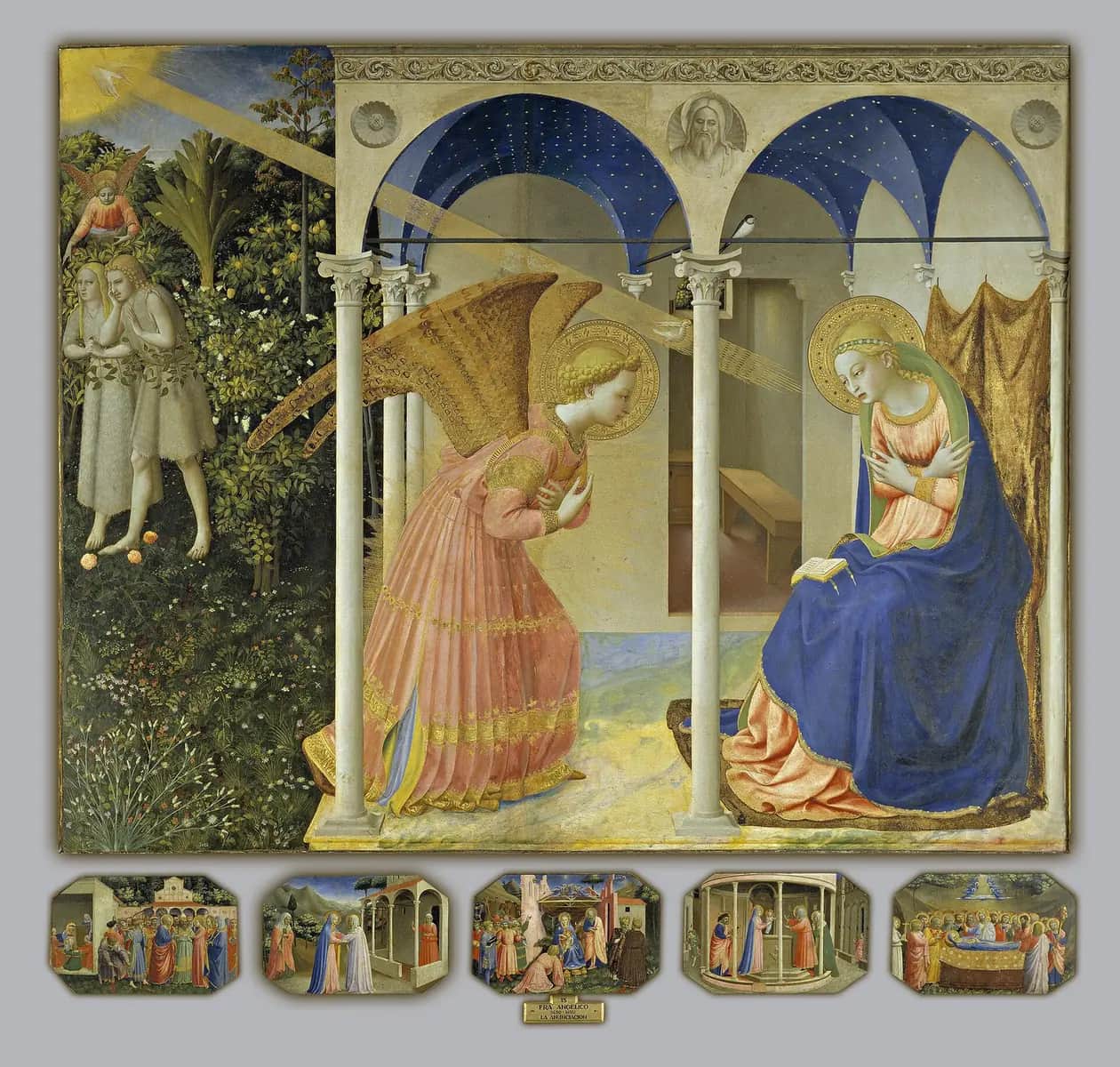
'If Mary is the new Ark, and the Ark is the dwelling place of God on earth, then, by implication, Jesus is God on earth.' The typology about Mary illuminates the deeper mystery of her Son's divinity, and three Fathers 'writing in Rome, Egypt, and Syria' saw it. Hippolytus: Christ's human nature 'of incorruptible wood, that is to say, of the Virgin and the Holy Spirit, overlaid within and without… by purest gold of the word of God.' Athanasius: 'O Ark of the New Covenant, clothed with purity instead of gold!… the flesh in which divinity resides.' Jacob of Serug: 'that maiden was the Ark of the Godhead,' before whom John leaped as David danced. They got this from the Old Testament, and they based what they believed about Mary on what they believed about Christ (CCC 2676).
Key verses
- Luke 1:35 — 'that holy thing… shall be called the Son of God.'
- Hebrews 9:4 — the Ark's contents — Word, bread, priesthood — fulfilled in one Son.
- Luke 1:41 — John leaps as David danced (Jacob of Serug).
The connection
| Old Testament root | New Testament fulfilment | |
|---|---|---|
| The Ark: the dwelling place of God on earth | → | Mary: the dwelling place of God made flesh |
The direction of the argument matters: calling Mary the Ark is a way of confessing that the child in her is God. That is why the early Christians who used the image were the same ones defending the divinity of Christ.
Sources
- Hippolytus of Rome — Discourse on Psalm 23 (p 61) · read
- Athanasius of Alexandria — Homily from the Papyrus of Turin (p 61) · read
- Jacob of Serug — Homily III on the Mother of God 671 (pp 61–62) · read
- Catechism of the Catholic Church — CCC 2676 (p 62) · read