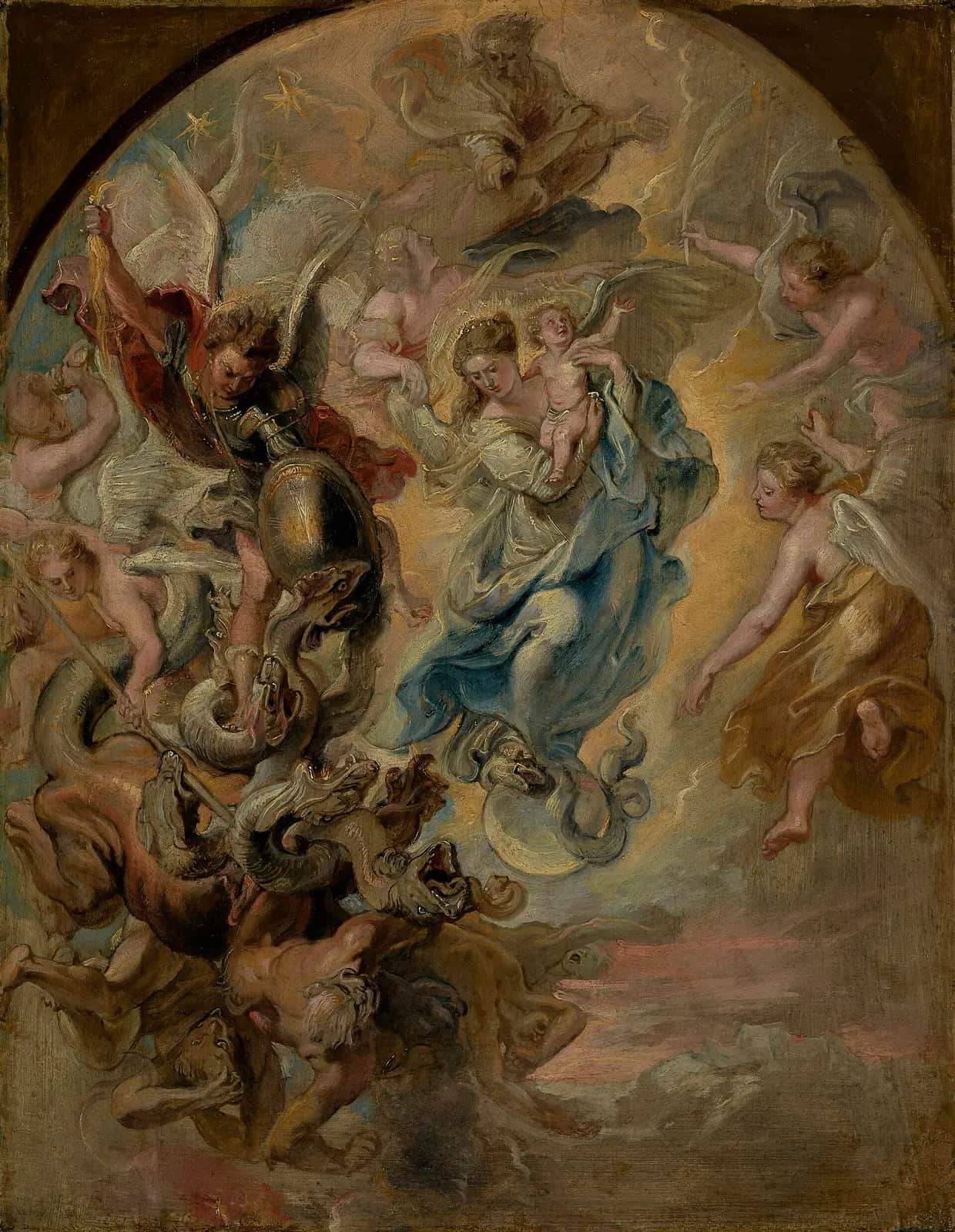
The idea
Scholars are divided over whether the Woman clothed with the sun is Mary or the people of God, and Pitre gives the collective case its due: Jerusalem is God's bride (Isaiah 62; Hosea 2), Zion is a woman in labour (Isaiah 26:17; Micah 4:10), and Revelation calls the Church the Bride and the new Jerusalem. His answer works from symmetry. The dragon and the male child are primarily individuals — Satan and Christ — so the Woman is too. But the dragon's heads and horns are also kings (17:9–12), and the child's victory belongs to his followers, 'the rest of her offspring' (12:17). So the Woman is an individual, Mary, and also a group, the Church — as the most ancient interpreters, and Protestants such as Witherington and McKnight, hold.
Key verses
- Revelation 12:1 — the Woman in heaven.
- Revelation 12:5 — the male child — the Messiah of Psalm 2.
- Revelation 17:9 — seven heads, ten horns = kings: the dragon is individual and collective.
- Revelation 12:17 — 'the rest of her seed' — the Woman's other children.
The connection
| Old Testament root | New Testament fulfilment | |
|---|---|---|
| Daughter Zion in labour; the dragon and the serpent | → | Mary, and in her the Church, at war with Satan |
The objection raised in chapter 1 — 'many interpreters reject the idea that this woman is Mary' — is answered not by denying the collective reading but by showing that every figure in Revelation 12 is both an individual and a people.
Sources
- Modern scholars Pitre cites — Ben Witherington III; Scot McKnight (pp 34–35)