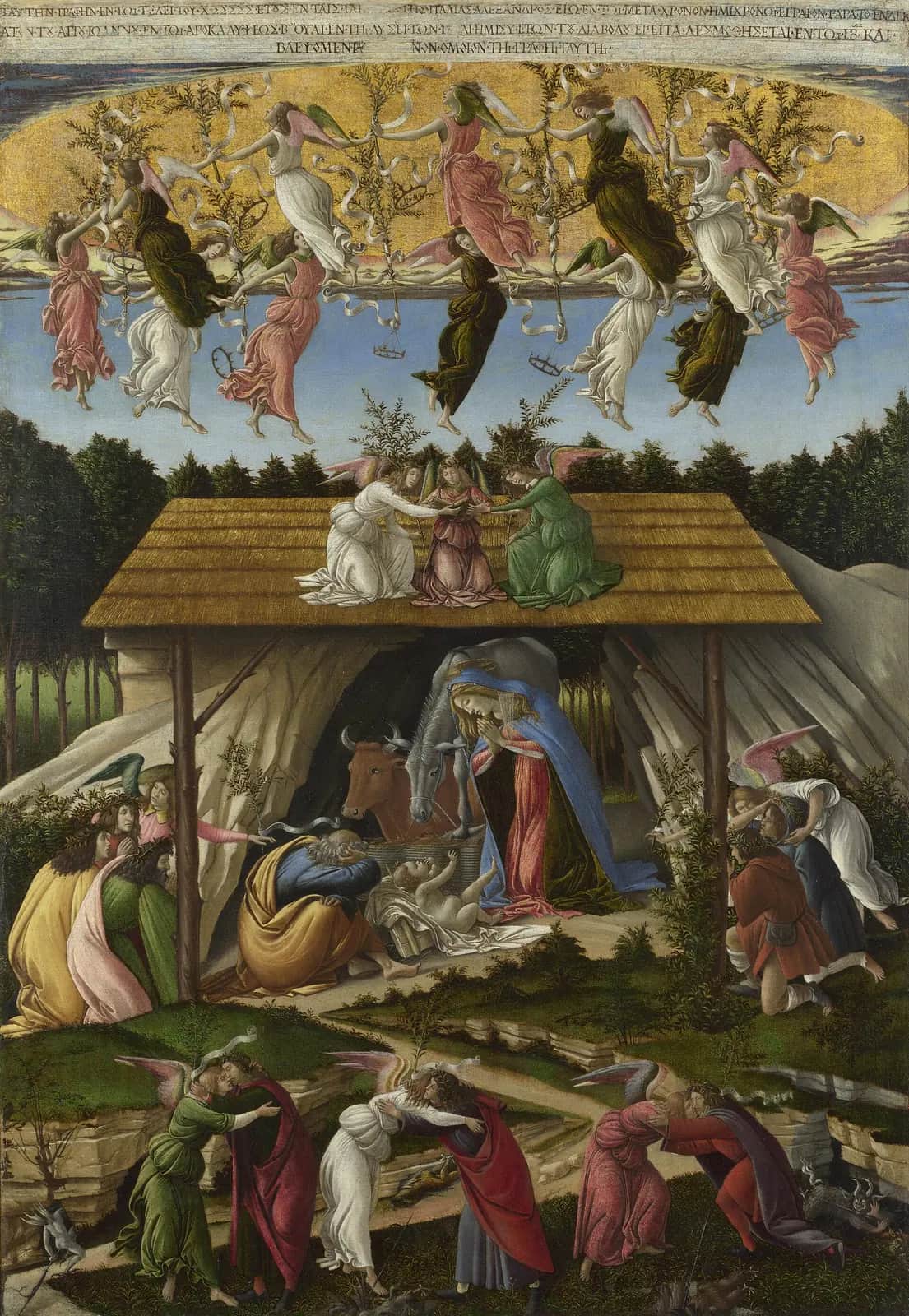
The idea
Isaiah foretells a birth WITHOUT labor — 'before she was in labor she gave birth.' Irenaeus and Gregory of Nyssa quote that verse of Mary's birth of Jesus (pp 131–132); Ephrem reasons that one 'blessed among women' was exempt from Eve's curse (p 135); and John Damascene says it best: she 'suffered those pains, which she escaped at the birth, in the hour of the passion' (pp 132–133). Since pain in childbirth came with the fall, a painless birth signals the new creation (CCC 499).
Key verses
- Isaiah 66:7 — 'before she was in labor she gave birth… a son.'
- Genesis 3:16 — pain in childbirth as a mark of the fall.
- Luke 1:42 — 'blessed art thou among women' — Ephrem's premise.
- Isaiah 65:17 — the new-creation oracle that precedes Isaiah 66:7.
The connection
| Old Testament root | New Testament fulfilment | |
|---|---|---|
| Eve's pain in childbirth (fall) | → | The New Eve's painless birth (new creation) |
Since pain in childbirth entered with the fall, Isaiah's prophecy of a birth 'before she was in labor' signaled the new creation. Pitre shows the Fathers held Mary was spared ordinary birth pangs at Bethlehem — because her true pangs were kept for the cross.
Sources
- Irenaeus of Lyons — Proof of the Apostolic Preaching 54 (pp 131–132) · read
- Gregory of Nyssa — On the Song of Songs 13 (pp 132, 135) · read
- Ephrem the Syrian — Commentary on the Diatessaron 2.6 (p 135) · read
- John Damascene — On the Orthodox Faith 4.14 (pp 132–133) · read
- Catechism of the Catholic Church — CCC 499 (p 131) · read