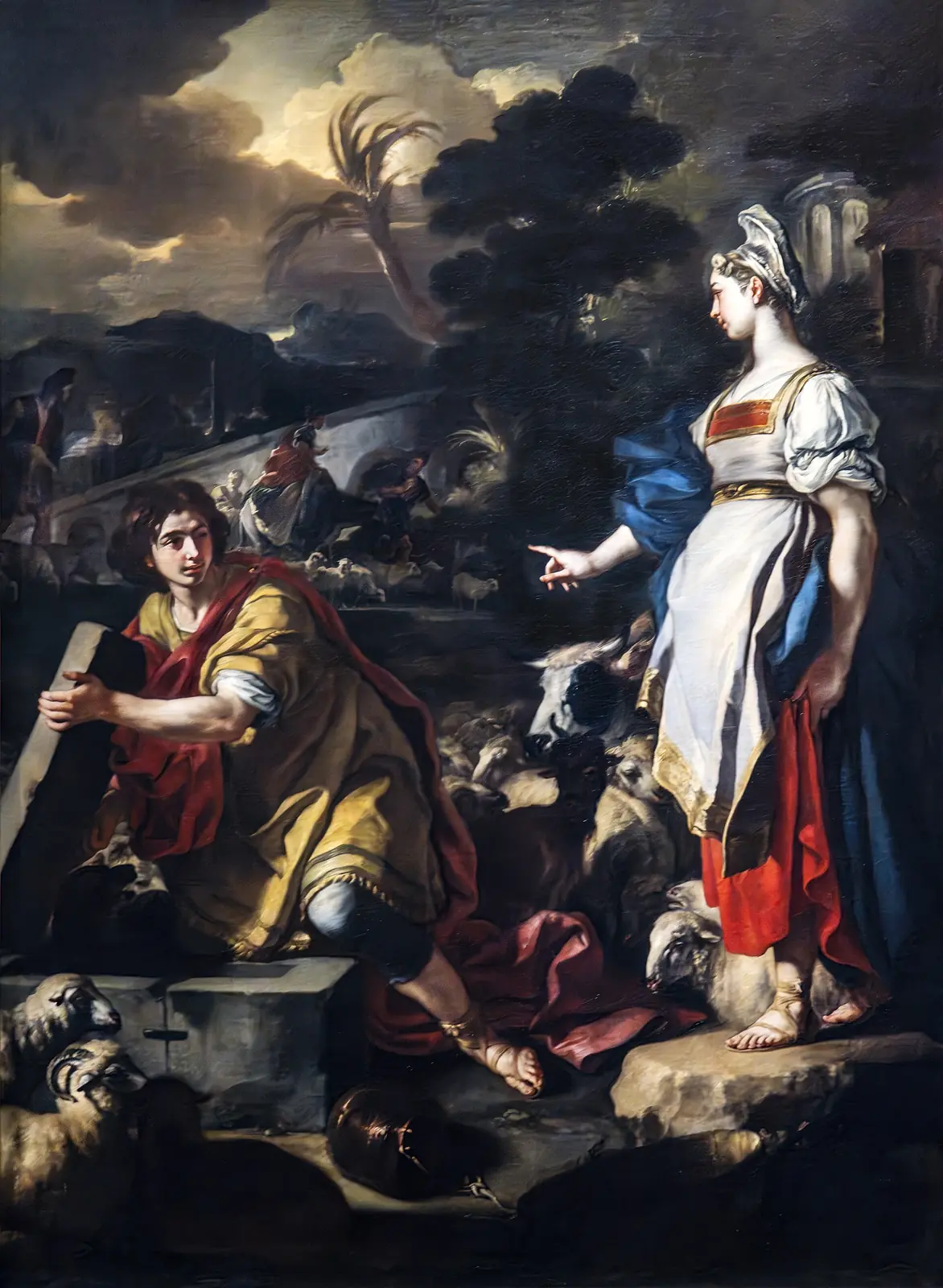
The idea
Three things stand out in Jewish tradition about Rachel. She was remembered as a woman of intense suffering: Josephus says she died 'in childbirth' and that Benjamin was so named 'because of the suffering (odynē) which he had caused his mother.' The link between her tomb and Bethlehem was preserved down to the first century and beyond: Demetrius the Chronographer says Jacob came 'to Ephrath, which is Bethlehem, and there he fathered Benjamin; and Rachel died after giving birth,' and a rabbinic tradition says Jacob buried her there because he 'foresaw that the exiles would pass on from thence… so that she might pray mercy for them.' And Jews, Christians and Muslims have regarded her tomb as a place of prayer — 'in the twentieth century, we even have records of Jews visiting Rachel's tomb to light candles and ask for her prayers!'
Key verses
- Genesis 35:18 — Benjamin, son of her pain.
- Genesis 35:19 — Ephrath, which is Bethlehem.
- Jeremiah 31:15 — the exiles pass her tomb.
The connection
| Old Testament root | New Testament fulfilment | |
|---|---|---|
| Rachel's tomb at Bethlehem, a place to ask her prayers | → | Mary, mother of the child born at Bethlehem, asked for her prayers |
Asking a departed mother of Israel to pray for her children is not a Catholic invention; Jews did it at Rachel's tomb, and the rabbis said God placed her there for exactly that purpose.
Sources
- Josephus — Antiquities 1.344 (p 146) · read
- Demetrius the Chronographer — Chronography 2.10 (p 146) · read
- Midrash Rabbah — Genesis Rabbah 82:10 (p 146) · read
- Modern scholars Pitre cites — Frederick Strickert, Rachel Weeping (p 146)