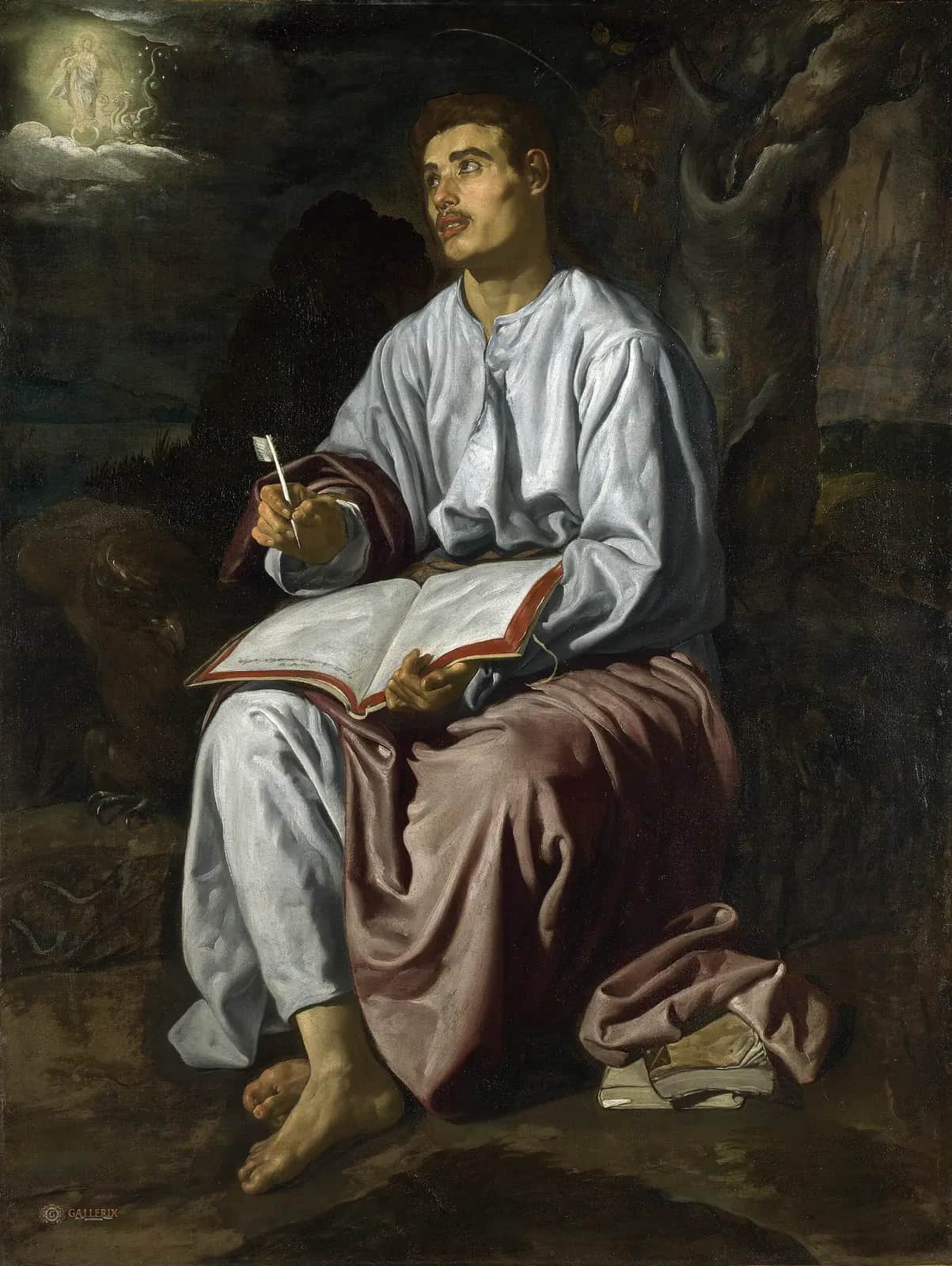
The idea
Four textual arguments. First, the chapter break is not original: 'the contemporary system of chapters and verses was not added to the Bible until the thirteenth century,' and experts agree the verse in which the Ark appears introduces the vision of the Woman. Second, both stand in the heavenly temple, in imagery drawn from Isaiah 66:6–7, where a voice from the temple precedes the birth. Third, the verb 'appeared' (ōphthē) is repeated — the Ark appears, the Woman appears — linking the two (Koester). Fourth, John habitually uses two symbols for one reality: dragon and serpent for the devil, male child and Lamb for Christ; so Ark and Woman for Mary. Paschasius Radbertus said it plainly: 'This certainly was not the Ark made by Moses, but is the Blessed Virgin.'
Key verses
- Revelation 11:19 — the temple opened; the Ark seen.
- Revelation 12:1 — a Woman appeared in heaven.
- Isaiah 66:6 — a voice from the temple before the birth.
- Revelation 12:5 — the male child — and the Lamb (12:11): John's dual symbols.
The connection
| Old Testament root | New Testament fulfilment | |
|---|---|---|
| The Ark seen in the heavenly temple | → | The Woman seen in heaven — the same mother, under two images |
'No first-century Jew who was waiting for the return of the lost Ark could read this vision in Revelation without being stunned that the true Ark was no longer on earth but in heaven.' The Assumption is what that reader would conclude.
Sources
- Modern scholars Pitre cites — Craig Koester (p 59)
- Paschasius Radbertus (p 60)