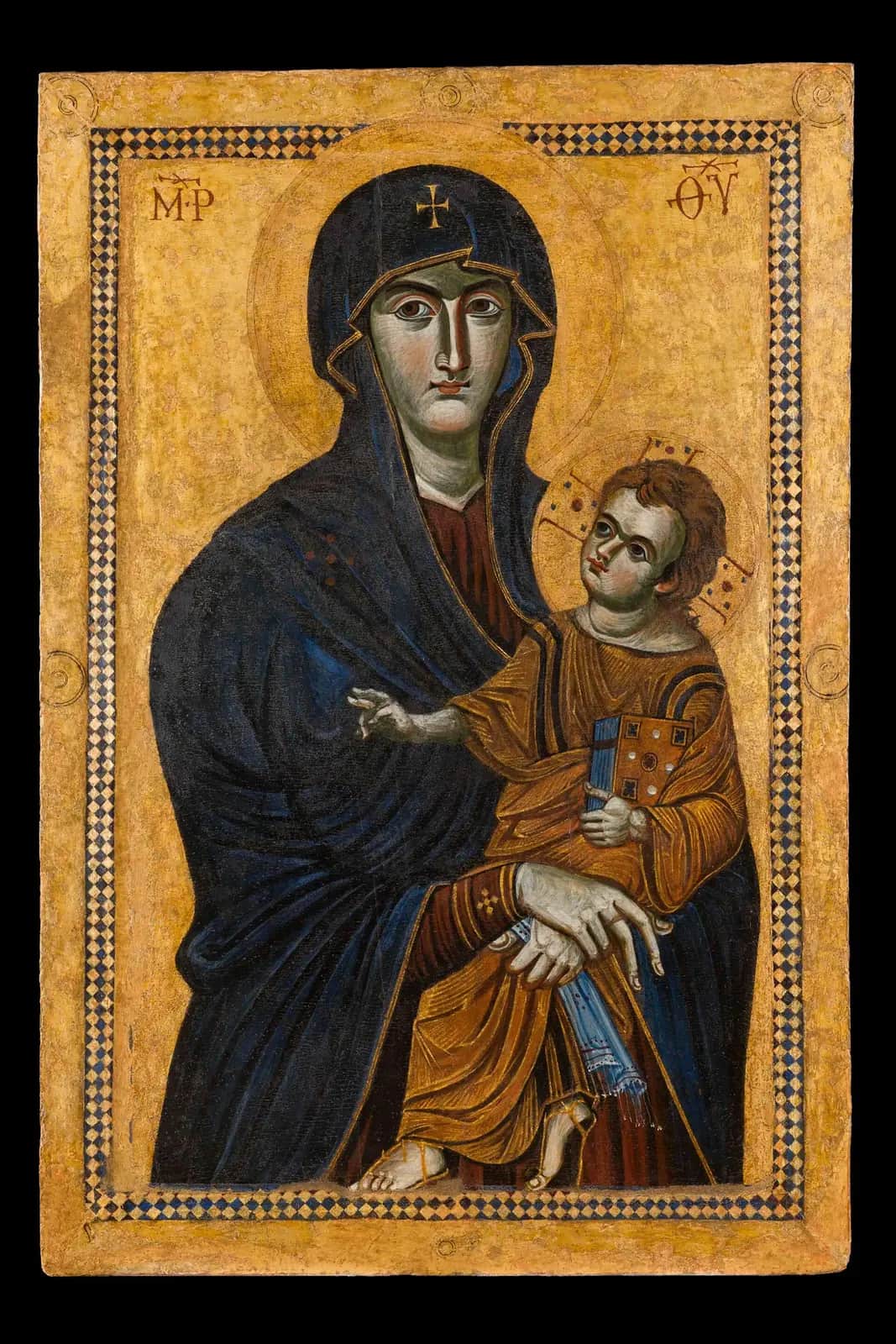
Where, then, has this coiling dragon come to us from again? Where do these crooked counsels spring up anew from? Let Mary be held in honour; but let the Father and the Son and the Holy Spirit be worshipped. Let no one worship Mary. Not to a woman, I say, nor even to a man: the mystery is appointed for God. Not even angels can receive such glorification.
Let what was wrongly written in the hearts of the deceived be wiped away; let the craving for the tree be dimmed from their eyes; let the creature turn back to the Master. Let Eve, with Adam, be shamed into honouring God alone; let her not be led by the serpent’s voice, but keep to God’s command: You shall not eat of the tree. The tree was not the error; but through the tree came the disobedience of error. Let no one eat of the error that arises over holy Mary. For though the tree was beautiful, it was not for food; and though Mary is most fair, and holy, and honoured, yet she is not to be worshipped.
8. These women again renew the mixed cup for Fortune, and prepare the table for the demon and not for God, as it is written; and they eat the food of impiety, as the divine word says: And the women knead dough, and the sons will gather wood, to make cakes for the host of heaven. Let such women be silenced by Jeremiah, and let them not trouble the world; let them not say, We honour the queen of heaven. For Tahpanhes knows how to punish such women; the places of Migdol know how to receive the bodies of these women to decay.
“Worship” renders προσκυνεῖν in Epiphanius’ sense here: the adoration and offering due to God alone. The Second Council of Nicaea (787) later used the same word for the veneration of honour given to saints and images, which it distinguished from the worship given to God.
Greek text (PG 42, col. 752 A–C)
Πόθεν τοίνυν πάλιν ἡμῖν κυκλοδράκων; πόθεν ἀνακαινίζεται τὰ σκολιὰ βουλεύματα; Ἐν τιμῇ ἔστω Μαρία· ὁ δὲ Πατὴρ, καὶ Υἱὸς, καὶ ἅγιον Πνεῦμα προσκυνείσθω· τὴν Μαρίαν μηδεὶς προσκυνείτω. Οὐ λέγω γυναικὶ, ἀλλ᾽ οὐδὲ ἀνδρὶ, Θεῷ προστέτακται τὸ μυστήριον. Οὔτε ἄγγελοι χωροῦσι δοξολογίαν τοιαύτην.
Ἐξαλειφέσθω τὰ κακῶς γραφέντα ἐν καρδίᾳ τῶν ἠπατημένων· ἀμαυρούσθω ἐξ ὀφθαλμῶν τὸ ἐγκίσσημα τοῦ ξύλου· ἐπιστρέψῃ πάλιν τὸ πλάσμα πρὸς τὸν Δεσπότην. Ἐντρεπέσθω Εὔα μετὰ τοῦ Ἀδὰμ Θεὸν τιμᾶν μόνον· μὴ ἀγέσθω τῇ τοῦ ὄφεως φωνῇ· ἀλλ᾽ ἐμμενέτω τῇ τοῦ Θεοῦ προστάξει· Μὴ φάγῃς ἀπὸ τοῦ ξύλου. Καὶ ἦν τὸ ξύλον οὐ πλάνη, ἀλλὰ διὰ τοῦ ξύλου γέγονεν ἡ παρακοὴ τῆς πλάνης. Μὴ φαγέτω τις ἀπὸ τῆς πλάνης τῆς διὰ Μαρίαν τὴν ἁγίαν. Καὶ γὰρ, εἰ καὶ ὡραῖον τὸ ξύλον, ἀλλ᾽ οὐκ εἰς βρῶμα. Καὶ εἰ καλλίστη ἡ Μαρία, καὶ ἁγία, καὶ τετιμημένη, ἀλλ᾽ οὐκ εἰς τὸ προσκυνεῖσθαι.
Ηʹ. Αὗται δὲ πάλιν ἀνακαινίζουσι τῇ τύχῃ τὸ κέρασμα, καὶ ἑτοιμάζουσι τῷ δαίμονι, καὶ οὐ Θεῷ, τὴν τράπεζαν, κατὰ τὸ γεγραμμένον· καὶ σιτοῦνται σῖτα ἀσεβείας, ὥς φησιν ὁ θεῖος λόγος· Καὶ αἱ γυναῖκες τρίβουσι σταῖς, καὶ οἱ υἱοὶ συλλέξουσι ξύλα ποιῆσαι χαυῶνας τῇ στρατείᾳ τοῦ οὐρανοῦ. Φιμούσθωσαν ὑπὸ Ἱερεμίου αἱ τοιαῦται γυναῖκες, καὶ μὴ θορυβείτωσαν τὴν οἰκουμένην· μὴ λεγέτωσαν· Τιμῶμεν τὴν βασίλισσαν τοῦ οὐρανοῦ. Οἶδε γὰρ Ταφνὰς ταύτας τιμωρεῖσθαι. Οἴδασιν οἱ τόποι Μαγδούλων τούτων τὰ σώματα ὑποδέχεσθαι εἰς σῆψιν.
Migne, Patrologia Graeca 42 (Paris, 1863), public domain.
Reproduced in full. Translation: Translation: Catena Fidei (2026), CC BY 4.0, from the Greek of Migne, Patrologia Graeca 42 (Paris, 1863), public domain (CC BY).